If you want to make your garden more eco-friendly, the most impactful thing you can do is plant a native tree. Why? Because of all the different ways native trees support birds, bees, pollinators, and other insects, which are the foundation of the ecosystem in your yard.
Trees excel at providing habitat and nesting sites, in particular. Birds nest in them, bees and pollinators lay their eggs there and the larvae live and eat there, chrysalises rest in the leaf litter, and butterflies and moths roll up in the leaves to overwinter. Each tree can be an entire ecosystem itself.
Doug Tallamy, noted entomologist, environmentalist, and author, has illustrated this point beautifully in his several books, especially “Bringing Nature Home” and the “Nature of Oaks”. If you would like to dive into the science, these are great resources.
Will just any native tree work? In short, yes, but some do a better job than others at supporting wildlife. The top trees are known as keystone trees, and the National Wildlife Federation has identified the top trees for our Cape Cod eco-region. Native Plants (By Zip Code) – Native Plants Finder
The number one keystone species, by a wide margin, is the oak tree. Over 900 species of insects have been documented as using oak trees for habitat and food. There are multiple kinds of oaks, but the white oak, black oak, and scarlet oak are the most common large oaks in Cape Cod woods, while the smaller scrub oak is found in more exposed situations.
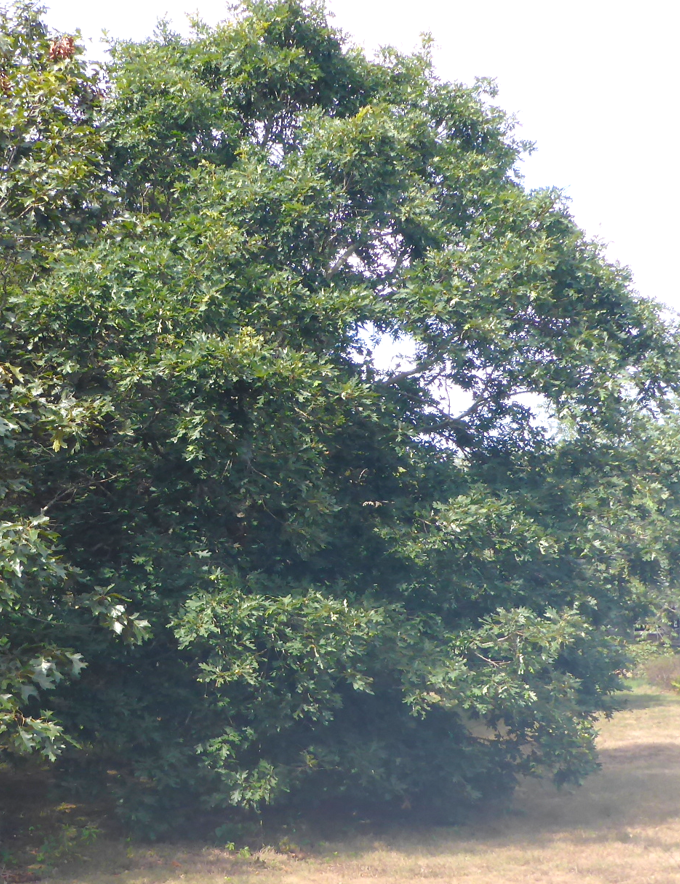
White oak (Quercus alba) is a large, stately tree that is best grown in a woodland area or as a single statement tree. This one is about 20 years old, and because it grew in full sun, ir has kept all its lower branches.
Beyond the oak, the top keystone trees include all types of maples, willows, pines, and cherries. Here are some examples.
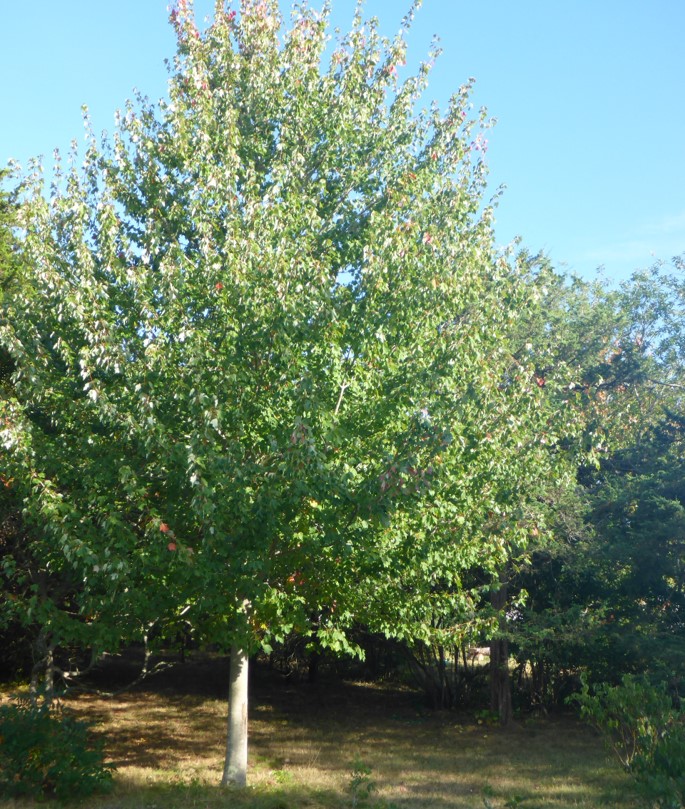
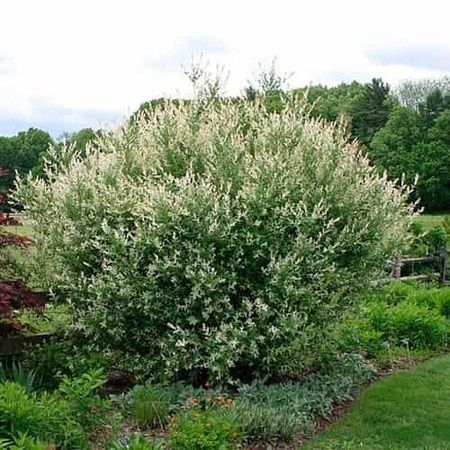
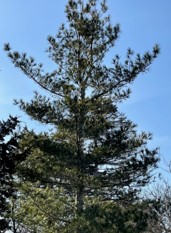
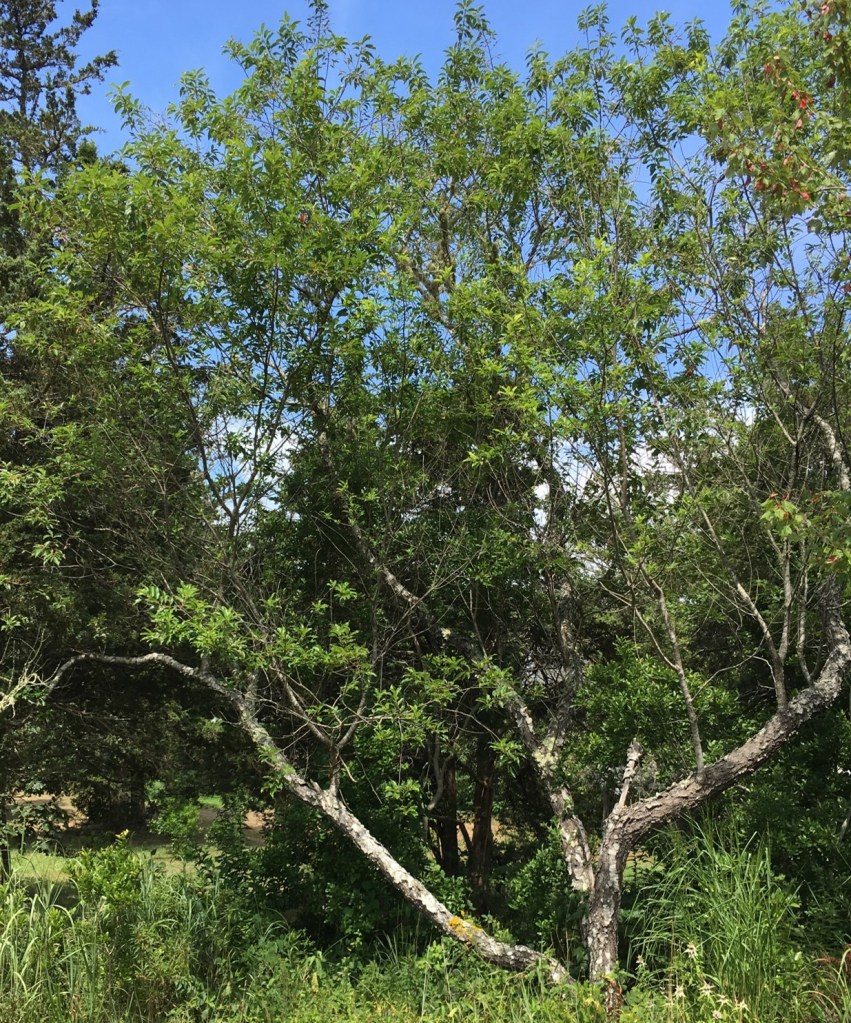
Red maple (Acer rubrum), gets its name from the fact that all its new growth – leaves, stems, flower buds – are all red. It’s fall color is nice, too, although not as spectacular as the sugar maple or the red maple cultivars. Maples prefer average-to-moist soils.Sily willow (Salix sericea). There are only two willow trees native to Cape Cod, the black willow which is a large tree, and the silky willow which looks more like a large shrub. (And the pussy willow is native, too.) Like all willows, they prefer moist soils.White pine (Pinus strobus). All pines are useful ecologically, and the pitch pine is emblematic of the Cape. But I prefer the more feathery and graceful white pine. All grow well in our sandy, acidic soil.The black cherry (Prunus serotina) is a classic pioneer species, growing in full sun and poor soil as one of the first trees to come back after disturbance. Its irregular branching and rough bark make it instantly recognizable. Note that any other trees or shrubs in the Prunus family are also keystone species.
If you don’t have room for a large tree, there are a number of smaller native trees to consider.
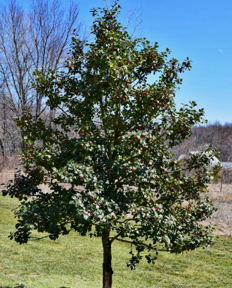
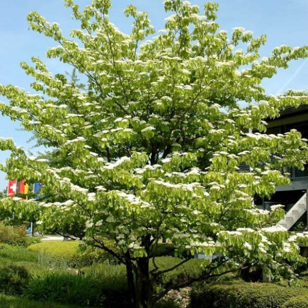
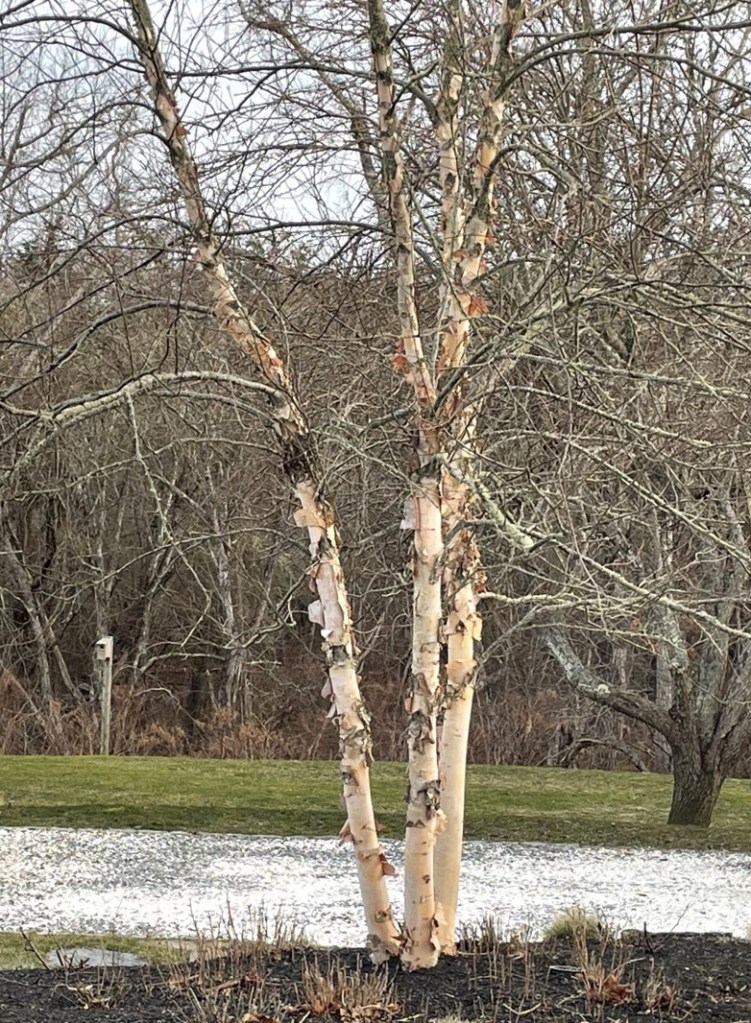
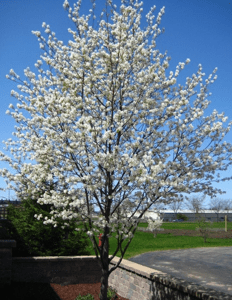
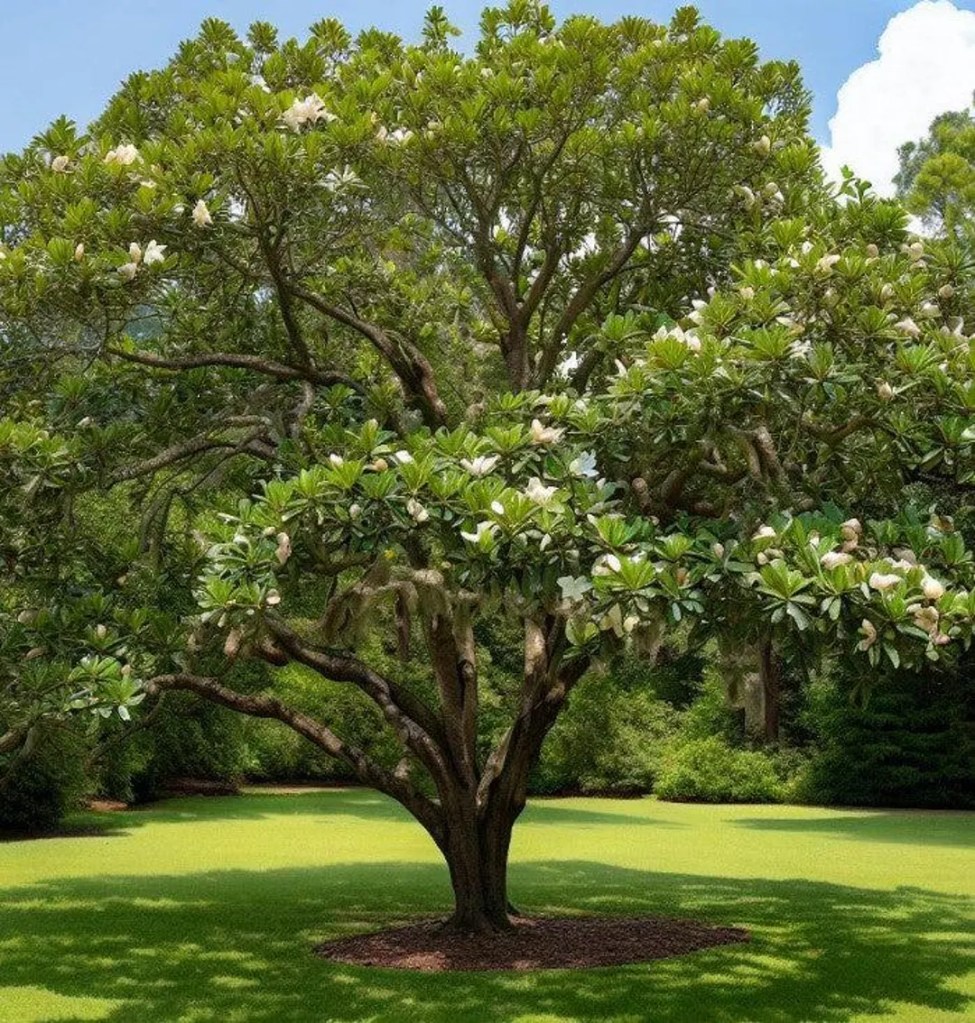
This is the American holly (Ilex opaca), which has prickly leaves that protect it from deer and bright red berries that feed the birds in the fall.All dogwoods are wonderful flowering small trees. This one, the pagoda dogwood (Cornus alternifolia), grows freely in the average-to-moist areas of my yard, which is sandy, acidic soil. While the white birch does not do well on the Cape, the river birch (Betula nigra) tolerates the heat of our summers well and looks similar to the shite birch.Serviceberry or Juneberry (Amelanchier species) are early bloomers and have very tasty fruit in early summer, if you can get there before the birds. It is often sold in the nurseries as a multi-stemmed large shrub.Who knew a magnolia could be native to Cape Cod? This one, the Sweetbay magnolia (Magnolia virginiana) is native all along coastal New England.. It flowers like its southern cousins. It also is available as a multi-stemmed large shrub.
Hi, Cathy I am the Environmental Awareness Committee Chair for the Garden Club Federation of Massachusetts and we have a lot of information on the GCFM.org website. I try not to “reinvent the wheel” so when I see articles that would fit onto our webpage, I ask for permission to include it. I was wondering if you might allow us to put your article re native trees on the website under the category Native Plants/Pollinators section. (It is under the Education tab.) We would obviously include your name as author. Thanks. Maria Bartlett
 Goldenrod Garden
Hi, Cathy I am the Environmental Awareness Committee Chair for the Garden Club Federation of Massachusetts and we have a lot of information on the GCFM.org website. I try not to “reinvent the wheel” so when I see articles that would fit onto our webpage, I ask for permission to include it. I was wondering if you might allow us to put your article re native trees on the website under the category Native Plants/Pollinators section. (It is under the Education tab.) We would obviously include your name as author. Thanks. Maria Bartlett
LikeLike