It’s been a quiet end-of-season in the garden – at least in terms of projects and work accomplished. No new fall plantings, just tidying up the vegetable garden, pruning out a few dead branches, and getting a jump start on next spring with some overdue edging.
But the garden continued without much attention from me and without much watering, producing lovely vignettes and a few surprises. All I had to do was walk around and observe. Let’s take a look.
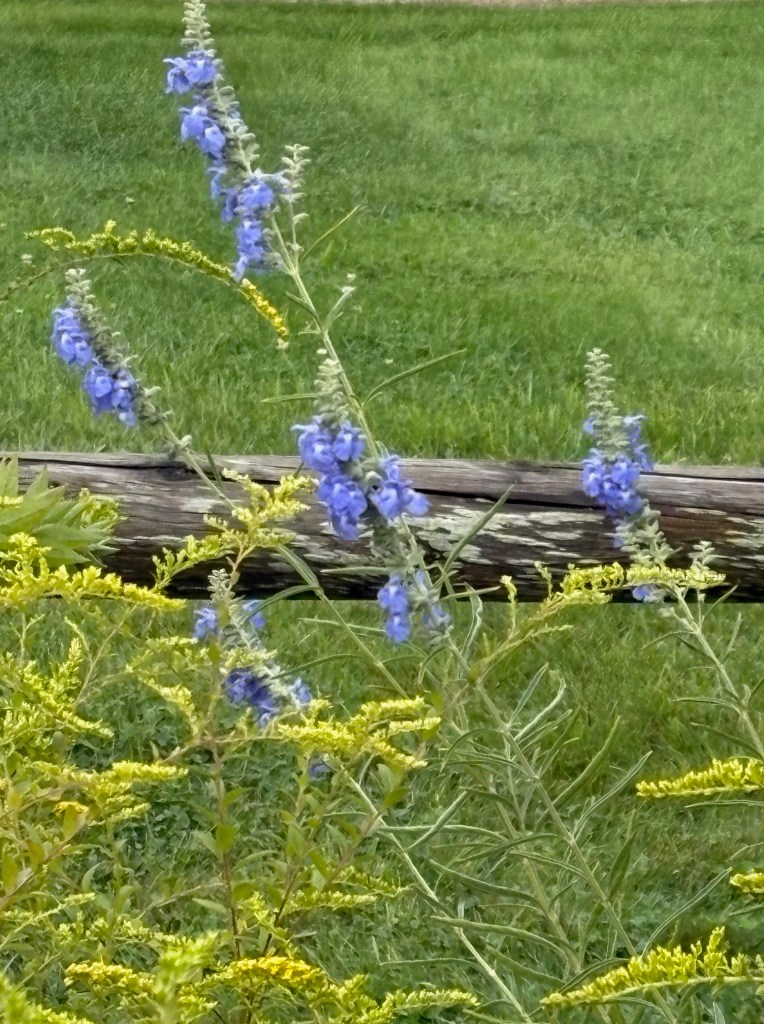
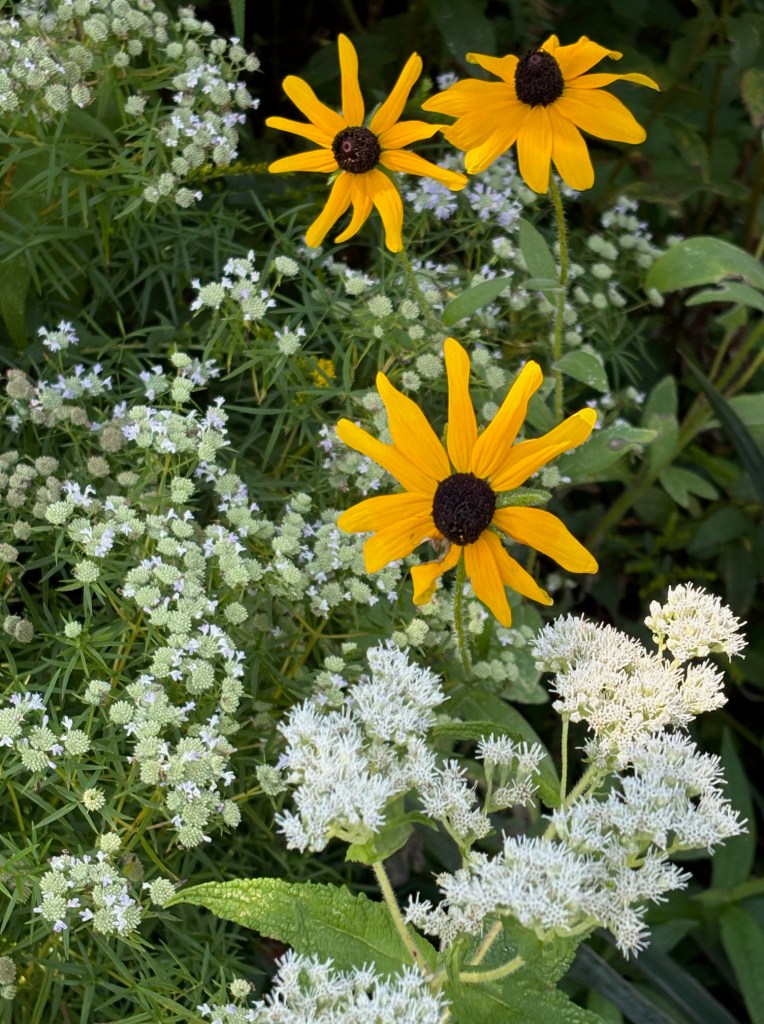
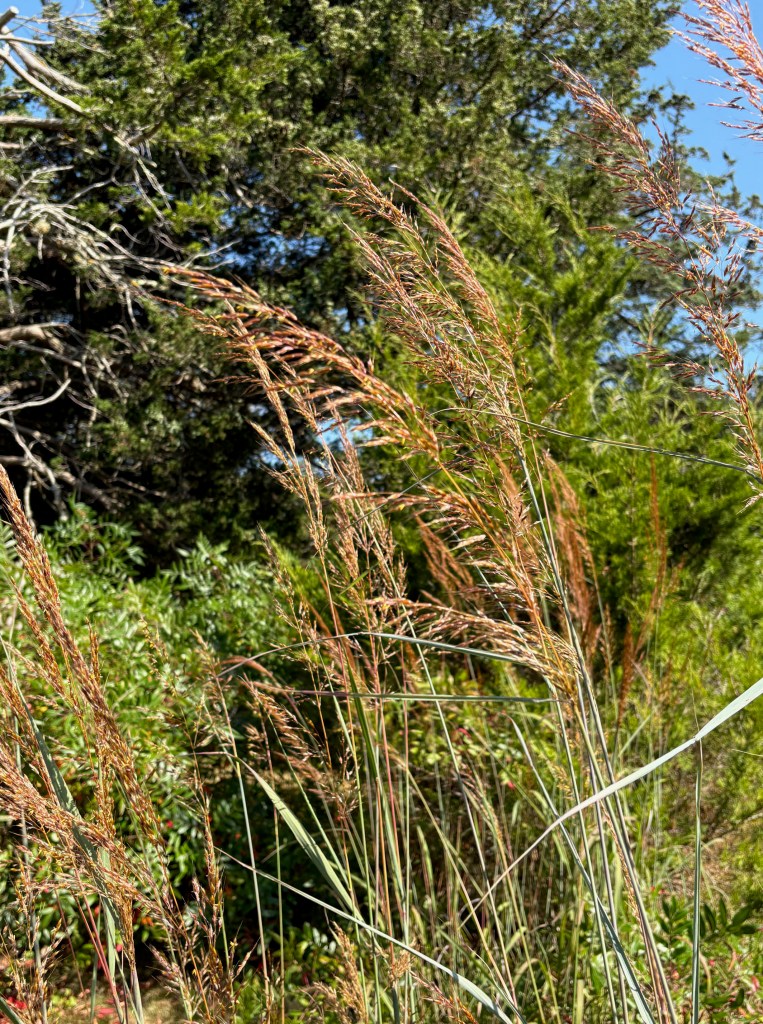
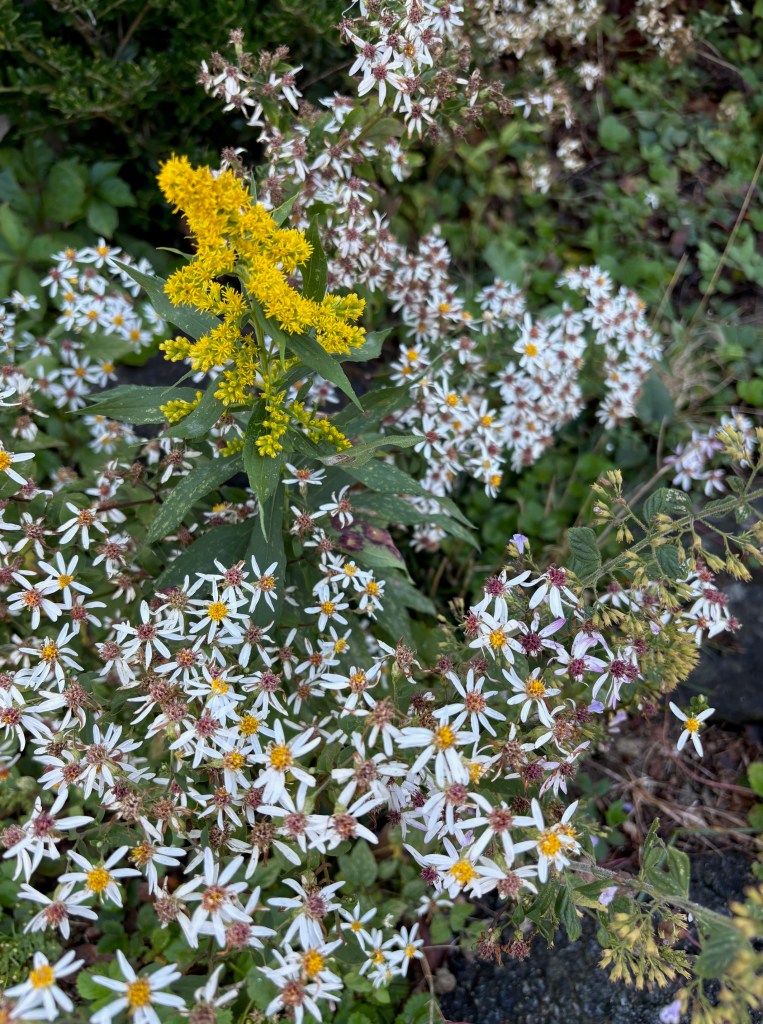
Blue Salvia (Salvia azurea) was the biggest surprise. I planted it several years ago, but it seemed to just fade away. Then suddenly this gorgeous blue flower popped up in the back of the South Border among the goldenrods. This plant is actually native to Massachusetts and is one of the more striking blue native flowers. It grows in full sun and prefers dry-to-medium soils, and it does best in a grouping of other tall plants, such as a meadow, as it can flop without support.Another photo from the South Border, this one shows on the left narrow leaf mountain mint (Pycnanthemum tenuifolium) and on the right boneset (Eupatorium perfoliatum), which bloom reliably in the late summer. The black-eyed Susan (Rudbeckia hirta), growing up through them, is a short-lived perennial that self-seeds, so I never know where it will be coming up. This year I was lucky that it grew through another plant, as the rabbits usually enjoy these before I get to see them flower.The meadow always has something interesting to see in the early fall. This is the showy goldenrod (Solidago speciosa), which like all goldenrods is a pollinator powerhouse. The bee on this plant is the common native bumblebee.Also near the meadow is this Indian grass (Sorghastrum nutans). I planted a few of these in the meadow itself, but it didn’t come back the second year. Instead, a half-dozen of them seeded around the outside of the meadow under the cedars where it doesn’t get mowed.I have always wanted to grow asters, but the rabbits devour almost everything in the aster family (with a few exceptions). Because I was putting a rabbit fence around the meadow, I decided to throw in a few aster in the second year, and this fall I found one blooming, yay! I’m not sure what kind of aster it is – it looks like a New England aster, but it was only 6″ tall, and the NE aster is much taller. And since it was an impulse buy, I threw the plant label in a pile somewhere and haven’t properly catalogued it. But I still enjoy the aster.Here’s one that is not in my garden this year but popped up all over the mini-meadow at the Mayo House. It is sweet everlasting (Pseudognaphalium obtifusium), an annual that spreads by windblown seed. It’s native to Canada but has been introduced here and is now naturalized. It’s also called rabbit tobacco and is said to have an aroma like maple syrup.Finally, more asters and goldenrod, the duo that marks the fall. This is white wood aster (Eurybia divaricata), which grows low and prefers part shade. It is a great plant for a ground cover, as it spreads easily. With it is Canada goldenrod (Solidago canadensis). Usually I pull it out of this particular bed as an aggressive weed, but I missed one, so I get to enjoy this lovely fall combination.



 Goldenrod Garden
Rabbit’s tobacco does indeed smell like maple syrup. Delicious fragrance on a warm day.
LikeLike