For this gardener, winter started the second week of November. That was the week I pulled in all of my pots of annuals and turned off and drained the outside water. Fall was relatively easy, as I don’t do cutbacks or remove the leaves, but I had spent the prior few weeks slowly doing the last of my weeding for the year. The goal was getting a head start on spring weeding by pulling the small rosettes of bittercress that will grow even over the winter. And I walked around the garden making a list of the winter chores, mostly pruning and invasives removal. That work will be done on nice days in January and February.
It’s also the start of the winter education season, when I can take advantage of the excellent offerings of the Ecological Landscape Alliance, New Directions for the American Landscape, and Native Plant Trust, and I can sit and read a meaty ecology book cover to cover. The one I’m working on now is Primer of Ecological Restoration, by Karen D. Holl, which is helping me hone my thoughts about how to re-wild my own landscape.
But if I am already in winter mode, the plants in the garden are on their own schedule. Some are indeed ready for winter:
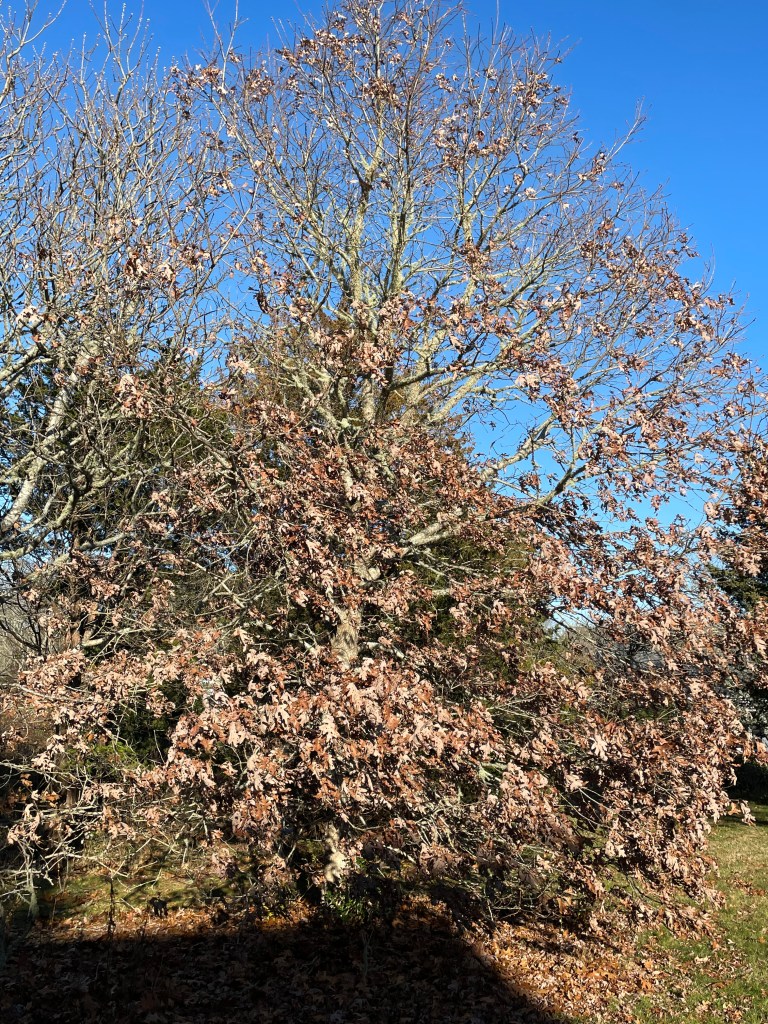
This is prairie dropseed (Sporobolus heterolepsis). All of the taller native grasses have developed these picturesque seedheads, which will be eaten by birds over the winter.The white oak (Quercus alba) drops the upper leaves but retains its lower leaves until the new leaves emerge in spring. It’s not really known why this happens, but the theory that I prefer is that the lower leaves serve as a defense against deer browsing over the winter.
Others aren’t quite ready and are still holding on to their green foliage:
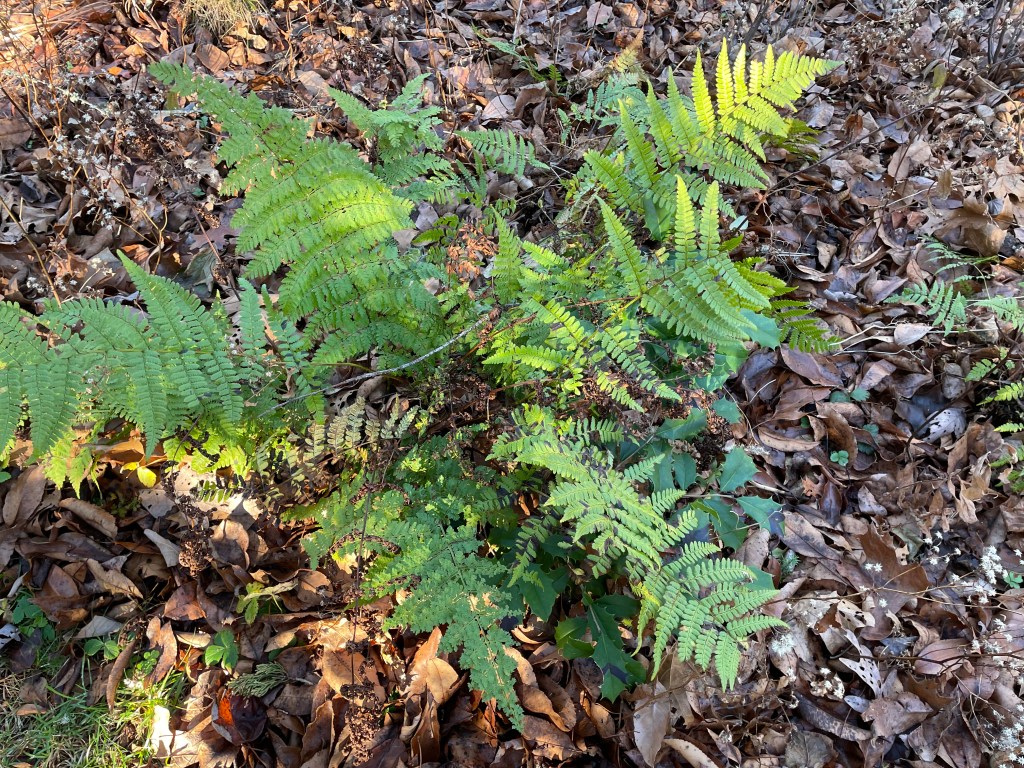
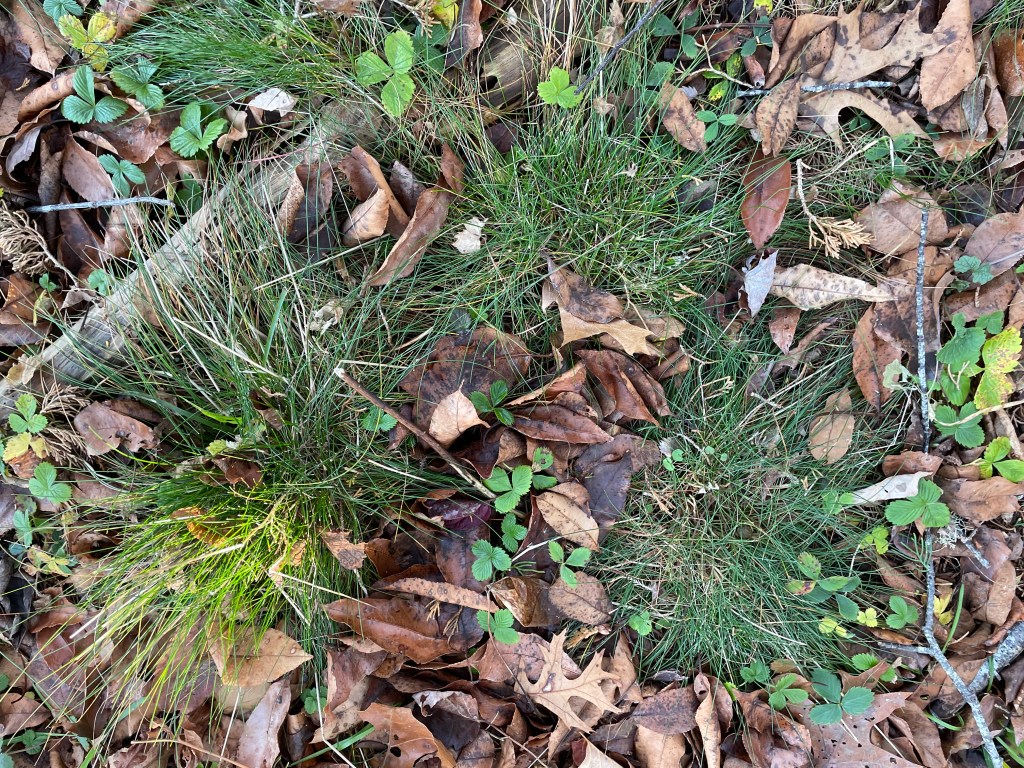
The Christmas fern (Polystichum acrostichoides) is so named because it will stay green at least until the holidays, and sometimes later.The lady fern (Athyrium filix-femina) however, will turn brown and shrivel up at the first hard frost. When I took these pictures on Thanksgiving weekend, they were still nicely green.In the woodland garden, the wavy hair grass (Deschampsia flexuosa) is still green. It flowers in June and creates seeds by July, and by November someone (rabbits?) has chewed down all the flowering stems. You can also see the wild strawberry (Fragaria virginiana) are still green and will continue to spread out until the first hard frost.
And a few evergreens have developed their berries and are seemingly dormant:
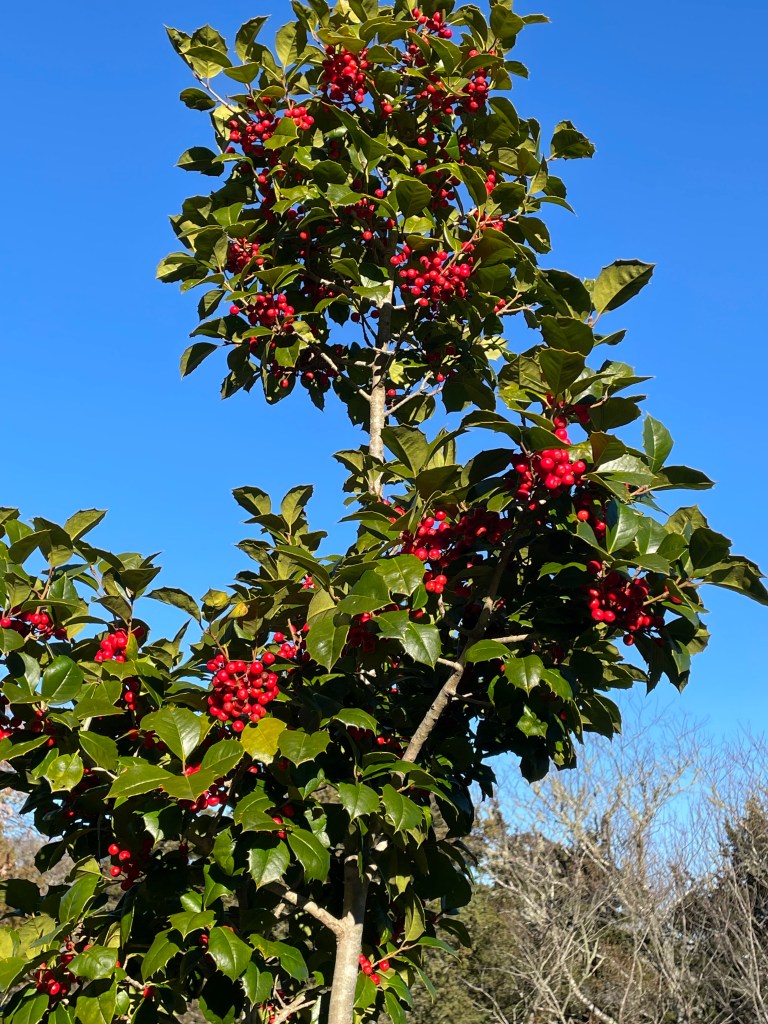
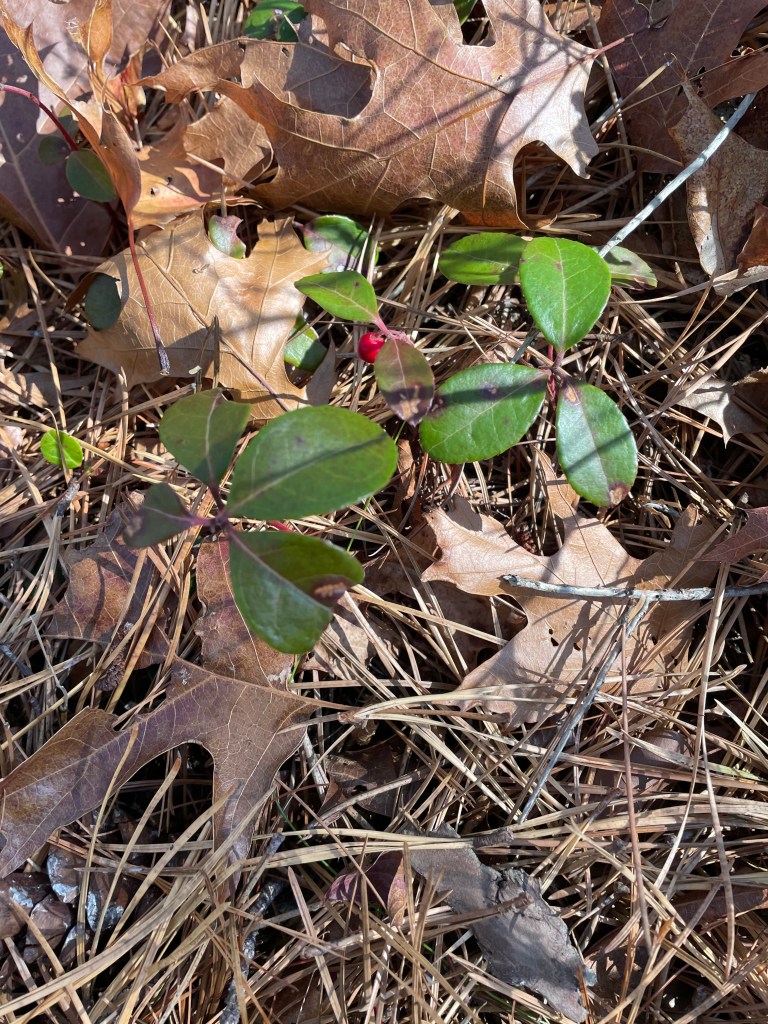
The holly (Ilex opaca) has an abundance of berries this year, despite the lack of rainfall. My bet is that these will be eaten by the birds before the new year!Finally, in the nearby woods there are patches of wintergreen, also called checkerberry (Gaultheria procumbens), which provide a welcome bit of green and red among the fallen leaves and pine needles.


 Goldenrod Garden
Cathy, thanks for these comments on your winter garden. Also appreciate the resources for winter “edification.”
My instructions to “leave the leaves” and much else were fairly ignored by the landscapers in the formal beds. More education will be necessary.
LikeLike