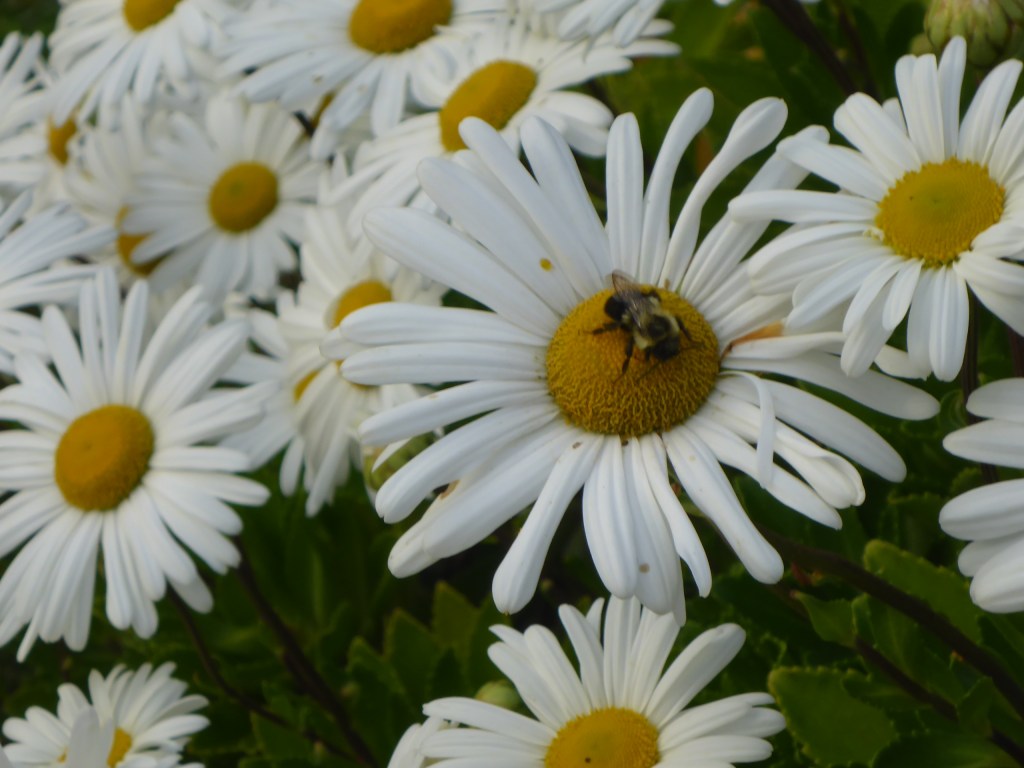
This post started out simply. I have a number of non-native ornamental plants, such as Montauk daisies and sedum ‘Autumn Joy’ that seem to be pollinator-friendly, so I have decided to keep them. This led to the idea of a post to discuss the question of whether we should remove non-native plants from our gardens to make room for natives.
But like so many things in nature and therefore gardening, it’s complicated.
Much of the horticulture message these days is all about native plants, stressing the benefits to the environment and showing ways to use them in home gardening. I love reading these articles and am inspired by them. But you know how once a trend gets hot, it’s easy to feel pressured to follow the trend. The unspoken implication is that all of our gardens should be 100% natives, or we are somehow failing. I was feeling like I had to defend my decision to keep non-native plants.
However, it’s my garden and I don’t have to do anything. That’s the beauty of gardening, we can read about trends and ideas and examples, and we take from them what makes sense for us and our individual goals for our gardens. We can each have our own goals and it will all be good. If you want a few natives or a lot of natives, the environment will be better. For me, a garden is as much about its ecological benefits as its beauty, so moving toward a more native-rich garden is important. But that doesn’t mean I will garden exclusively with natives.
I once had the good fortune to visit the garden of Claudia Thompson, founder of Grow Native Massachusetts. She had set out to convert her small lot to native plants, and the year I was there she had just removed her last non-native – her favorite daylilies. She was proud of the transformation, but she seemed a bit wistful about those daylilies. The garden was amazing, and I was in awe at her all-native landscape.
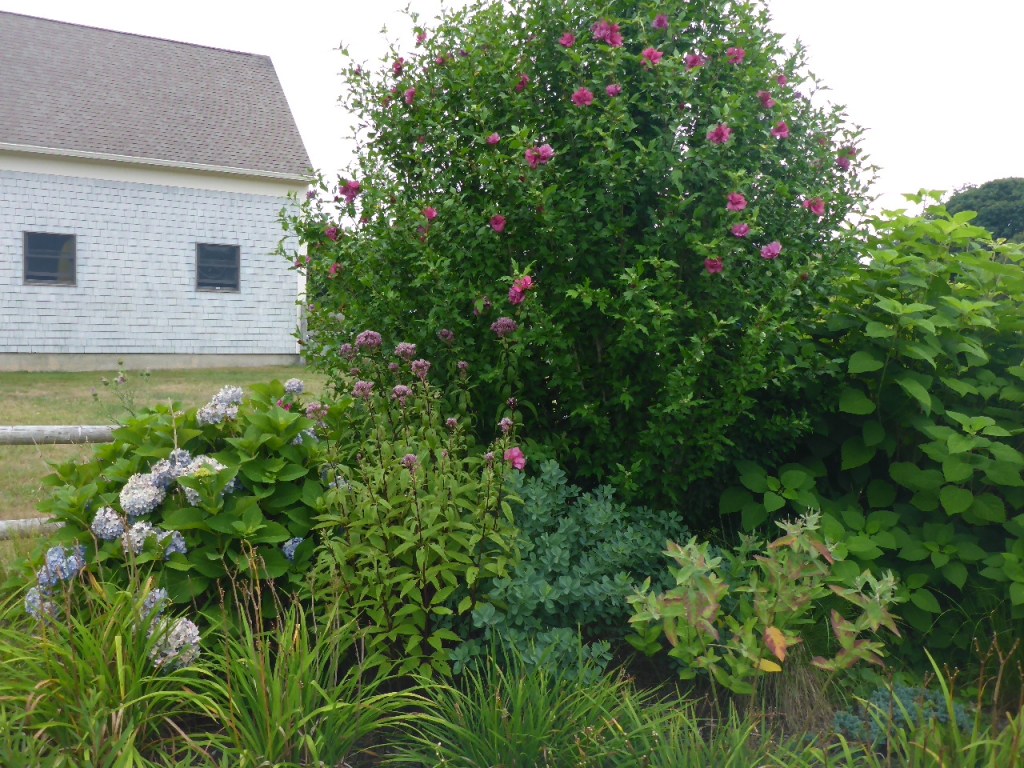
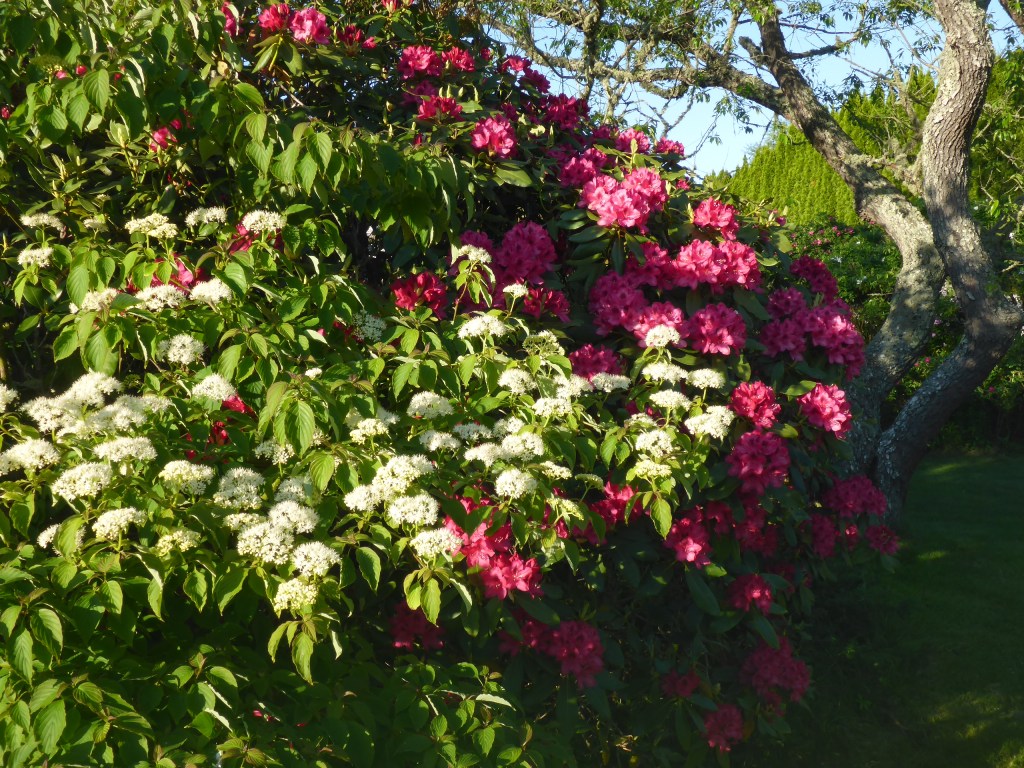
I share Claudia’s goal of converting my yard to natives, but not to the 100% level. I have many well-grown non-native plants, especially larger shrubs and small trees, that I don’t want to replace, such as rhododendron, lilacs, rose of Sharon, kousa dogwood, and hydrangeas. Fortunately, I have enough space to be able to keep many of the non-natives and still have a good concentration of native plants.
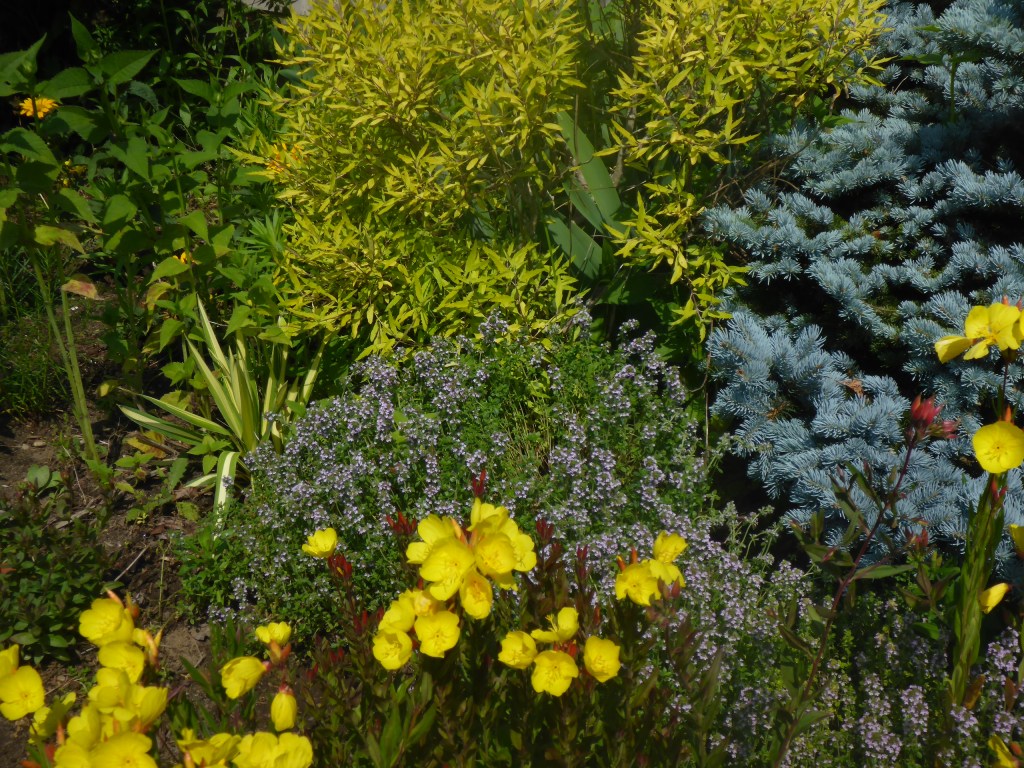
My goal for the beds around the house is to have at least 60% of the plants be natives. The Glory Garden that I have been renovating is a good example. In this 40’x8’ garden bed were several non-native shrubs that I kept, including hydrangeas, spirea, dwarf blue spruce, caryopteris and a Japanese maple, all of which provide structure and color to the bed. I also kept perennials that had pollinator value, such as catmint, sedum ‘Autumn Joy’, thyme, and lavender, and a few plants just for sentimental reasons – a rose and some iris. After taking out some short-lived or underperforming perennials, such as salvia, helenium, and yarrow, I had about 45% of the bed filled with non-natives, and 55% either existing native plants or cleared space. This was planted with 12 species of native pollinator plants. Now I am evaluating the non-natives again to see if I can remove any to get the ratio up to 60%.
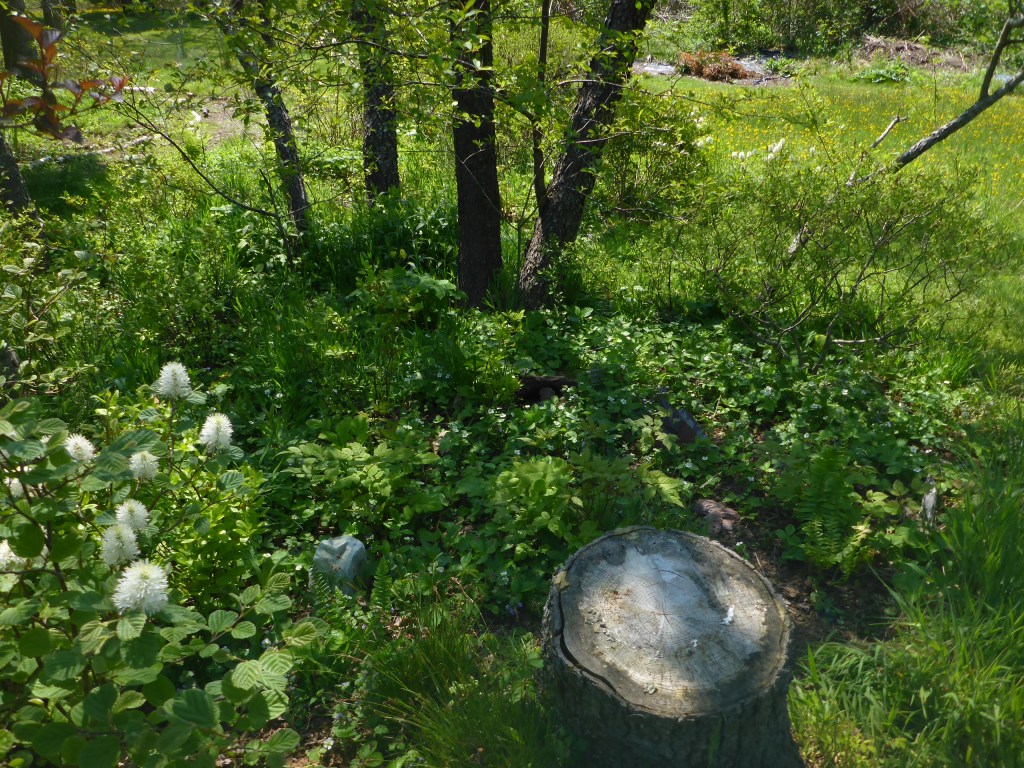
Other parts of the garden have different goals. In the woodland garden, I went with a goal of 80% straight native species and 20% native cultivars. And in the meadow and outlying wooded areas, the goals is 100% straight native species.
So how do you decide whether to keep or remove a specific non-native plant? Here are my considerations for removing plants:
–If it’s not very robust or is underperforming, I wouldn’t try to nurse it along, I would remove it to make room for natives.
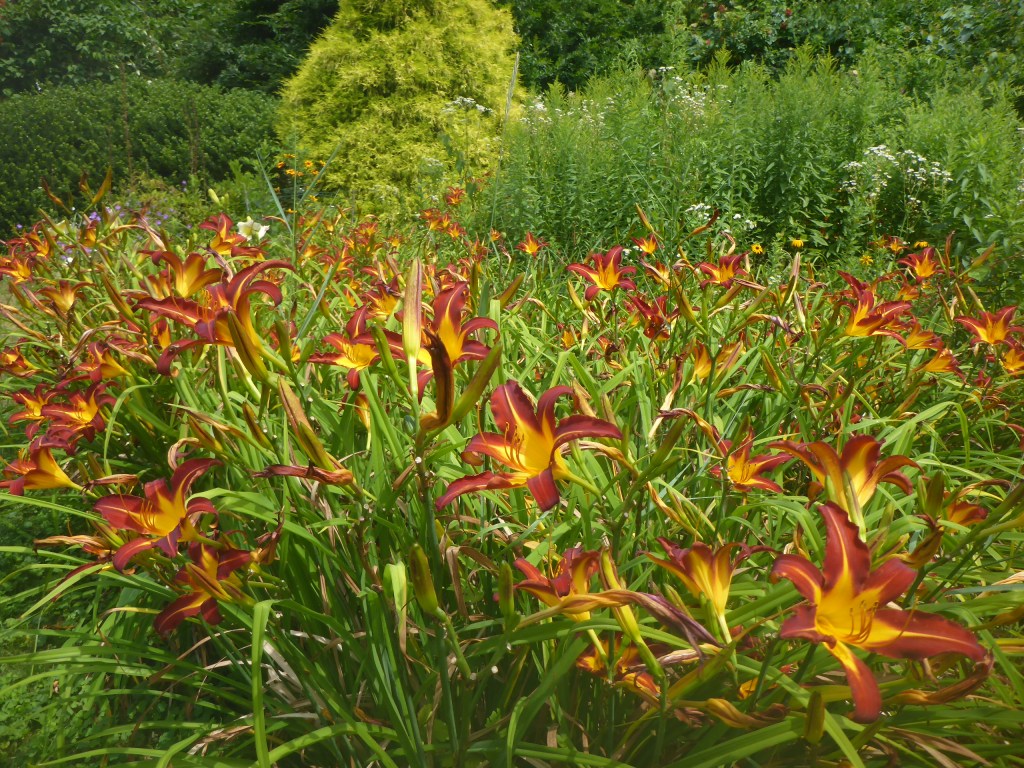
–If it has little pollinator value, you are renovating the bed, and is not critical to the design, strongly consider removing it. This is what will finally get me to remove some of the daylilies.
–If it has little pollinator value and it spreads aggressively, remove it to minimize competition for the new native plants going in.
Considerations for keeping non-natives:
–Large, well-grown shrubs and trees that provide framework, structure and color, and that take a long time to replicate with natives.
–Plants that have very deep roots or are very hard to dig out, such as some shrubs or grasses; it may be easier to work around them.
–Plants that attract pollinators can add ecological benefit even if they are not natives.
–Plants that have a specific sentimental value. I have planted non-natives in memory of loved ones, and I’m keeping those.
–Plants that serve a specific design purpose that is hard to replicate with native plants, such as the variegated Solomon seal in a dark corner or the blue salvia that perfectly complements the native Amsonia.
 Goldenrod Garden
What a great approach. It reduces my guilt too and gives me a clearer path to gradual replacement. Thank you!
LikeLike
hi Cathy — great post! I was reminded of the time I had to talk my sister out of removing a very large established evergreen shrub just because it wasn’t native. Bonnie was with me and we simultaneously said nooooooo! Will you be joining in the winter pruning activities this year? Hope you had good holidays — it’s been ages … see you soon — Karen
>
LikeLike