Winter is here. Not by the calendar, but by my garden. We had our first hard frost Saturday night, which is the deadline for all fall garden activities to be completed. I just made it, finishing with the vegetable garden cleanup and mulching the prior Tuesday. But this is a good time to share the highlights of my fall gardening season. I know many gardeners who spend the fall planting shrubs, trees, bulbs, and other plants to get ready for the next spring. More power to them! In contrast, I am ready to wind down and have an easy and enjoyable time when I can still be outside but with little pressure to get things done.
Fall Cleanup
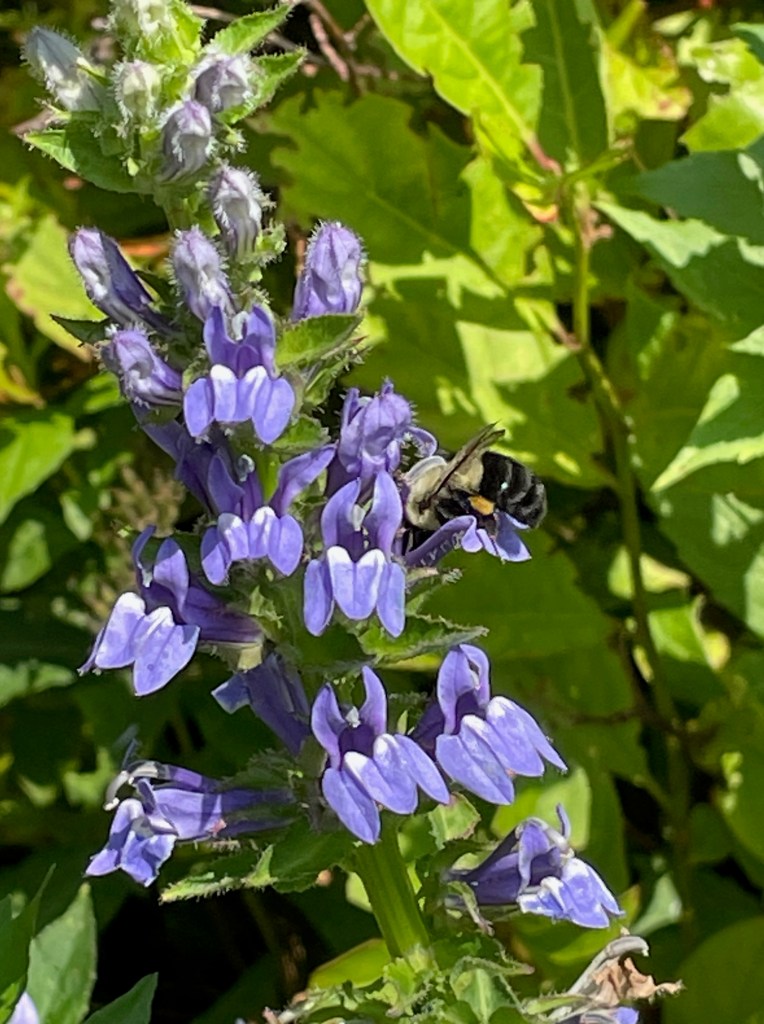
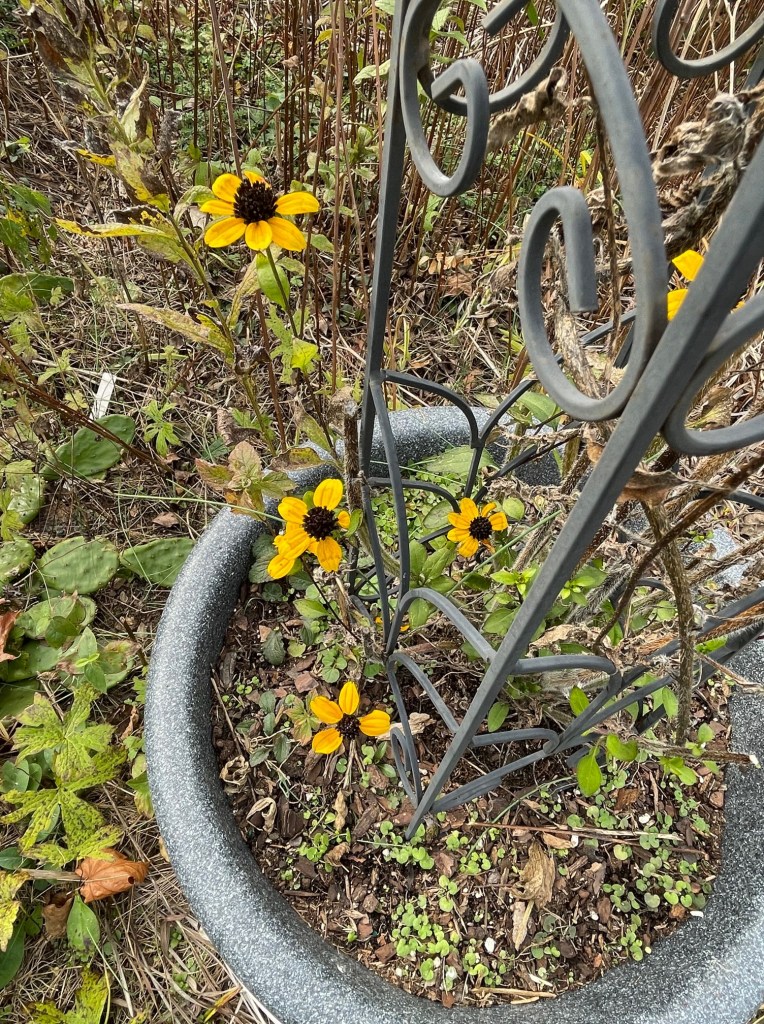
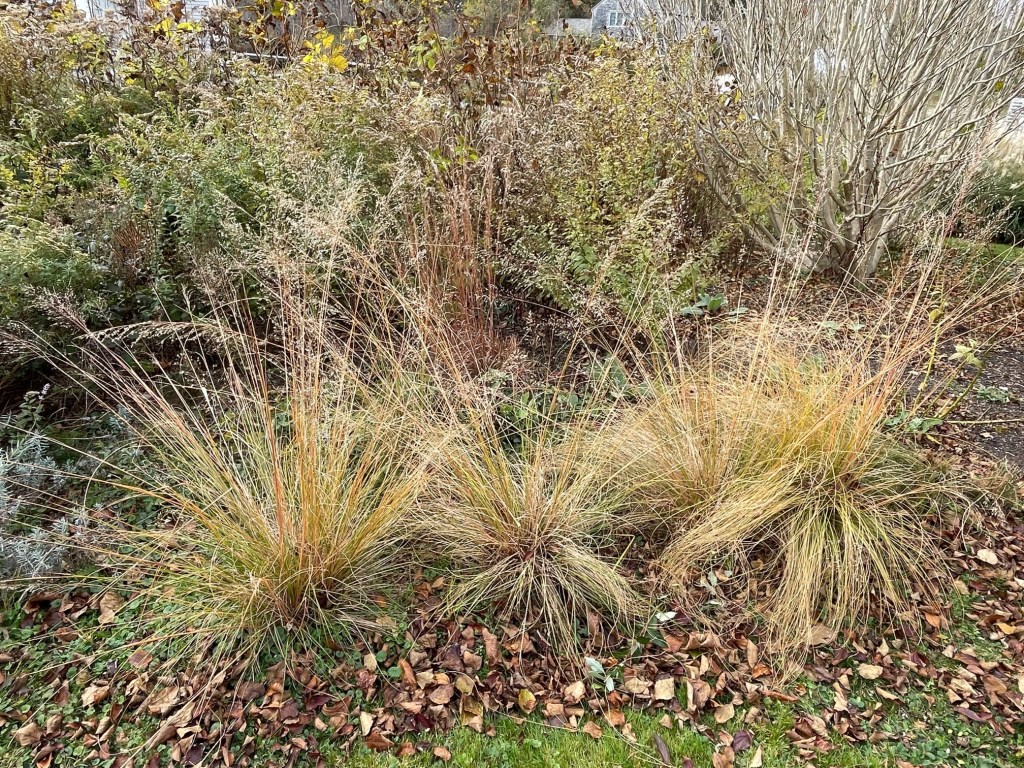
The fall gardening routine has become pretty simple since I gave up cutbacks and garden bed cleanups to retain habitat for overwintering insects and seeds and nesting materials for birds. That meant that in the South Border, there was no work at all to be done and I was able to just enjoy the last of the flowers and grasses.
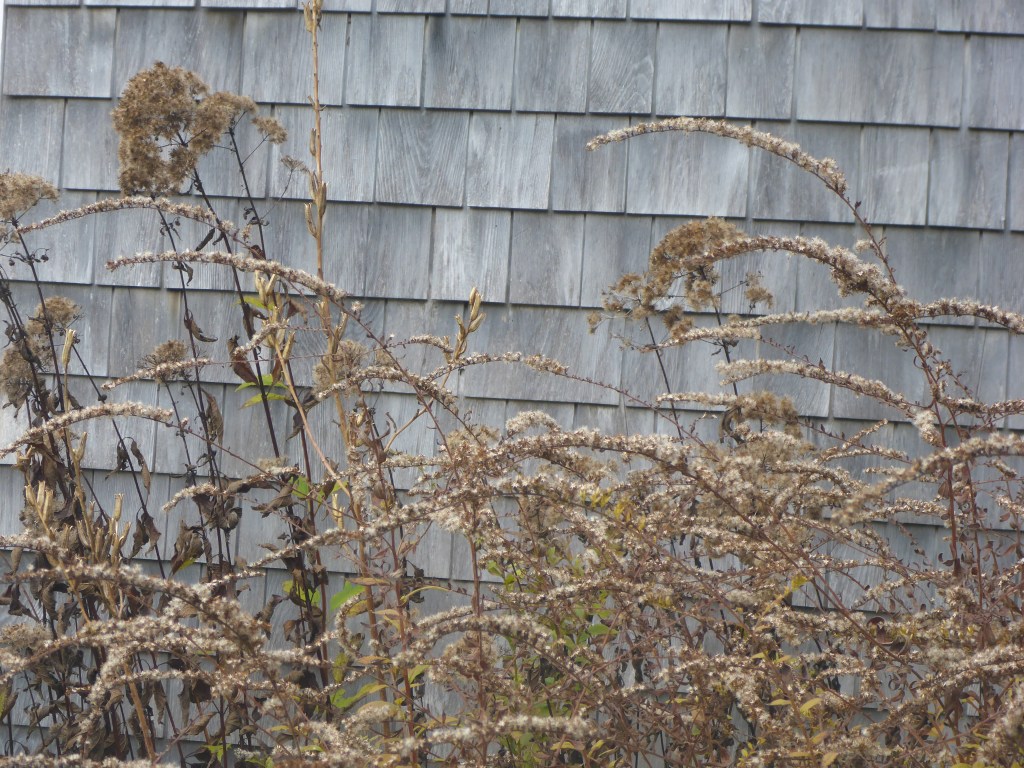
The Glory Garden had a few final weeds to pull, mostly Canada goldenrod that seems to pop up continuously throughout the season. But I did leave the dried flowers of the ‘Fireworks’ goldenrod that looked stunning against the gray shingles of the house.
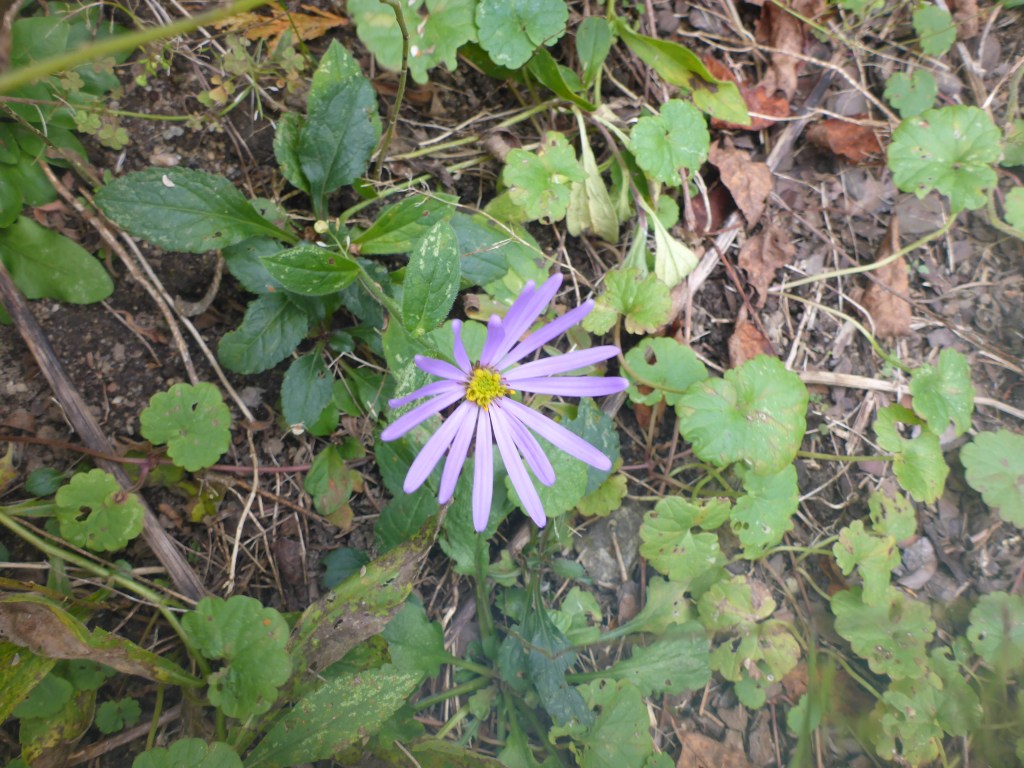
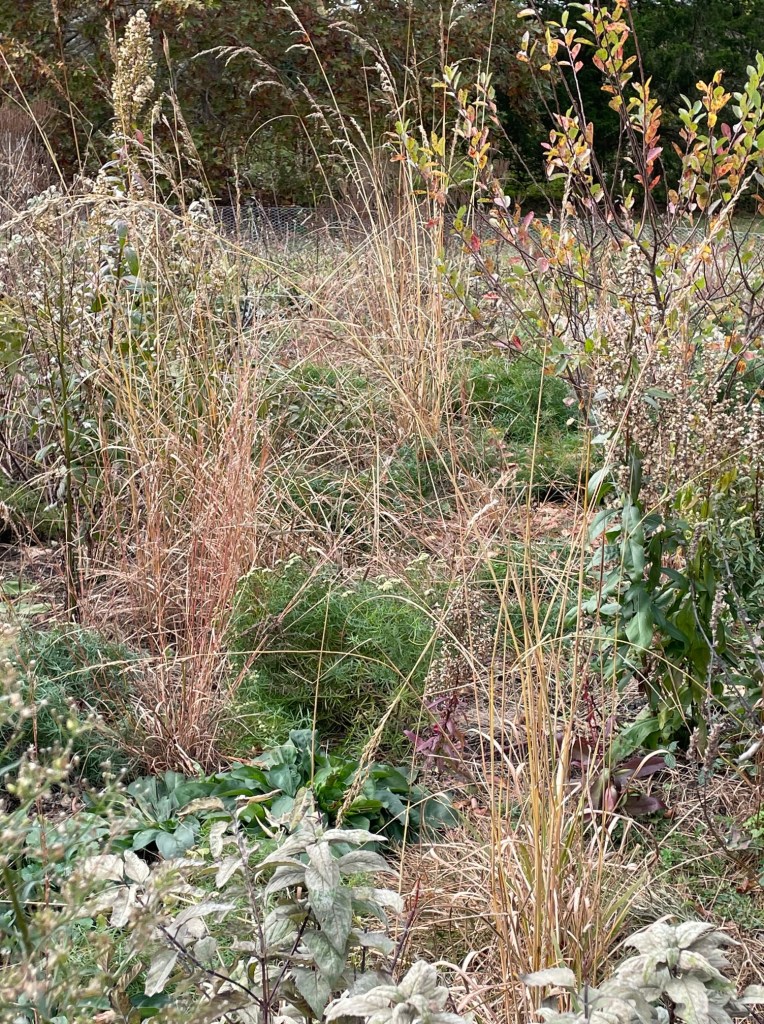
Up in the meadow, I felt compelled to finish weeding out the crabgrass that popped up in the summer. I had taken some out earlier, along with the spotted spurge weeds, but there was enough left to warrant another round of weeding, even if the grass had already gone to seed. That means more weeding next year, alas. In between weeding sessions, I was able to sit on the bench and admire the beauty of the dried stems and grasses, just adding to my delight with the new meadow.
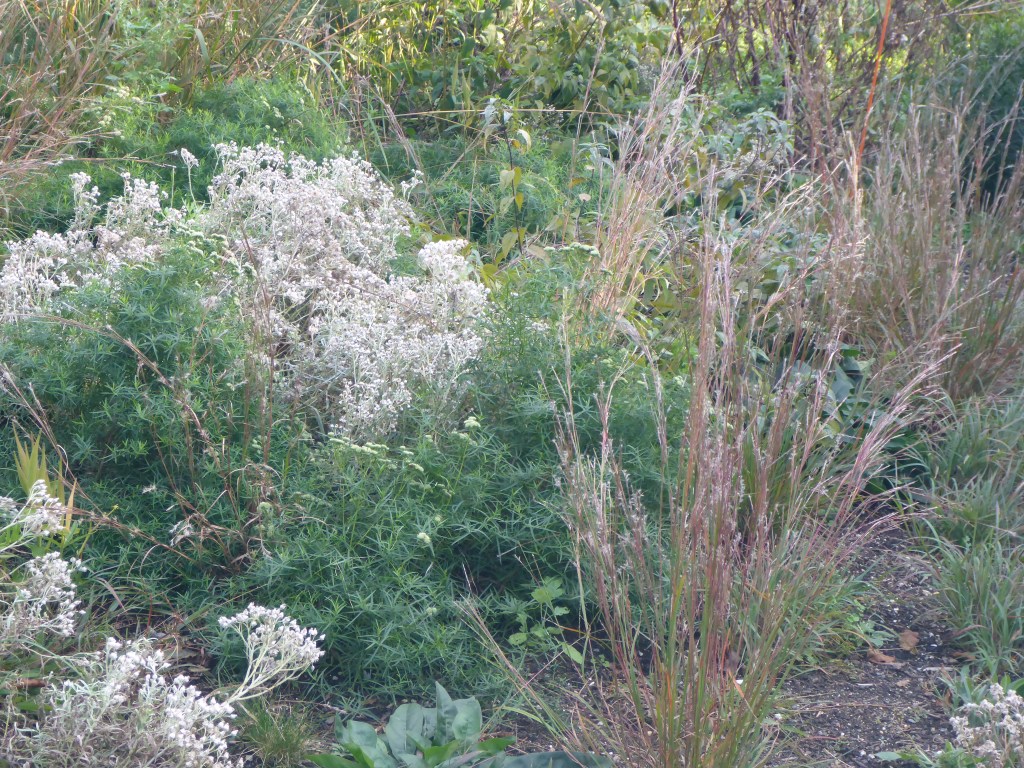
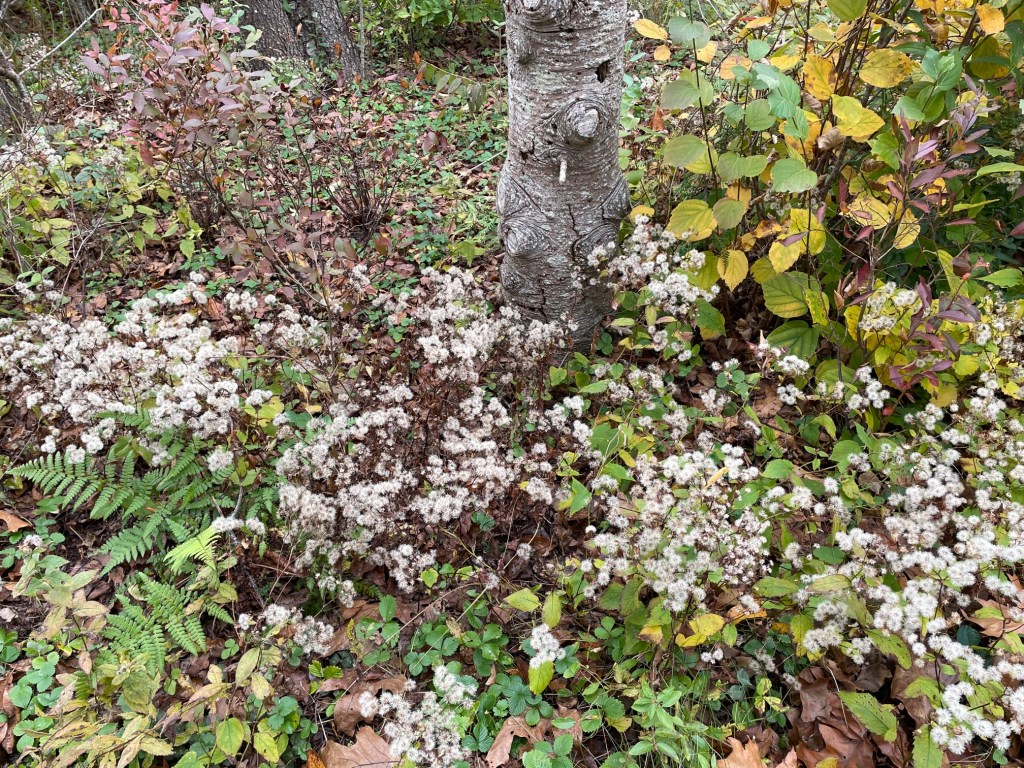
In the woodland, the white wood aster bloomed prolifically. Here, as elsewhere, there was no cleanup, but I did find a number of new porcelain berry vines and some foot-tall tree of heaven saplings, both of which needed to be removed. So, I spent some time with my small shovel, clippers and herbicide, trying to remove those plants and a few others around the yard. For the small stems in an accessible place, the preferred approach is to dig it out. You need to get the top several inches of the root structure at least, and even better, the entire root system. If it’s a thicker stem or the roots are inaccessible (e.g. it’s growing out of the middle of a shrub or clump of ground cover), then I clip the vine as close to the ground as possible, and immediately dot on a small amount of herbicide. If it’s a thick stem, I will clip higher up so that I can come back a week later and cut closer to the ground and do another herbicide application. While I no longer use any other pesticides, I have concluded this is a reasonable trade-off – a very small amount of herbicide will prevent thuggish invasives from outcompeting the valuable native plants.
Foliage
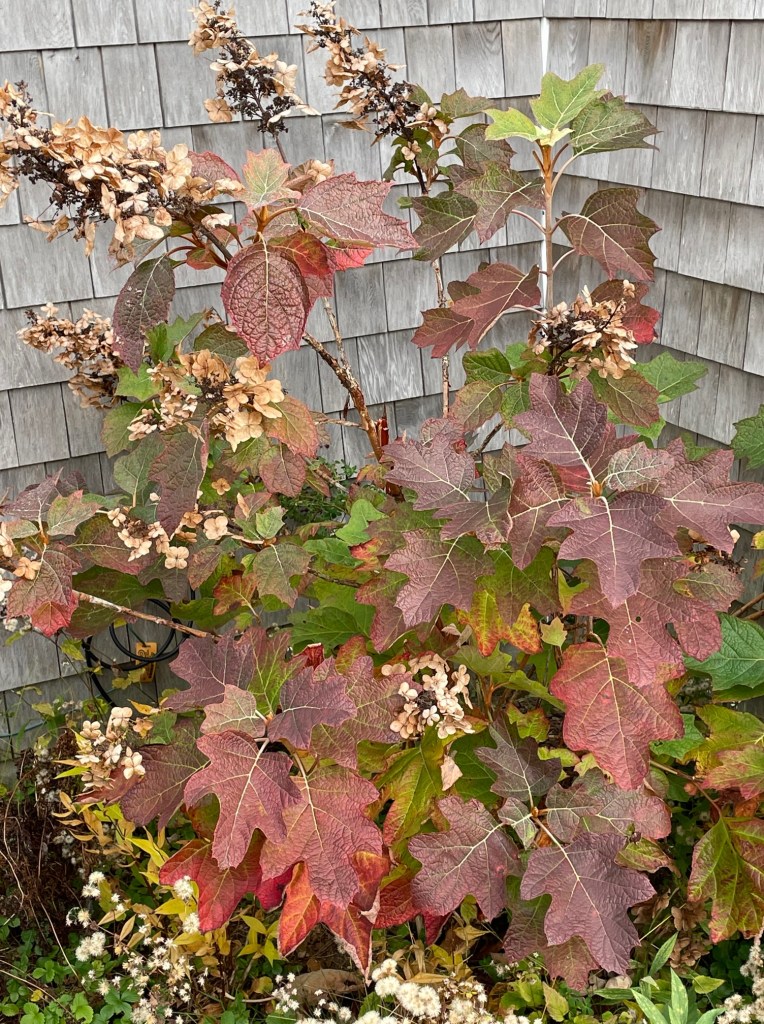
It wouldn’t be fall without pops of great foliage color. The oak-leaved hydrangea turns deep burgundy in early October and the leaves ad dried flowers stay on the shrub until December, so I’m glad this is near the front of the house where I can see it daily.
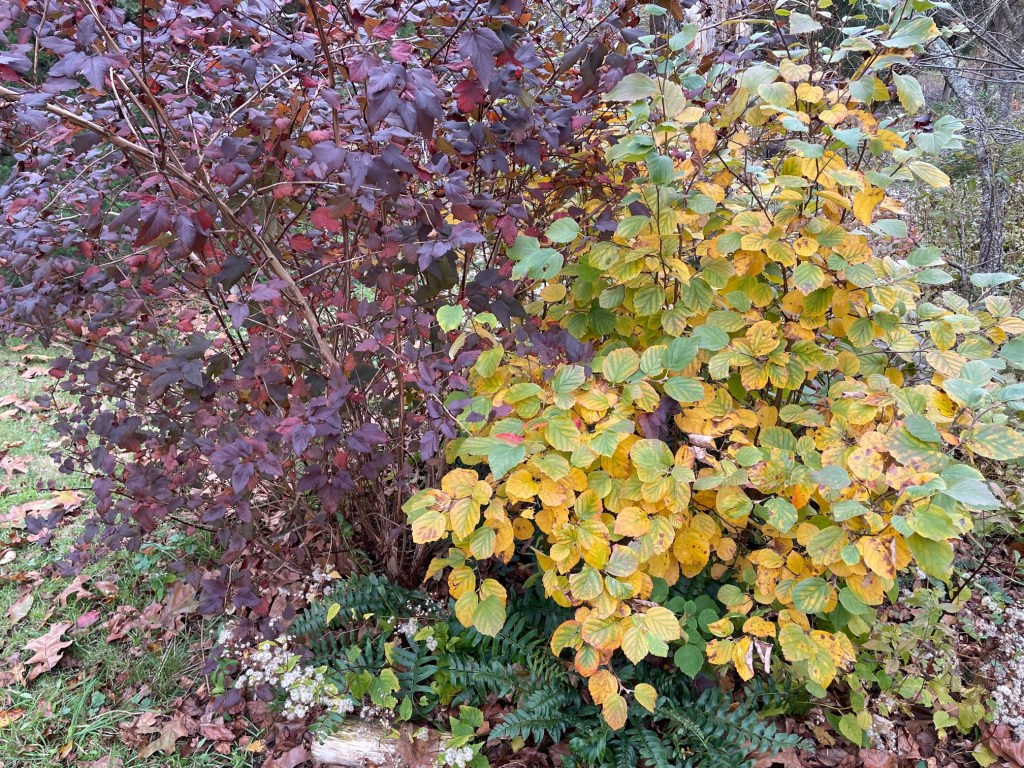
In the woodland, the greenish-purple leaves of the ninebark shrub also turn burgundy, while the fothergilla next to it turns golden yellow, a lovely combination. As the fall progresses, the burgundy gradually lightens to a brighter red.
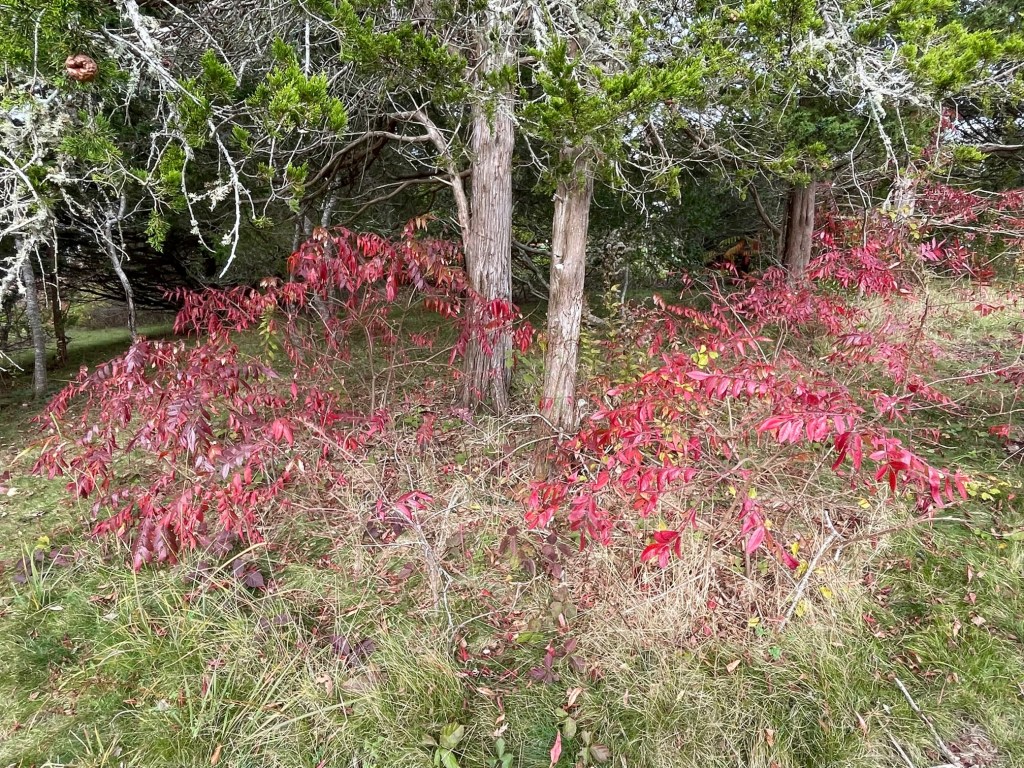
In the upper field, above the meadow, I have decided to just stop mowing and see what comes up. Of course, some invasive have sprouted, but not that many since we have been mowing this area for five years. Instead, the native winged sumac is spreading. It makes a lovely patch under this old cedar, and as a bonus it turns bright red in the fall.
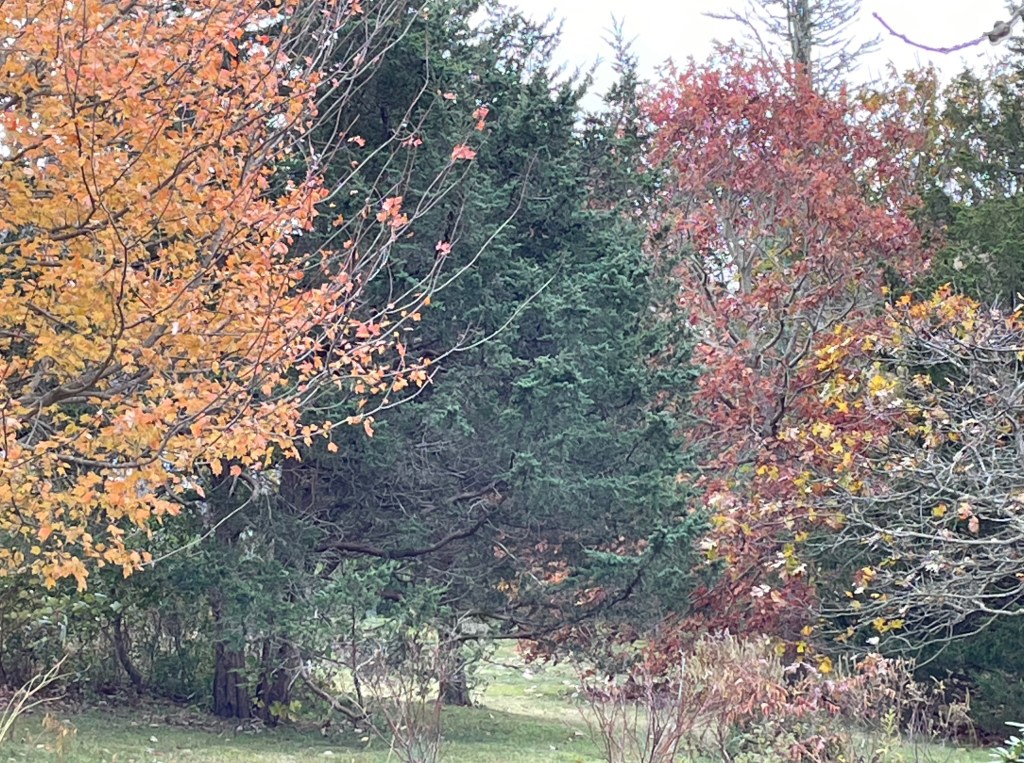
Finally, this is the view from the living room window at the very end of the season, just before our hard freeze. The red maple on the left is past prime, but still nicely yellow orange. And behind and in contrast with the red cedar, the white oak is lovely russet color, the perfect embodiment of fall.
 Goldenrod Garden
So much to enjoy in your garden! It looks beautiful.
LikeLike
Thanks, as always, for sharing your beautiful garden!
LikeLike