It’s been forever since I last thought about gardening – we traveled for two weeks in Italy, and then came down with Covid, so I’ve been out of the garden for well over a month. I’m itching to get back, but the amount of weeding to be done before the end of the season is daunting! I will make a valiant attempt while I enjoy the end of season blooms as well.
For now, I want to give you an update on the meadow planting I posted about here. It has had its problems (more on that later) but overall, I’ve been thrilled. Strong growth of all the perennials, good progress on most of the grasses, lots of blooms in combinations I love, pollinators galore – all that made for delightful strolls around meadow, feeling pleased that the plan and the design are working out.
Here are some general photos of the meadow, month by month.

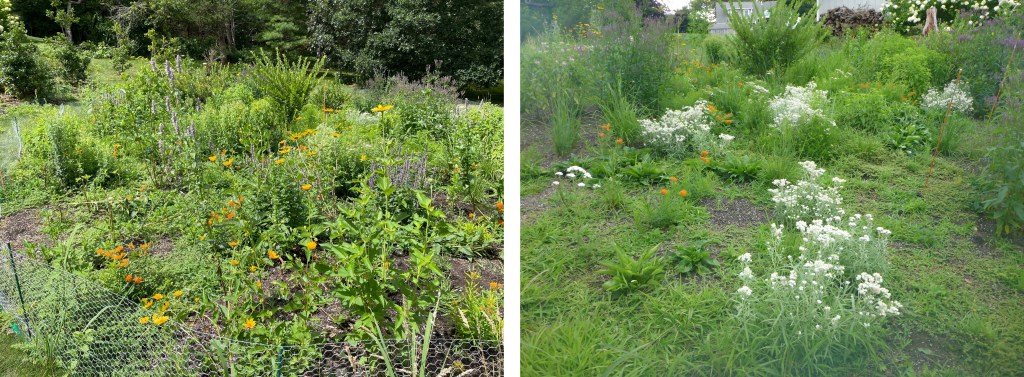

The maintenance regimen for the meadow was pretty simple. In May and June, which were quite dry months on the Cape, watering was every 3 days, using an oscillating sprinkler attached via hoses to our well. In July, after the rains started, the frequency was reduced to every 5 days, and I turned it off completely in the middle of September. Because there was plenty of open space, there were plenty of weeds, too. Early in the season I could weed the entire meadow in about 2 hours. In late July, when the spotted spurge and crabgrass were growing, it jumped up to about 6 hours, spread over a weekend. I am optimistic that in future years, with less open space, there will be fewer weeds.
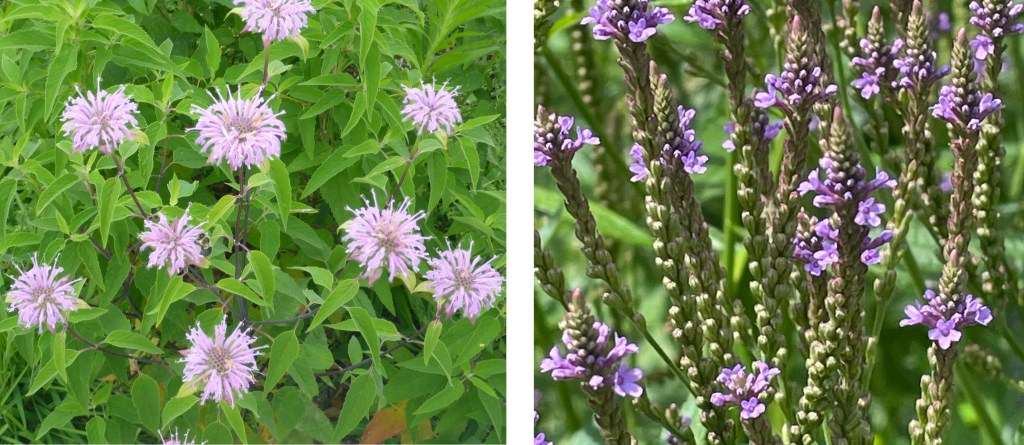
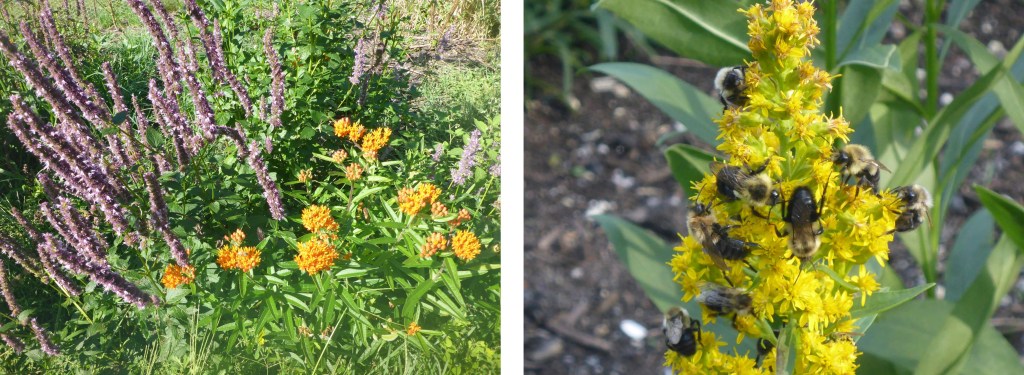
Here are some of the combinations and individual plants that I found particularly fun.
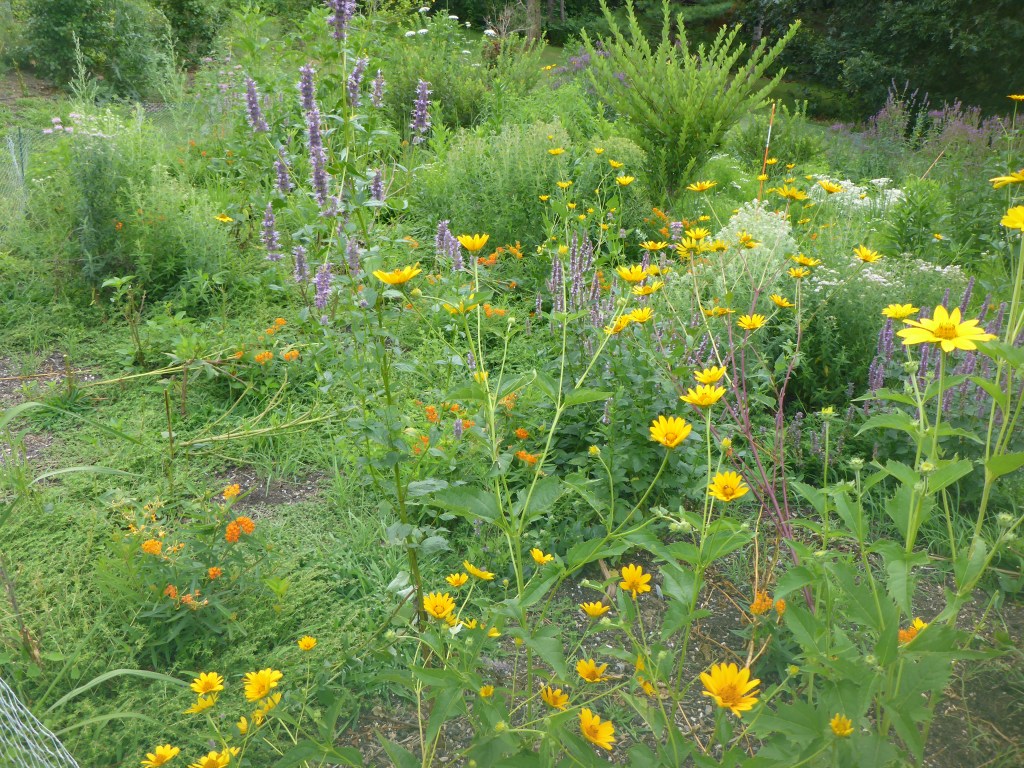
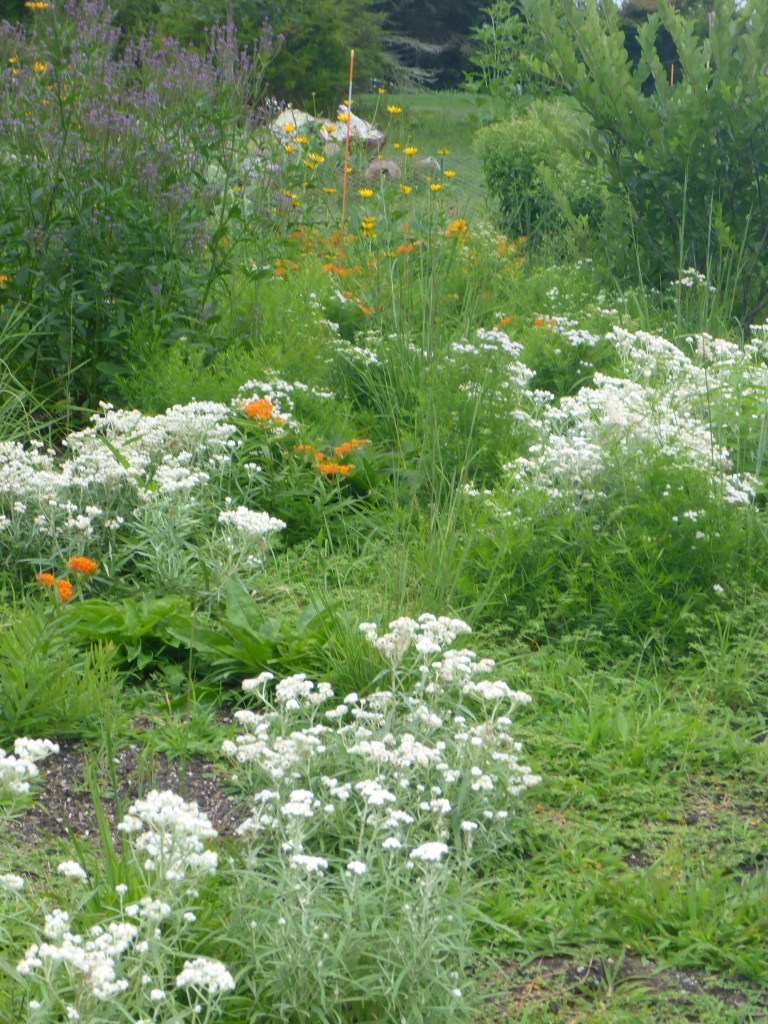
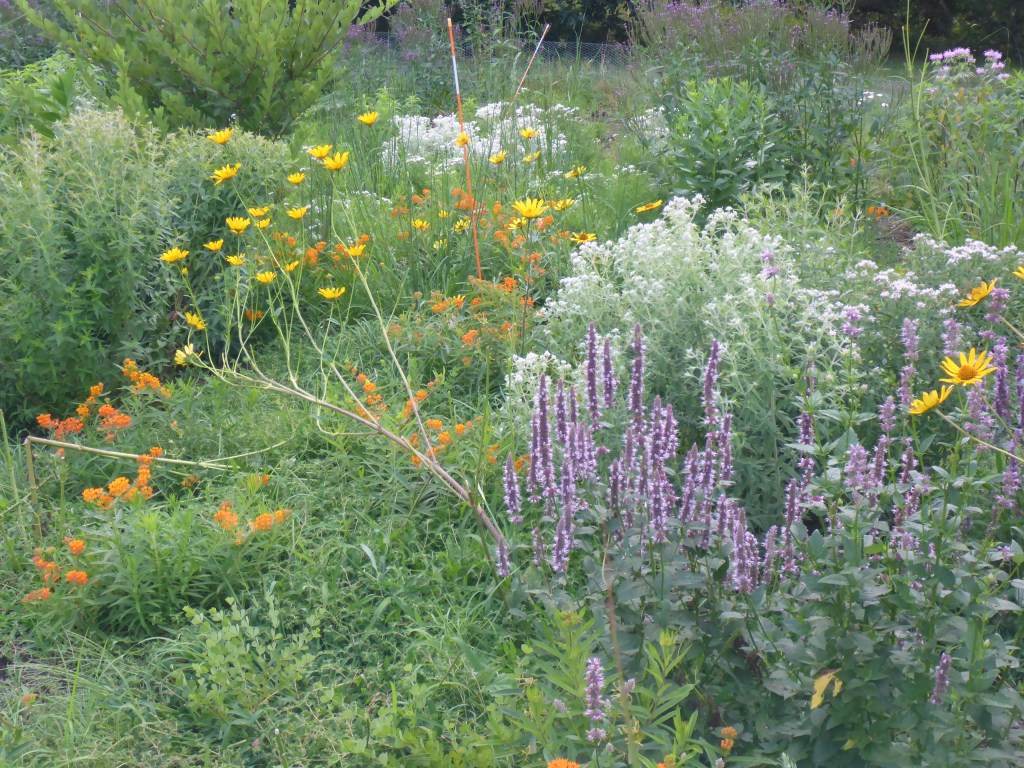
There was one section that was problematic, the lowest section. First, I didn’t have enough plants for that section – I had intended to put in more milkweed, but the nurseries were sold out by the time I got there. I did plant several dozen black-eyed Susans that I had grown from seed to fill in. But they were done in by the next problem – rabbits figured out how to tunnel under the fence, then to go over the parts that were sagging down. After installing many more ground staples and supporting stakes, the rabbits seemed to be staying outside the fence, but the damage was done. Finally, all that open space led to proliferation of weeds, which I still need to finish getting up. Why didn’t I use a mulch to suppress the weeds? The reason was that I sowed grass seed – purple lovegrass in this section, little bluestem further uphill – and they need direct sunlight to germinate.
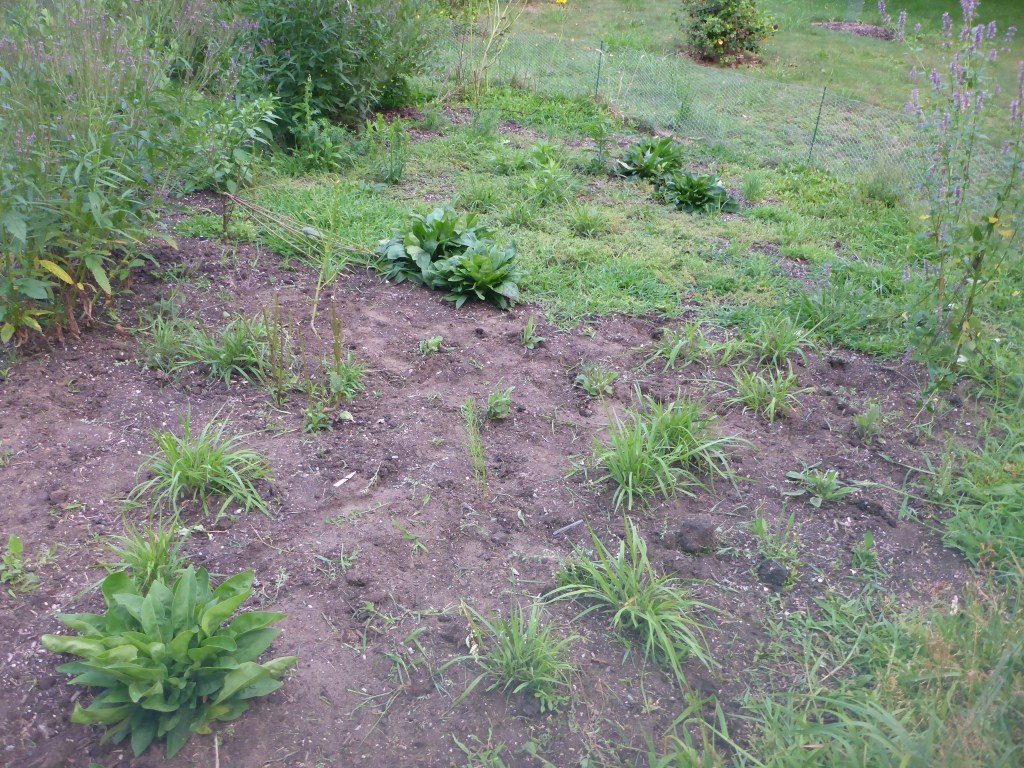
The plan for the fall and winter is to let it go dormant and leave all the bare stems for pollinators and insects to use as winter habitat. In the late spring, probably May, I will cut down the dead stems and leave them in the meadow on the ground. I will also need to plant more grasses throughout and more flowering plants in the problem section. By the third year it should be settling in to be the low-maintenance, beautiful, and pollinator-friendly meadow I envisioned.
 Goldenrod Garden
Spectacular! Shows how your good planning pays off. I hope you get some time to sit and relax there too. Love the variations in color, shape, textures
LikeLike
Your meadow is lovely and your plant selection is inspiring me to add some of your plants to my garden.
LikeLike
Love it!! This was definately the year for crabgrass!!
LikeLike