As usual when I travel, I spent as much time in Ireland looking at wildflowers than at the scenery. Much of what I saw was familiar, but I also found some delightful surprises.
Context: Climate and Natural History
To appreciate the mix of flora in the landscape, it helps to keep in mind both the climate and the country’s natural history. Ireland is quite far north, on a latitude parallel to Newfoundland and Attu Island in Alaska, so you would expect it to be cold. But it is warmed and cooled by the Gulf Stream, so temperatures fall in a rather narrow band. The low in winter is in the 30’s F and it rarely snows, and if the summer temperatures exceed 70 F, it is considered “boiling”. It is quite moist as well – rain falls every month of the year, totalling50-80 inches per year in the western part of the country, and in the eastern half 30-40 inches. This temperate climate allows for a lush green landscape all year long.
You would also expect Ireland to be forested, as most temperate climates are. Indeed, it once was, but is no longer. Most of the country was covered by glaciers until about 13,000 BC, and at that time the sea levels were quite a bit lower, so Ireland was still connected to England and Europe by land bridges. When the glaciers started retreating, plant and animal species migrated into Ireland directly across those land bridges. That period of species migration was relatively short as the sea levels cut off the land bridges by about 10,000 BC, so the total number of species is lower than most European countries.
Many of those species were trees, the land was forested, and the earliest settlers, hunter-gatherers who arrived about 7000 BC, did little to disturb the landscape. The next wave of settlers, though, were farmers, and they began to clear the land for agriculture. By 1000 AD there were few remaining trees. Further harm was caused by extensive sheep farming, which uprooted the vegetation that held the topsoil in place. As a result, only 1% of the land is naturally occurring woodlands today, and farmers struggle with low-nutrient soil.
The landscape has been further challenged in the last few hundred years, as foreign landowners brought with them the trees and other plants they used at home. Many of these have now naturalized across Ireland, some delightfully and others less so. And like most countries today, exotic plants are brought in via ships and imported plants, and some naturalize and become invasive, crowding out native plants.

Along the Roadsides
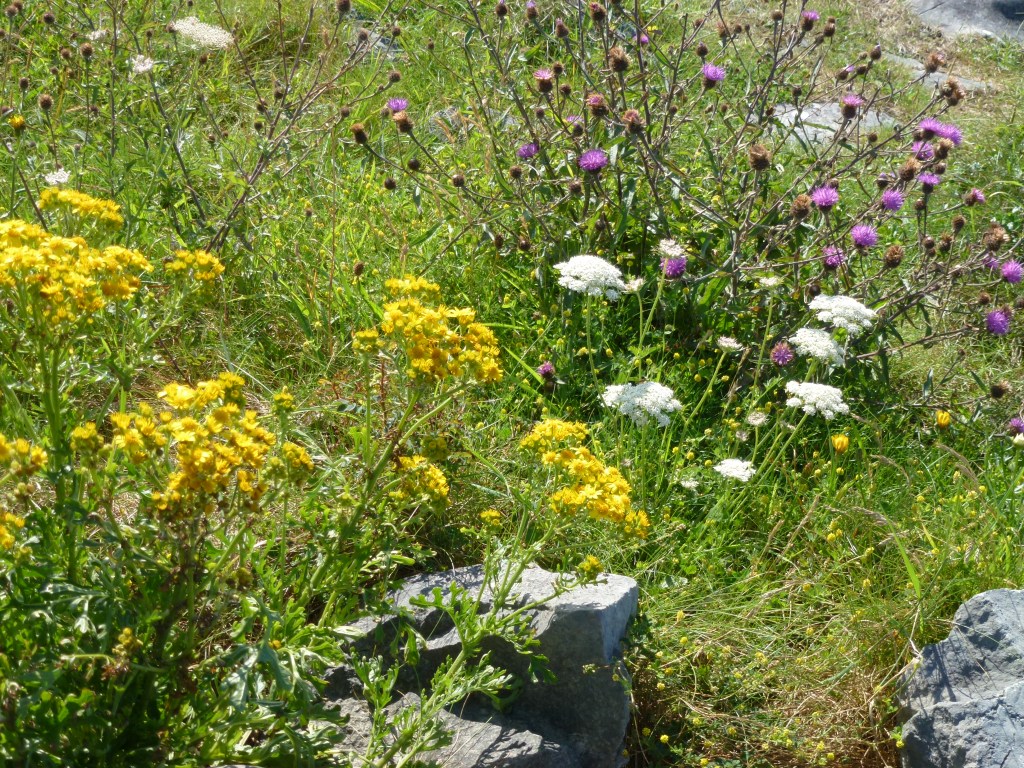
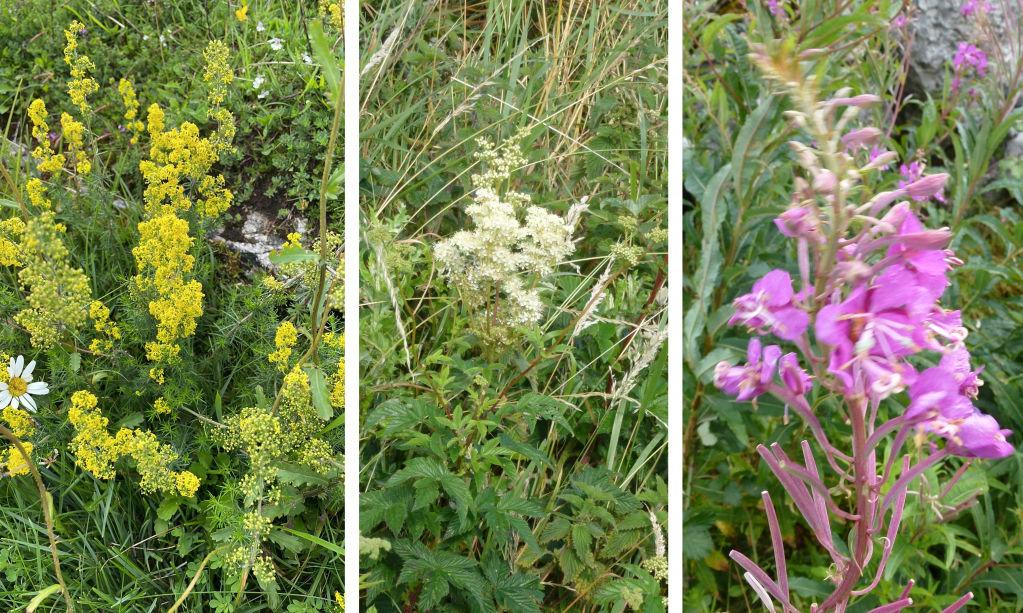
Still, there are plenty of native plants in Ireland taking advantage of the great growing conditions: to be exact, 814 flowering species, 78 ferns, 21 broad-leaved native trees and three native conifers. I was delighted to find many roadside flowers in bloom. Note that I have tried to identify these plants as best I can, using both the Apple and Picture This apps, plus the Complete Guide to Irish Wildlife that I bought, but I make no claim that the identifications are 100% correct!
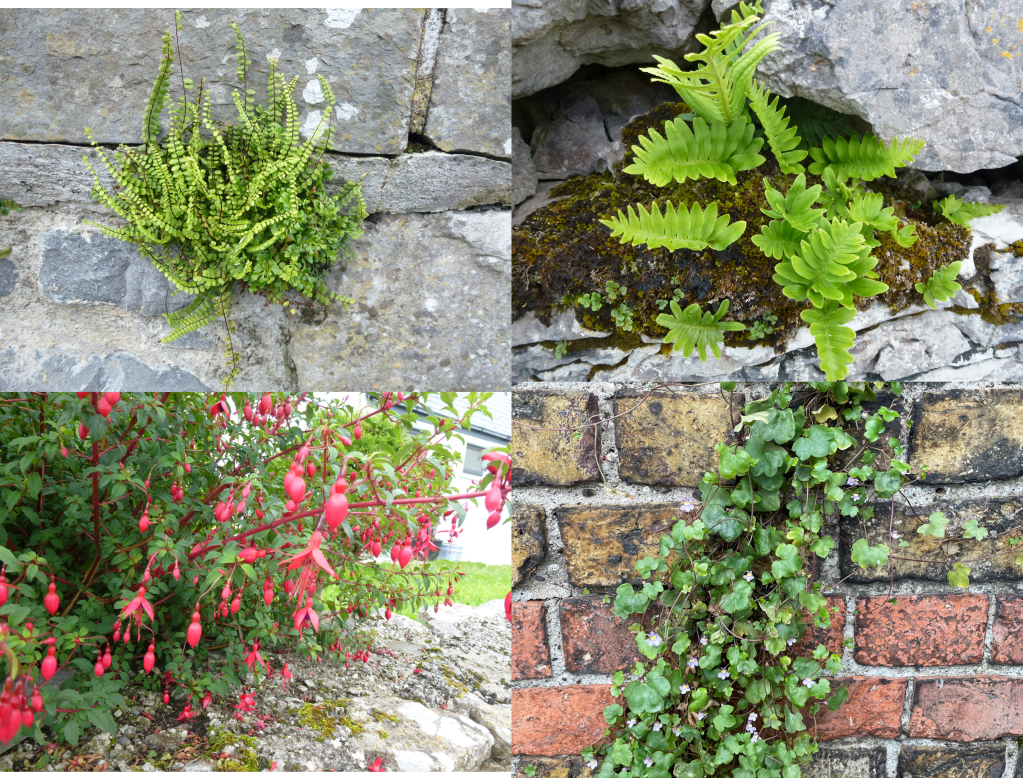
Plants grow everywhere, including out of the ubiquitous stone walls.
We noticed many areas are being deliberately managed for wildflowers and pollinators.

This is the Cliffs of Moher, one of the great natural attractions in Ireland. In the US, there would be carefully tended lawn area framing the view, but here there are unmanaged swaths of wildflowers.


The Burren
The west coast of Ireland is blessed with stunning landscapes, none more so than the Burren, a 200-square mile section of Ireland on the west coast just south of Galway. It consists of limestone hills, many of which are exposed as rock or deeply cracked escarpments. The soil layer is thin and calcareous, and it supports a startling number of forbs and small flowers. Actually, most of the 814 flowering species occur only in the Burren, and they include plants that survived the ice ages as well as Mediterranean plants, all in the same habitat.
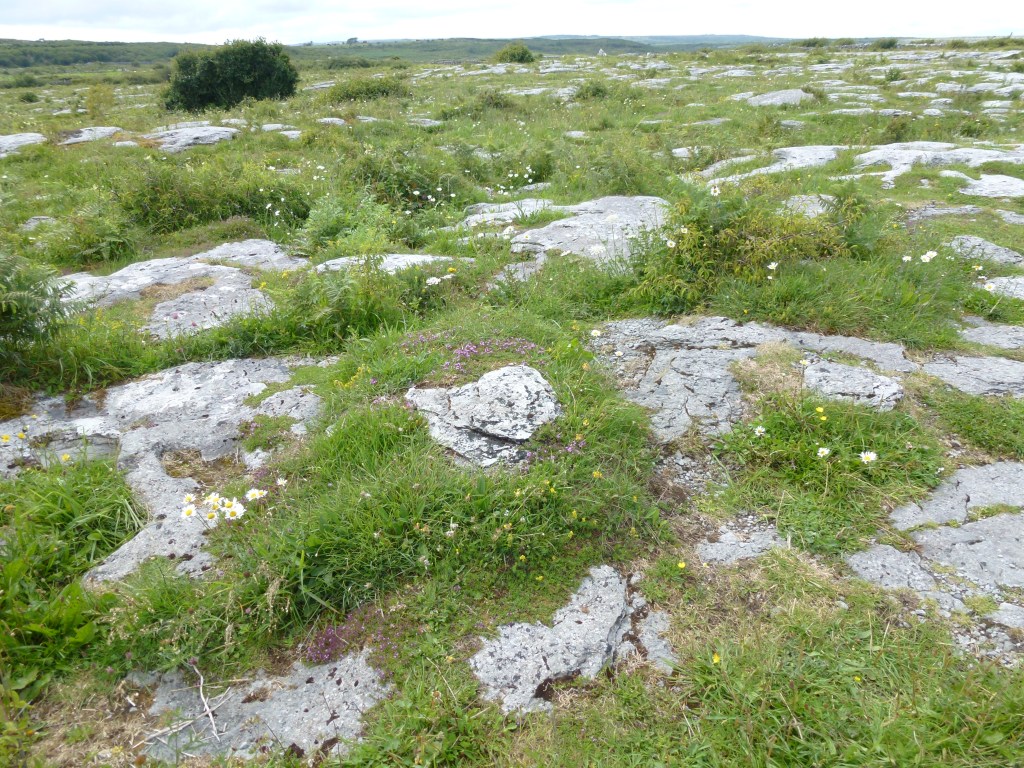
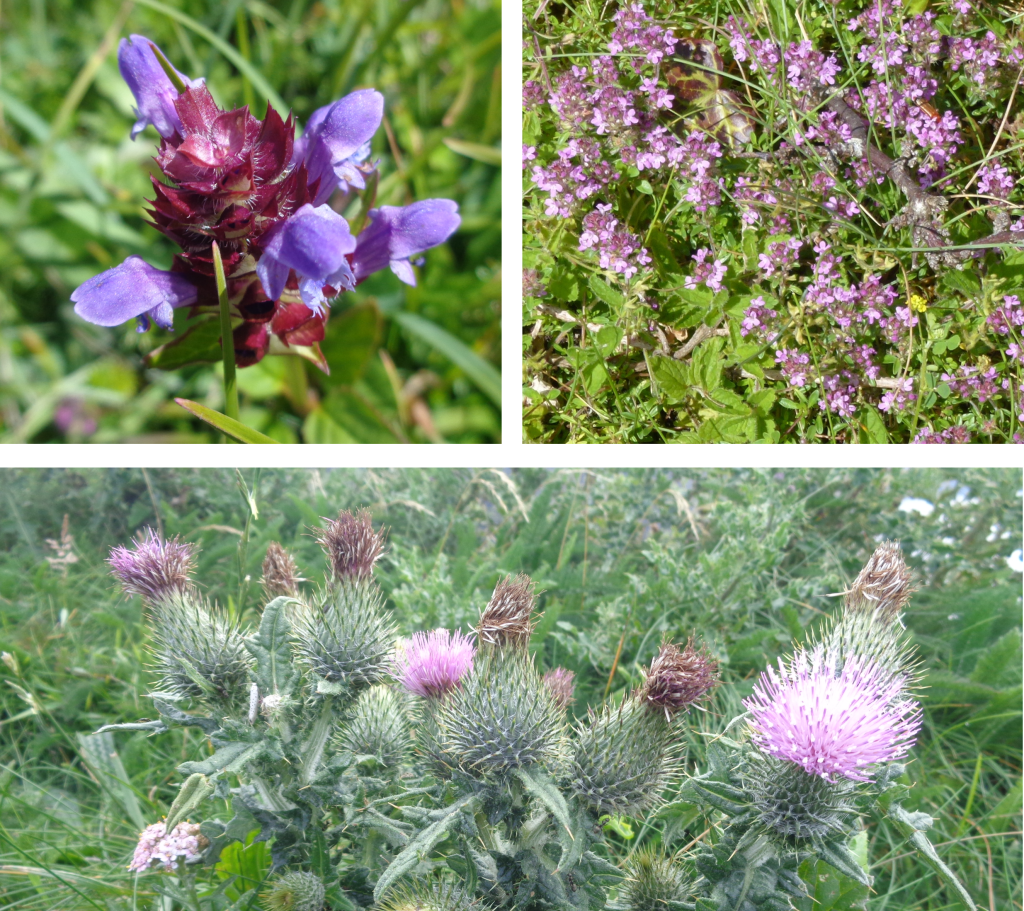
We were fortunate enough to have a local guide take us on a walk through the Burren and point out many of the wildflowers. Here are three that were new to me, and three that were familiar.


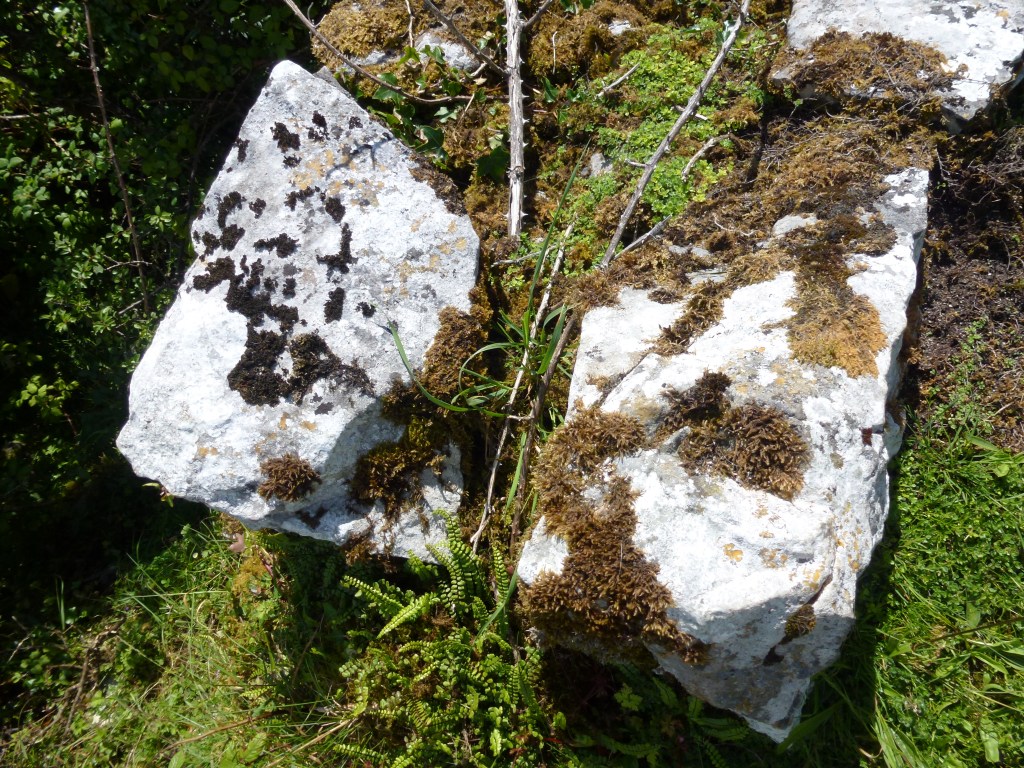
Last but not least, there were mosses, fungi, and lichens everywhere. In fact, there are 759 different mosses and liverworts, including 29 species of sphagnum moss, 3500 identified fungi species, and over 1000 lichens. I guess it’s the moist and temperate climate!
 Goldenrod Garden
Wonderful tour of the beauty & natural history of Ireland! Thank you.
LikeLike
What a wonderful trip. Thank you for sharing all the beauty and information.
LikeLike
Thanks! This was an interesting read and lovely to see some of the wildflowers. The Burren sounds fascinating.
LikeLike
[…] post/photo essay: Ireland in Bloom – Wildflowers (Cathy Weston/Goldenrod Garden). Roadside flowers, flowers growing in stone walls, and flowers […]
LikeLike