My native plant journey has included lots of classes, webinars, and reading, but I most enjoy a well-written and insightful book that I can pore over on a winter afternoon and then use as a quick reference all year long. The good news is that the last few years have seen some terrific books that address ecological gardening, each in slightly different ways, and I have bought many of them! Here are six books I have found the most inspirational and reread multiple times, and I wholeheartedly recommend each of these books. The first two are for those just getting started, and the other four are more advanced.

The Living Landscape by Doug Tallamy and Rick Darke. This was the book that introduced Doug Tallamy’s research into the importance of native plants for sustaining insect populations and therefore the food web and ecosystems in our landscape. Darke shows examples from his own garden on how lovely and inspiring a garden with native plants can be. This book is what made me say “I want to do that – improve the ecosystems and make a beautiful space.” Both authors went on to write other fantastic books, including Tallamy’s Nature’s Best Hope and Bringing Nature Home, and Darke’s American Woodland Garden.

Northeast Native Plant Primer by Uli Lorrimar. Uli is one of the Northeast’s most noted native plant horticulturalists, having been with the Brooklyn Botanical Garden and now the Native Plant Trust. Getting into native plants requires learning a whole new plant palette, and Uli’s recent book is a great way to get started. The book includes 235 reasonably in-depth profiles of both common and unusual plants, with enough description to be confident about how to grow each plant. He also has a useful introduction that includes such encouraging tips as “No gardener can predict with 100% accuracy whether a given plant will work in their landscape. We just keep learning and getting better at predictions.” (my paraphrasing) Even though I have been planting with native for 10 years and am familiar with most of these plants, I am learning more about the plants I know and becoming aware of many new plants I might try. I’m glad I added this to my library.

Planting in a Post-Wild World by Thomas Ranier and Claudia West. Ranier and West make the case that planting with native plants is best done by expanding our ideas of planting design in two different ways. First, native plants will look most at home if we emulate/take inspiration from the naturalistic styles of natural plant communities such as forests, woodlands and grasslands. Second, we should design our gardens as complete communities, including a ground layer as a living mulch in addition to the herbaceous and woody layers above. For me, this served as a great foundation for understanding how to evolve my gardening from traditional horticulture to a more ecologically friendly approach.
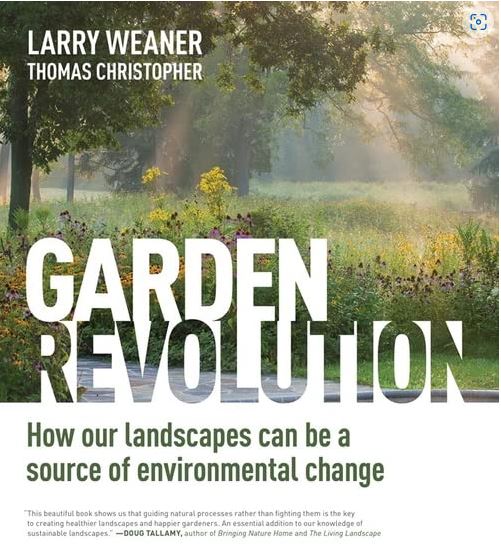
Garden Revolution by Larry Weamer and Tom Christopher. As more of us move from exotic to native plants, our horticultural practices are changing. Weamer urges us to take this further, evolving from being an ecological gardener to a gardening ecologist, someone who takes full advantage of ecological processes to create a landscape. He advocates anticipating how a designed native plant community is likely to evolve over time and then guiding the community as plants select their growth niches and reproduce. He offers a variety of practices to help this along. This is particularly helpful for me in the section that is being restored to a coastal woodland,
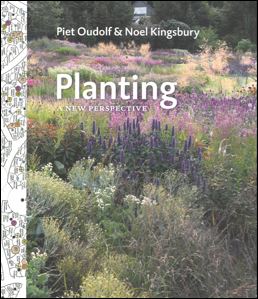
Planting Design by Piet Oudolf and Noel Bradbury. Oudolf is renowned for his gorgeous naturalistic plantings, and in this book he and Bradbury unveil the design principles and methods that yield such a wonderful result. Oudolf takes a very systematic and disciplined approach based on his knowledge of the plants and their characteristics, which leads to novel and effective plant combinations. Interestingly, he uses many North American native plants in his designs, and I have one particular garden bed that I am trying to plant using his methods. Alas, I am not the artist Oudolf is, but I’m learning!
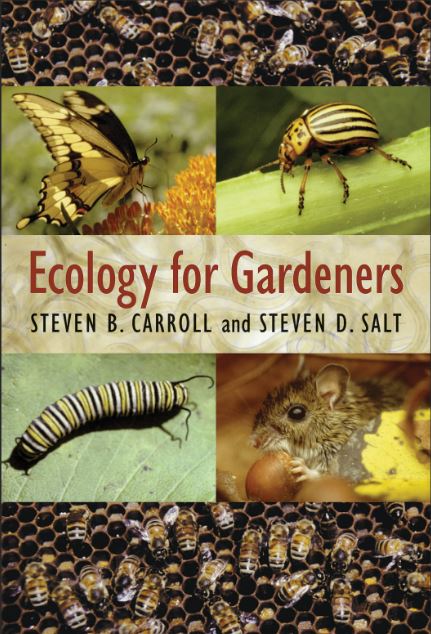
Ecology for Gardeners by Steven Carroll and Steven Salt. For a while now I’ve also been dissatisfied with just relying on the general wisdom about growing plants and wanted to know the “why” behind that general wisdom and what was actually happening in the garden. I needed more science, but I didn’t want to go back for a degree in ecology. So, I looked around and found this book. It is clearly a textbook, dense with information – aimed, I would judge, at a 200-level college course.
It is organized into 6 major sections. The first two cover things you probably already know – the nature of plants, and the other critters that also live in the garden. Still, it was good to review this information in an orderly context and to pick up some new nuggets along the way. I learned more in-depth about photosynthesis and plants’ growth cycles, and the implications for gardeners. For instance, it is the tiny root hairs at the tip of the roots that actually absorb water and nutrients, and because these tiny hairs are always disturbed when planting and transplanting the plant has to “get established,” meaning regrowing those root hairs so they can resume their growth cycle.
The next 3 sections cover the garden environment itself, how plants interact within the environment, and how plants interact with the other creatures in the environment. I took pages of notes on such topics as what minerals plants need, how plants deal with the wind, competition among plants, and herbivory and predation. The last section is on the gardener’s role in managing garden ecology, from stewardship responsibilities to interventions to holistic gardening. Overall, this book has given me deeper insights into the ecology, which can only help me be a better gardener.
 Goldenrod Garden
Cathy, Thanks for these book recommendations. The first three are favorites in my gardening library, really terrific — the last three I do not know and will investigate!
LikeLike
Thanks for your recommendations.
I would like to let you know about a newly published book – The Gardener’s Guide to Prairie Plants which is written by Neil DiBoll and Hilary Cox.
This is the only book that has photographed native plants in 5 stages of growth from seedling to mature. It is the final work of over 20 years of tedious gathering and recording information on native plants.
The Gardener’s Guide also gives information on propagating, soils, insects, birds, mammals, insects, and including specific directions on how to plant prairie plants.
It is an incredible resource with a recommendation by Doug Tallamy as the one stop compendium for gardeners using prairie plants in their gardens.
I hope that you will find this book as one of its kind as a complete reference book for native plants.
Thanks for all of the information that you provide to many gardeners! We have to do everything that we can to help the planet survive!
Best wishes
Beverly Russell Master Gardener and National Garden Club member for over 20 years, gardening in Indiana and Massachusetts.
beverlyjrussell@live.com 317-403-0188
Get Outlook for Androidhttps://aka.ms/AAb9ysg ________________________________
LikeLike
Beverly, thanks so much for the book recommendation! I’ve heard webinars with Neil DiBoll and he is a genius with plants. This level of detail of this book sounds amazing, too, and is very rare. My only caution is that Cape Cod gardeners need to consider that our soils are different than prairie soils and should select plants that will thrive in the well-drained, low-nutrient soils that we have here. (I have tried and killed a few prairie plants!)
LikeLike