Spring rains were scant, so the Drought of 2022 began in early summer. The Town first imposed voluntary watering restrictions, then later, mandatory restrictions. I am on well water, so technically the town’s restrictions don’t apply, but we are all drawing from the same aquifer, and all of our groundwater is low, so I had to do my part.
It isn’t always easy to practice what I preach. I know that native plants, when sited in the right conditions and well established, are adapted to our weather patterns. But when I saw them wilting and obviously distressed in the drought this summer, the gardener in me was yelling to go out and water!
I found myself making rules for myself about how to adapt my watering, trying not just to comply with the regulations, but also to water the minimum needed. I grouped plants by category of how much water they would get:
- No water at all: The lawn, of course. The self-planted trees and shrubs in the woodland area and the long-established trees and shrubs around the house. We are one house away from a wetland so what groundwater we have is fairly close, and these trees and shrubs seem to have deep roots that can access that groundwater.
- Regular watering: The new plants I had put in this spring were hand-watered to direct the water just to that plant, not to the beds around them. The vegetable garden was watered regularly. The trees and shrubs planted last year fell into this category too, as they are not yet established, and I am still watering to encourage root growth.
- Reduced frequency of watering. The Glory Garden, Woodland, and South Pollinator border are all mostly established, so during voluntary restrictions I cut the watering frequency by 50% and eliminated it during the mandatory restrictions. The dozen or so pots of flowers were hand watered weekly, instead of the usual twice weekly.
- Exceptions. There are a few trees – an elderly wild cherry, a native dogwood, a redbud – that always seem to droop, although they are well established, so they get some supplemental water occasionally over the summer.
Impact on the Garden
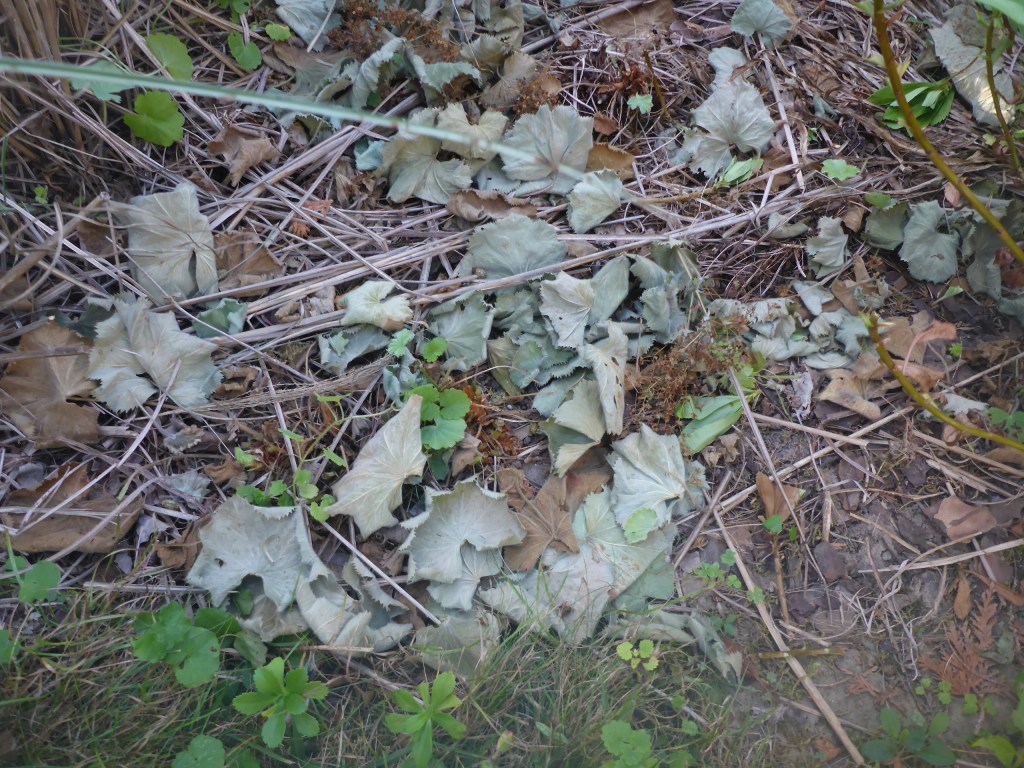
The lawn browned out, of course, and there were far fewer wildflowers in the lawn than usual. As a result, the rabbits had less to eat and started eating more ornamental plants than usual. This continued throughout the season – in addition to the lady’s mantle below, they ate the tops of the sedum Autumn Joy, all my irises, and the variegated Solomon Seal (all of these are non-natives). They avoided the native plants (I have focused on planting only natives they don’t prefer). I made sure to put chicken wire fences around all the new shrubs and trees as I’m sure the rabbits would go after them, too.
Many of the self-planted trees and shrubs did just fine
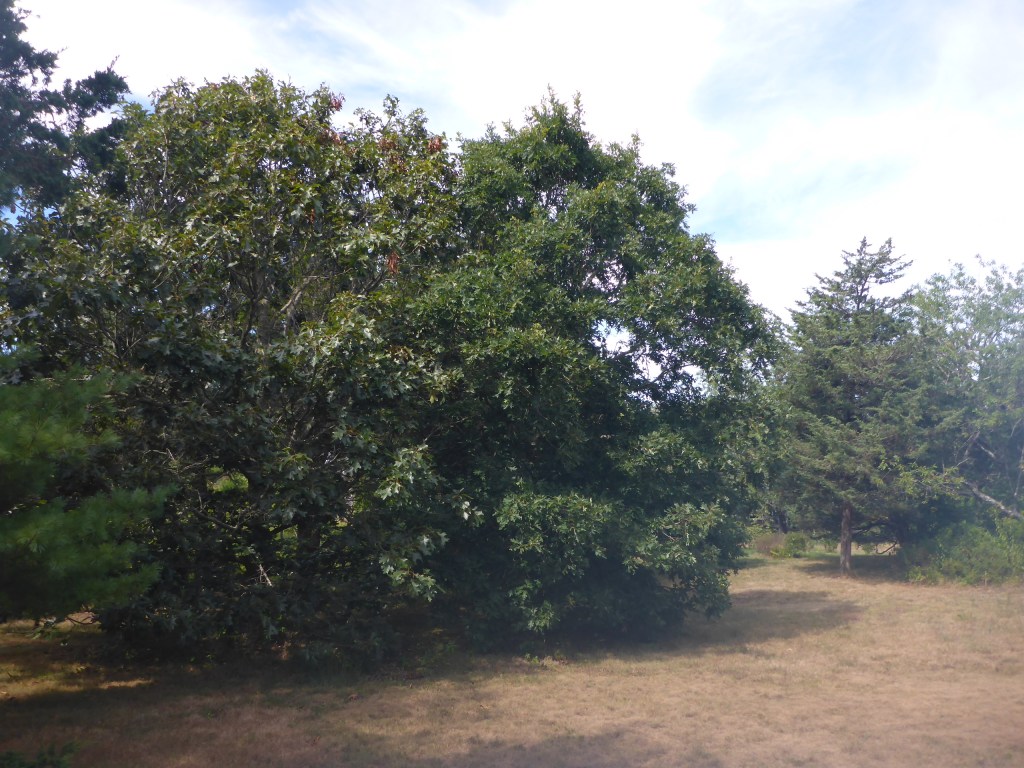


.
But some of them were clearly stressed. especially in the upper field. This red maple has been in the ground for over 5 years, but it is planted in s full-sun spot on a slope in sandy soil, not in the moister environment it prefers. I have clearly pushed it beyond its comfort zone so need to give it some supplemental watering as one of my exceptions.

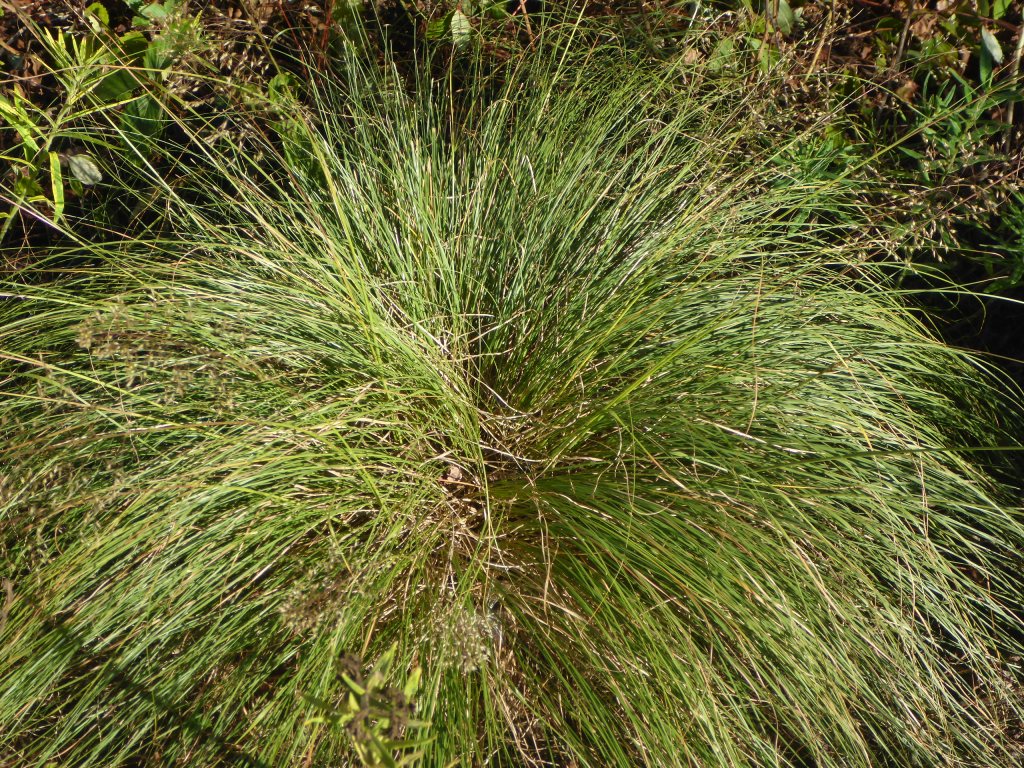
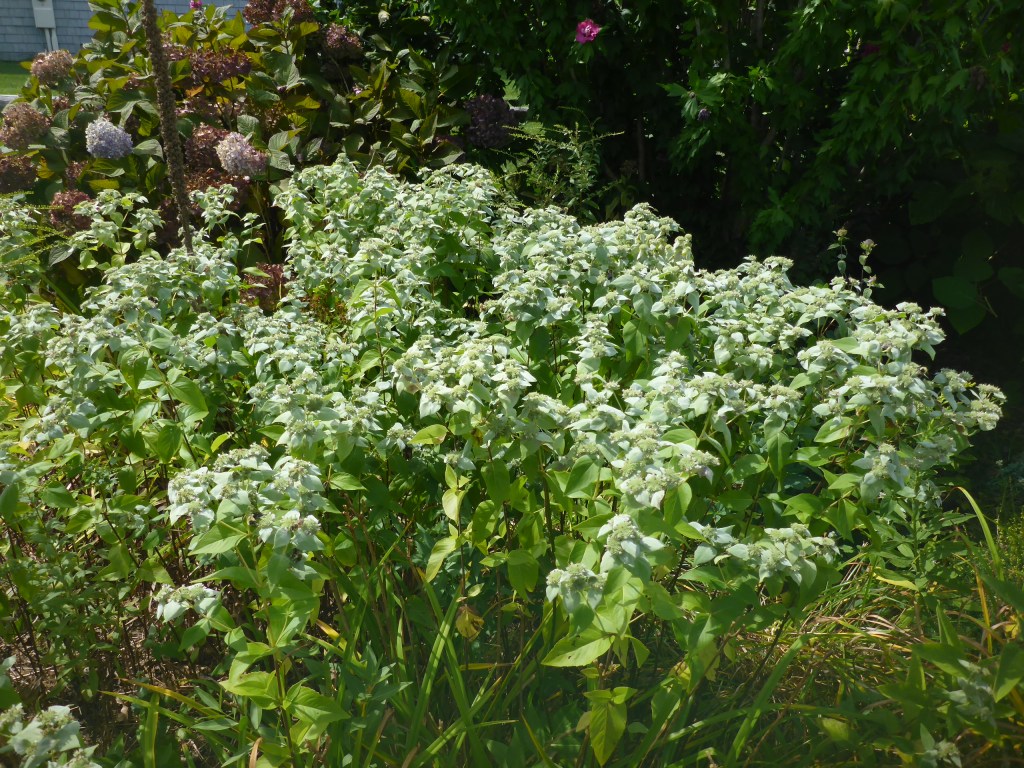
The perennial borders browned just as expected – the plants are surviving but looked pretty tatty, except for a few natives that took the drought in stride – barren strawberry, gaillardia, mountain mint, boneset, prairie dropseed and goldenrod.

Most of the clethra did well, including the well-established large Ruby Spice in the South Border and the smaller Hummingbird shrubs in the woodland area. But two of the four Sixteen Candles, planted just outside the woodland areas, lost most of their leaves in early July. I don’t know for sure why this happened, as these plants have been established for several years. My hypothesis is that micro-conditions are to blame – a bit too much sun and soil that drains a bit too well, as it is on a slope. Interestingly, the Christmas ferns planted around the clethra seemed to be less stressed.


I also want to show you the all-native planting of my gardening buddy Bonnie. She is a very talented gardener who is converting her property to natives. She is also very restrained in her use of supplemental water, but most of her plants were in pretty good shape in July.


Takeaways
This is the third summer in a row with very low rainfall, and without heavy rains in the prior fall and winter to bring water levels back up. The prudent thing to do as a gardener is to assume we will have more years like this, and garden accordingly.
The priority here are the trees and shrubs. This past year I replaced the grass around several planted ornamental trees with a wide ring of mulch. The trees got the standard low-to-no supplemental watering and seemed to fare reasonably well, probably due to less competition for what moisture was available and better moisture retention with the mulch. To help more of the recently planted trees and shrubs withstand low-water conditions, I will be smothering the grass around them with a biodegradable landscape barrier and a lot of mulch.
One interesting aspect was how the micro-conditions that each plant faced determined how well it did in the drought. A little too much sun and a well-draining soil in one spot led to plant stress, but three feet away, the same soil but less sun led to much less stress. I think a good winter project will be re-visiting which plants are located at the edge of their comfort zone and what micro-conditions are affecting them; I may find a need to relocate some plants.
The final takeaway will happen next spring, when we see what plants survived and how well they do next year. There will likely be some pruning to do, after waiting to see if leaves emerge on the stressed shrubs, and some perennials that come back but smaller so beds may need some new plants to fill in. In the meanwhile, the fall rains are underway, and we are all hoping for enough precipitation to replenish the ground water and give us a good growing season next year.
 Goldenrod Garden
Thank you for this drought assessment. I planted hundreds of natives last year and this year, and I could not keep up with hand watering while abiding by the water ban regulations. Some plants shrugged it off— Blue Star, Joe Pye, goldenrod, sumac, beach plum, sweet fern, etc. But new plantings- we’ll see. Clethra did not perform well here. As you suggested I’ll look more closely at micro conditions.
LikeLike