I readily admit that Mother Nature has more impact on the success of my garden than I do. The evidence this year is clear – I followed my normal care routines, but despite some weird weather, new plants and old have done remarkably well. Let me show you – Mother Nature and I are both bragging a bit!
New Plantings
If the rabbits left the new plants alone, then they did really well – robust foliage and great blooms.
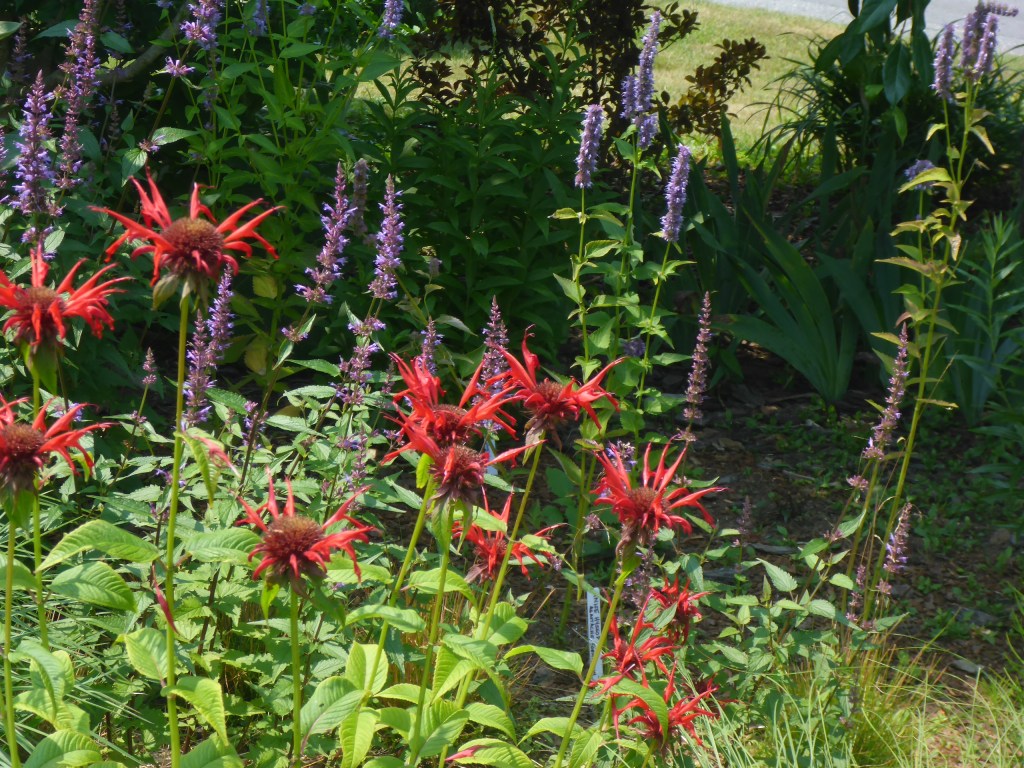
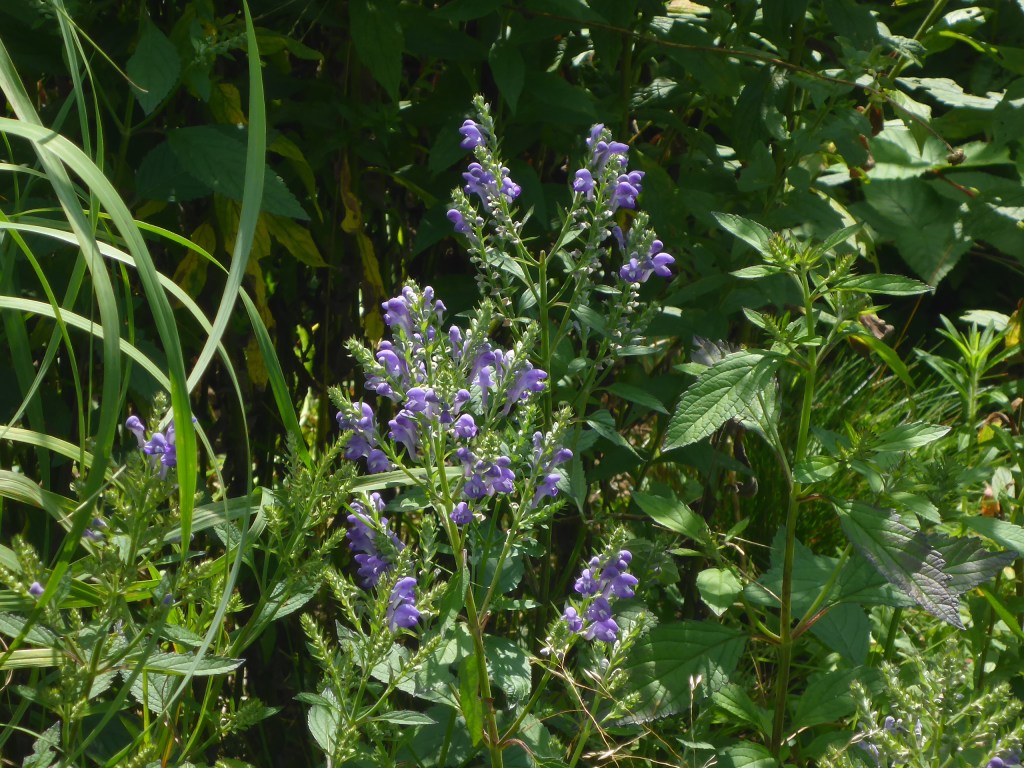
Bee balm (Monarda didyma ‘Jacob Cline’) was new this year and I added several Anise hyssop (Agastach foeniculum ‘Blue Fortune’) to an existing clumpDowny skullcap (Scutellaria incana) was a transplant from the back of the border to the middle.
Second-year Plantings
Last year I planted a couple of new areas and overhauled a third; they did fine last year but they were clearly new plantings. This year, not only did everything come back, the plantings began to fill in nicely.
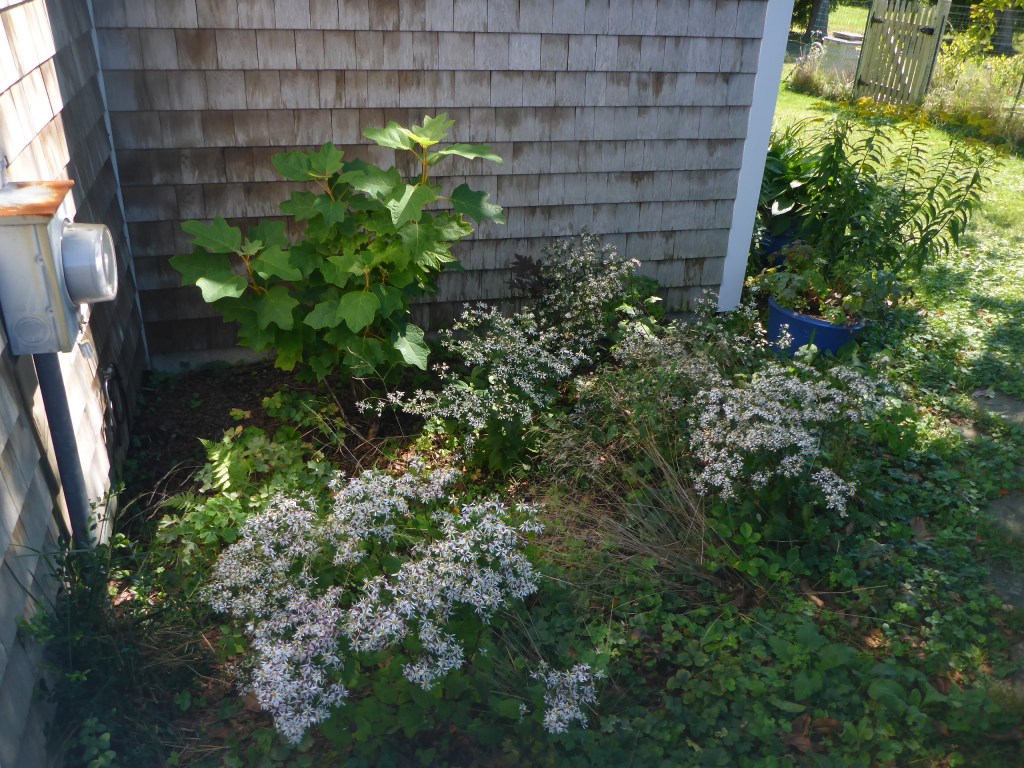
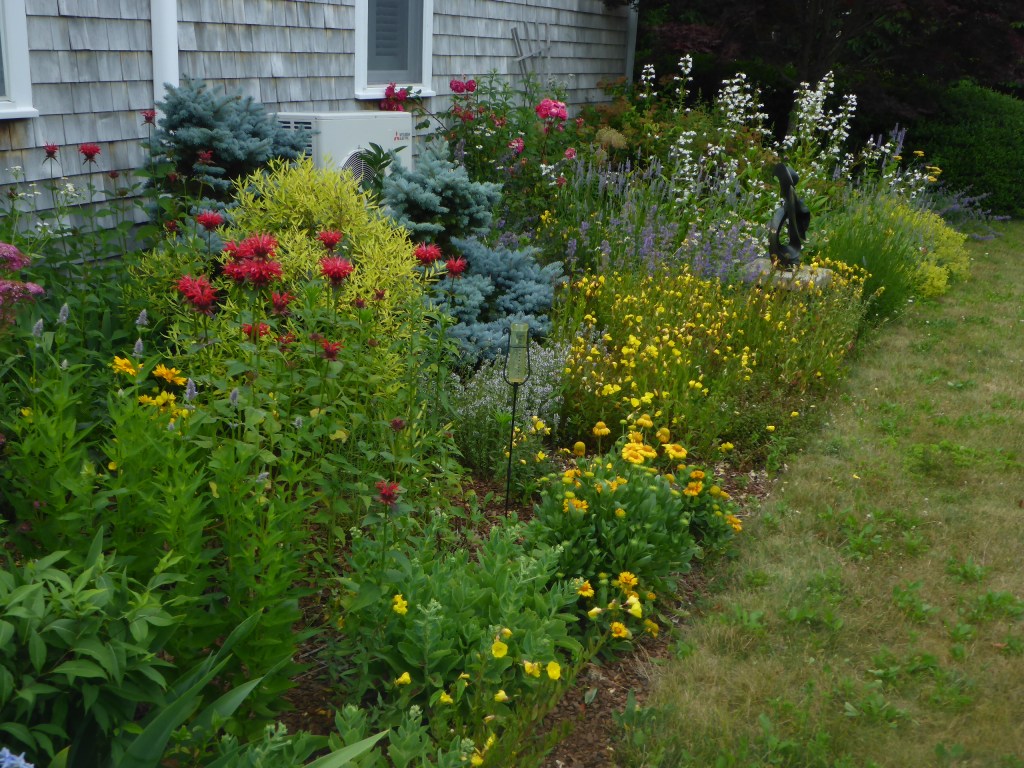
In the shady corner, the oak-leaf hyndrangea (Hydrangea quercifolia) doubled in size, the wild strawberry (Fragaroides virginianum) covered the ground layer, and the white wood aster (Eurybia divaricata) filled in nicelyThe Glory Garden had about 50% new plants last year and some more this year. From left: False sunflower (Helopsis ‘Tuscan Gold’), Bee balm (Monarda didyma var.), Blanket flower in front (Gaillardia ‘Arizona Sunset’), sundrops (Oenithera sp.), lavender and an heirloom red rose in the back, and a cloud of beardtongue (Penstemon digitalis).
First Time Bloomers
Two of my established plants bloomed this year for the first time – what a treat!
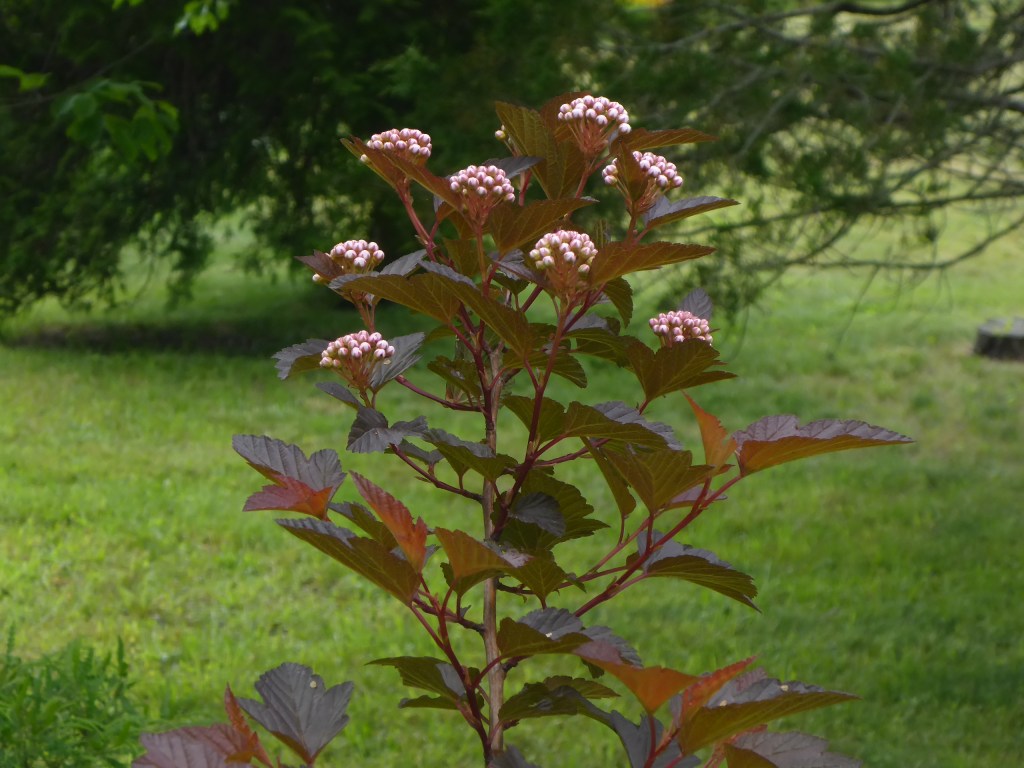
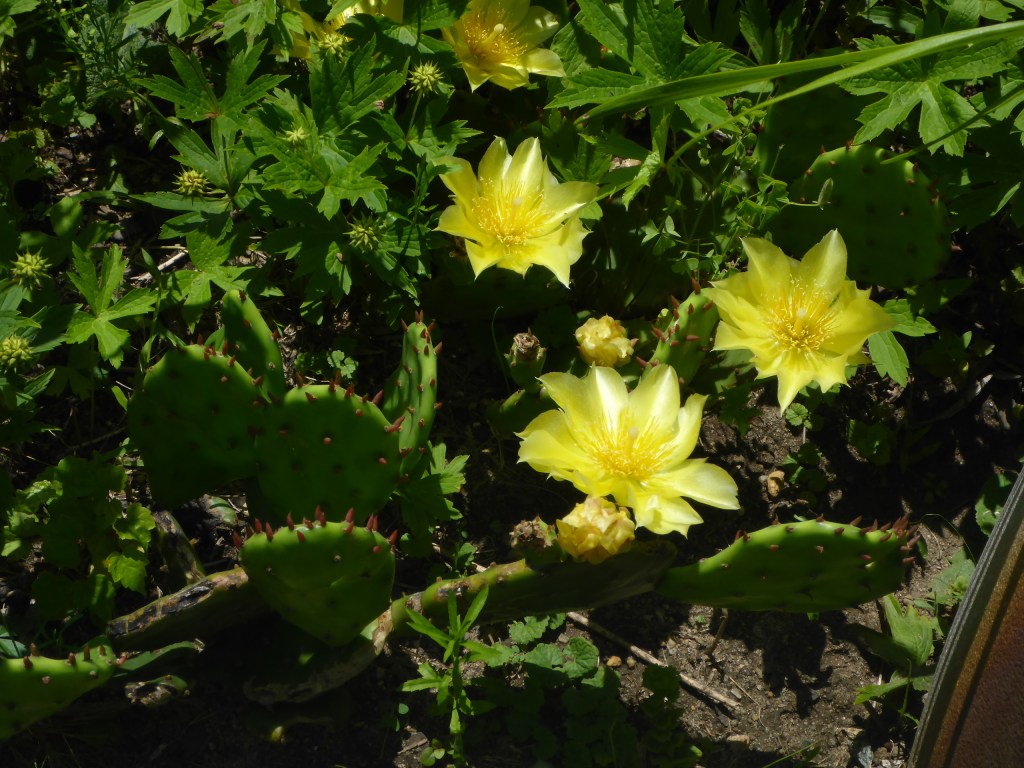
Ninebark shrub (Physocarpus opulifolius ‘Coppertina’) has grown well, despite being in the shade, but this year it had delicate pink blooms.There is one cactus native to New England, the Eastern prickly pear (Opuntia humifusa). It was a thrill to walk by the pollinator garden and see these glowing yellow flowers.
Established Plantings
The established plants did really well, too, with more blooms and more growth than other years.
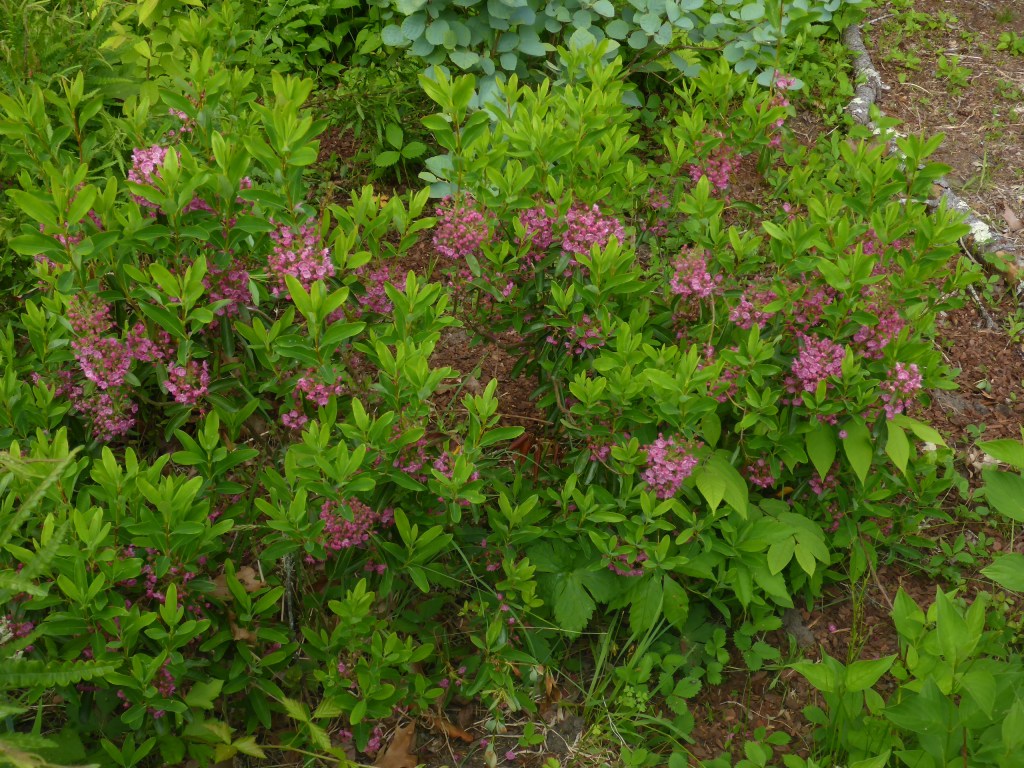
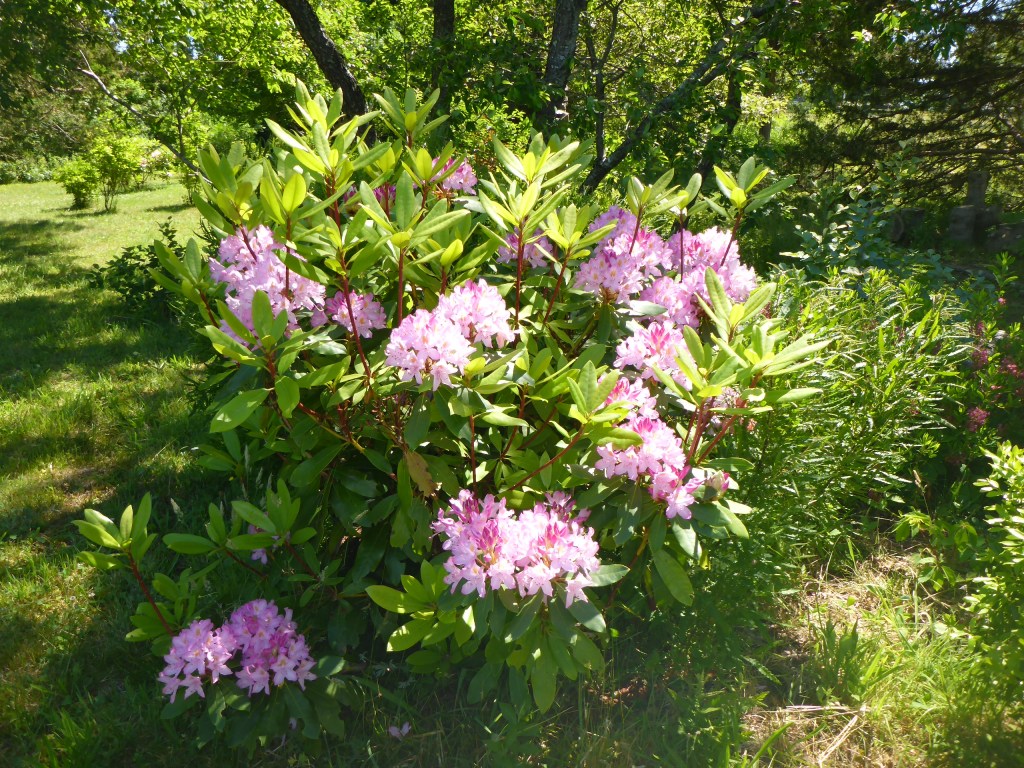
The sheep laurel (Kalmia angustifolia) has survived since its 2016 planting (which hasn’t been easy), but this year had double the flowers of any prior year.Same with this native rhododendron (Rhododendron maximus var.) – a lot of growth and prolific flowering
Berries
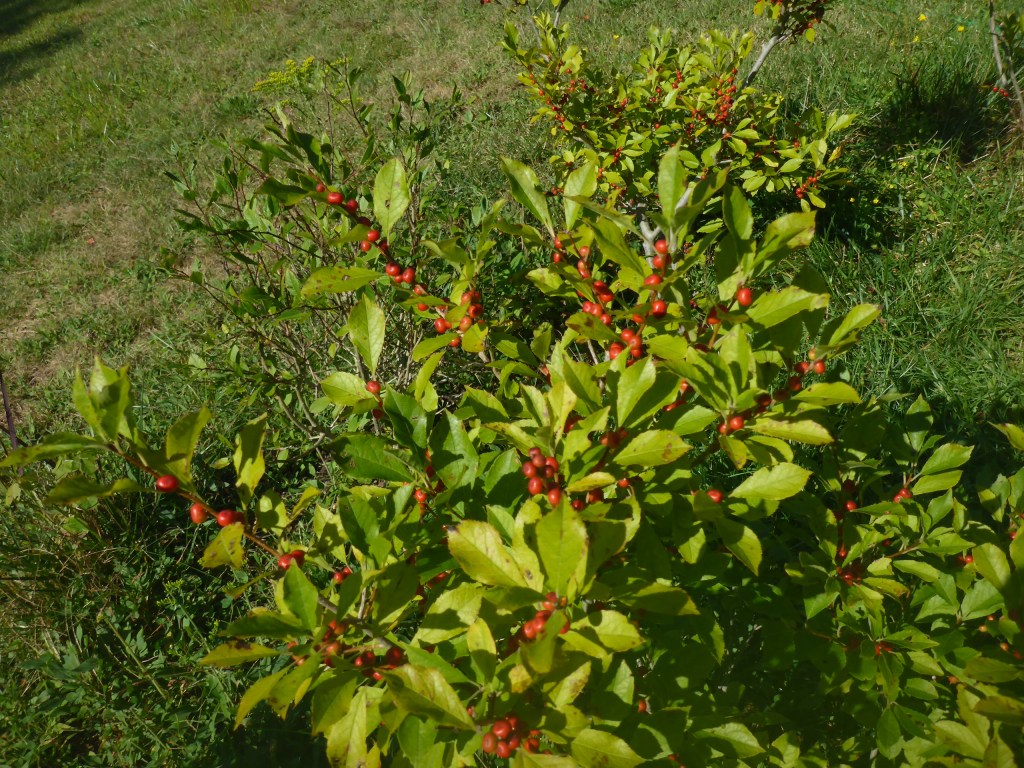
And in the fall, the berries on all the native shrubs were plentiful.
Winterberry (Ilex verticillata ‘Red Sprite’) was loaded with berries last week. We will see how long they last!
There was a lot to celebrate and be thankful for this year!
Kathy, your garden looks beautiful. The sheep laurel is stunning. You mentioned it hasn’t been easy growing it…how have you cared for it? I’ve planted four individuals over the last few years in my sandy-soiled Western MA garden, two have survived (one barely so)…I love them and dearly wish to see them thrive. Hoping you have some tips!
Rayane, thank you! I can’t say for sure what the secret is for growing sheep laurel, but I’m sure it is some combination of soil and moisture. Around Chatham they grow in the wild in very moist locations, in the woods at the edge of a pond for instance. My yard is fairly close to the water table, and I suspect that the moisture-loving shrubs, like the sheep laurel and the clethra, are growing quite long roots to get to the ground water. My soil is sandy loam, and this particular spot is quite acidic, as I had Norway spruces here for a long time and their needles and cones added a lot of acidity. Or maybe I’m just lucky!
 Goldenrod Garden
Kathy, everything looks terrific! Thanks so much for all the educational information you provide (and the photos).
LikeLike
Kathy, your garden looks beautiful. The sheep laurel is stunning. You mentioned it hasn’t been easy growing it…how have you cared for it? I’ve planted four individuals over the last few years in my sandy-soiled Western MA garden, two have survived (one barely so)…I love them and dearly wish to see them thrive. Hoping you have some tips!
LikeLike
Rayane, thank you! I can’t say for sure what the secret is for growing sheep laurel, but I’m sure it is some combination of soil and moisture. Around Chatham they grow in the wild in very moist locations, in the woods at the edge of a pond for instance. My yard is fairly close to the water table, and I suspect that the moisture-loving shrubs, like the sheep laurel and the clethra, are growing quite long roots to get to the ground water. My soil is sandy loam, and this particular spot is quite acidic, as I had Norway spruces here for a long time and their needles and cones added a lot of acidity. Or maybe I’m just lucky!
LikeLike