Every new year brings new possibilities, am I right? Last winter, in a fit of optimism, I wrote about Trying New Things, with three projects I was going to attempt in 2025. Two of them, killing off Canada goldenrod and building a HugelKultur garden, are coming along, but still works in progress.
The third project was to replant a section of my vegetable garden (which is fenced in) with native pollinator plants that I can’t readily grow elsewhere because of the rabbits. The idea was to plant this from seed, instead of from plants. So in February I researched the perennials that would be most beneficial for bees and pollinators and ordered 19 different species of seeds. Of course, the designer in me then had to come up with a planting layout that would look interesting. So far, so good.
Spoiler alert: the rest of the project didn’t work, but I learned a lot.
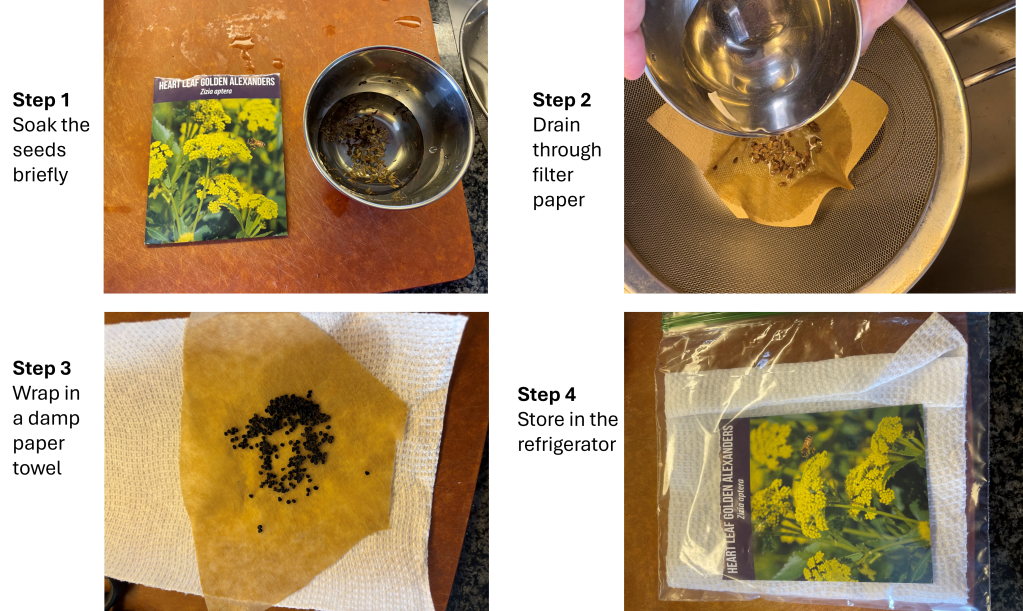
First, I learned about preparing the seed for planting – this has to be done right or the seeds won’t germinate. Many (not all) seeds require a period of cold, as they would normally overwinter in the soil in nature. To mimic that, you need to “stratify” the seeds, which means storing them in a cold, damp environment for a set number of days. Each plant requires a different number of days (typically 30 or 60). The plant growers have figured this out and kindly include that information on the seed packet.
There are several ways to stratify seeds (search for stratify seeds in milk jugs) but I used the classic method, where you dampen the seeds, then store them in a cold dark place like a refrigerator for the specified time. Here, I’m preparing one of the 19 seed species that I was planting – preparation by the book.
The next step was to prepare the planting bed, which I did in May, twice, with careful weeding.
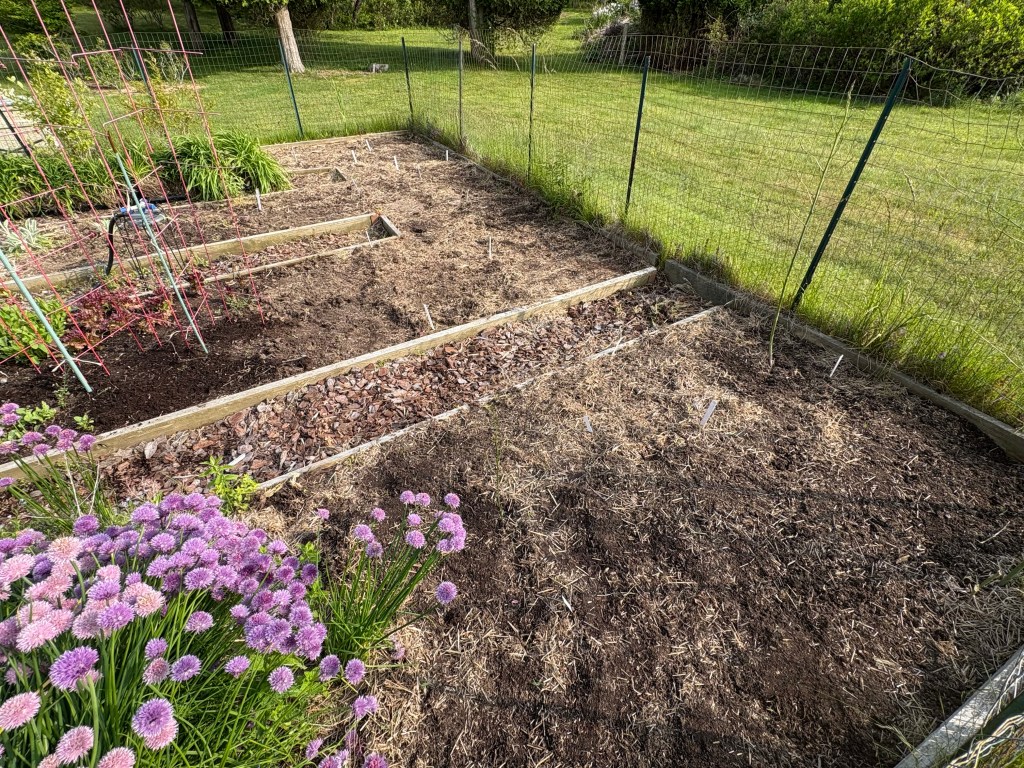
Then on Memorial Day weekend, I planted each seed in its designated area on the planting design. I watered lightly, then waited for seeds to germinate. And this is where the project went haywire. What came up in June was not just the seeds I had prepared, but about 10,000 weeds, so dense they crowded out the desired seeds.
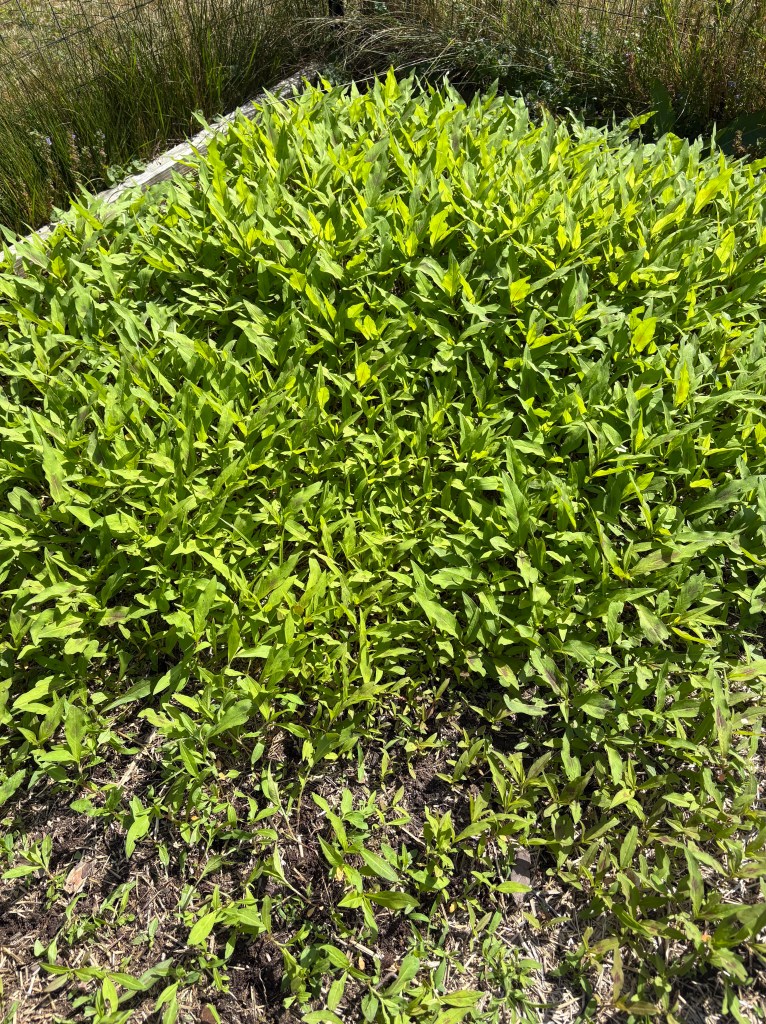
This is smartweed (Persicaria pensylvanica), which I have seen in this garden before. I generally weed it out in the early part of the year, and for the rest of the season the soil is covered with a hay mulch once I plant vegetables in this space. Evidently one year I let it go to seed – it does have kind of pretty small pink flowers. So, all the seeds from those flowers must have been lying dormant in the seed bank until this year, when I removed all the barriers preventing their germination. And voila! An explosion of new growth.
At first, I thought I could salvage the situation by weeding and cutting back and eventually the desired plants would grow tall enough to get a place in the garden. The smartweed is an annual, so if it didn’t flower this year, next year it would be much less of a problem. But the pollinator plant seeds just didn’t make it, except for a couple of milkweeds. I had read in several places that bed preparation was key, and they were right. My careful spring weeding was clearly not enough.
In July, I did what I should have done the summer before: cover the beds with black. I used plastic, but black fabric also works (not landscape fabric, that is too permeable). The black is supposed to create enough heat to kill everything in the seed bank. I worried about killing all the beneficial organism in the soil as well, but I have read that they will come back readily once the black is removed.
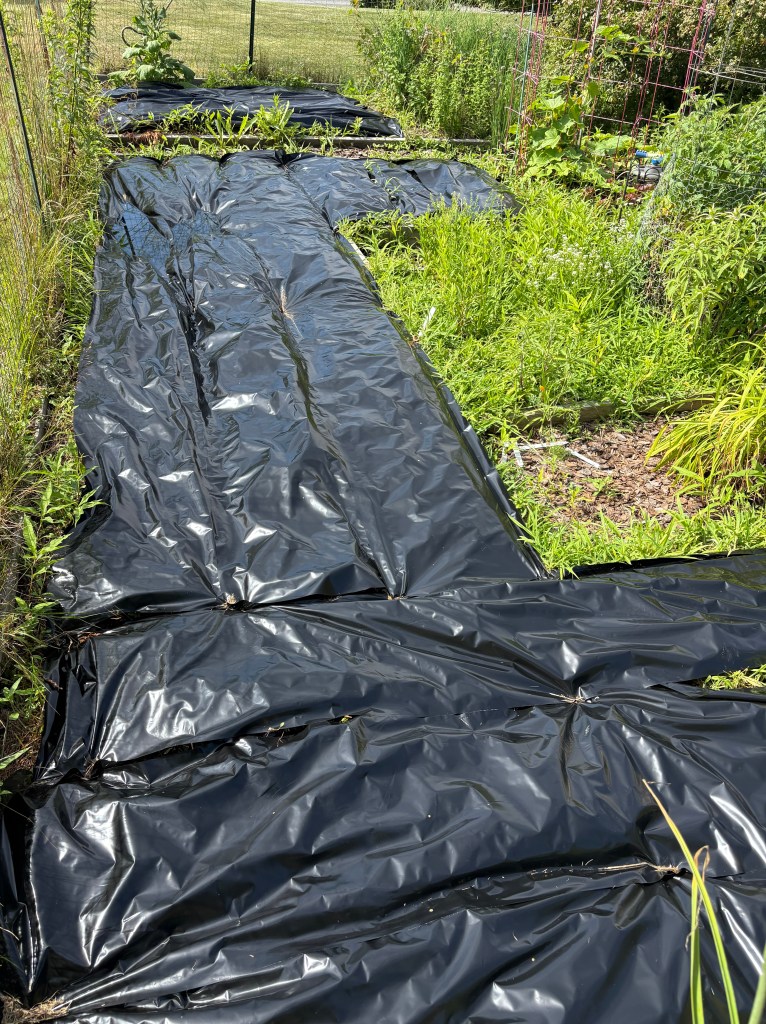
Last summer and fall I felt pretty discouraged every time I walked by the vegetable garden. But winter comes around again, and the optimism for the next season returns, and I have great plans for this space in 2026.
The idea is the same as last year – a naturalistic garden with plants selected for multiple seasons and for maximum benefits for pollinators, including butterflies and bees. There’s nothing like a quiet winter afternoon for doing a bit of plant research, and I’ve spent the last few days developing a list of candidate plants and creating a planting design for those plants.
This year, though, I’ve learned more about serving pollinators, and I am factoring that into the plant selection and design. First, it’s important to have plants blooming all summer and fall – our native pollinators all emerge, feed, and lay eggs at different times in the summer, and some species have several life cycles over the season. Next, it’s much more convenient for the pollinators to have an abundance of blooms, to save time and effort of traveling between garden beds (and masses of blooms are more visually striking). This led me to narrow down the list of plants from 19 to 12, so I can have more of each. Third, it’s important to have blooms of different shapes and colors, to attract pollinators with different feeding habits. Finally, to support the greatest variety of pollinators, it is best to go with keystone plants or pollinator powerhouse plants; I used the National Wildlife Federation’s list of Keystone Plants by Ecoregion and the Native Plant Trust’s list of pollinator powerhouse plants.
All that said, here is the planting layout and plant list I am going with.
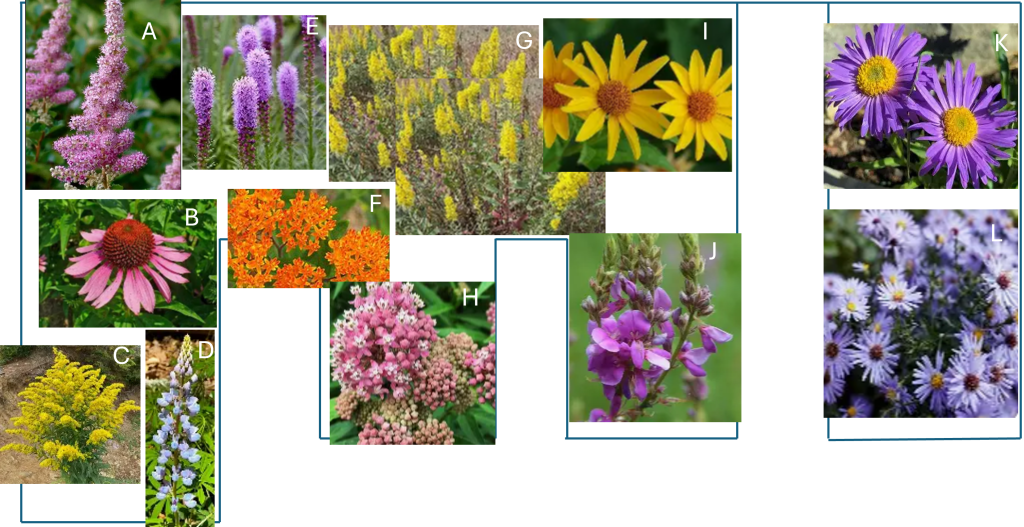
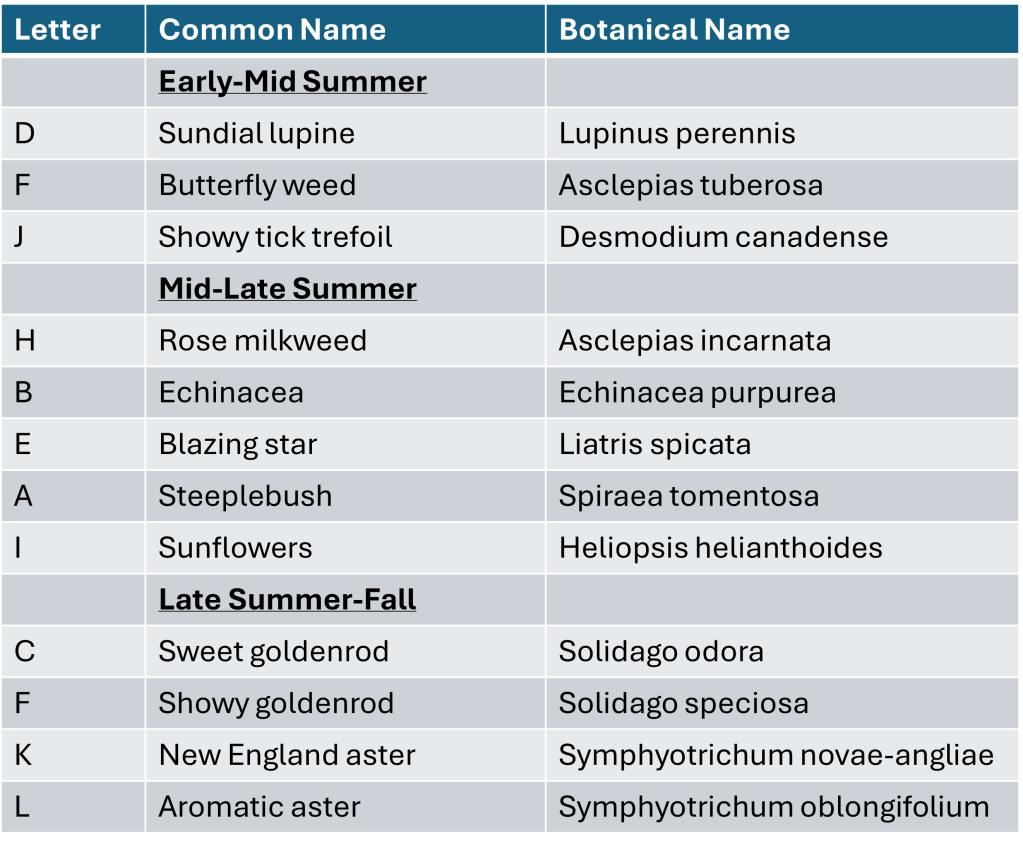
I’m actually excited by the vibrant color combinations, different in each season. Purples and orange in the early-mid summer, followed by pinks, purples, and yellows in the mid-late summer, and purple and yellow in the fall. Not a white flower in sight. I think the pollinators will be happy. too, as many of these plants also serve as host plants in addition to being food sources.
One big difference this year from last year, thought, is that I decided to go with plants instead of seeds. For many people, seed germination is a fun hobby, but for me it was more stressful than fun. Maybe I’ll try again in the future, now that I know the secret of thorough bed preparation.
I need over 100 plants to fill this space and using plugs of very young plants is the most cost-effective way to go. I’ve ordered 8 of the 12 plants as plugs from Prairie Moon Nursery; I’ve used them before and have been pleased with the results. They should be shipped to me in mid-May. The remaining plants I will get in 1.25-qt pots from Blue Stem Natives in Norwell, Mass. They only sell plants when they are ready to be planted, so I can’t pre-order as I did the plugs. But their website has a nice feature – I have asked them to alert me when the plants are ready. When I get the alert, I can get on the website and buy the number of plants I want. They will set them aside and I will pick them up within a week. That system works well.
So in mid-May I will take up the black plastic, see if there is any spot weeding to do, perhaps around the edges, and get ready to plant. So much to look forward to!
 Goldenrod Garden
Hello from Maine!
Thank you for the plant list and lessons learned. I think they will all grown here but I must make my garden deer proof around them.
LikeLike
[…] with photos: Winter Optimism (Cathy Weston/Goldenrod Gardens) Last winter Weston (on Cape Cod) bought and stratified 19 kinds of […]
LikeLike