In my last post I promised to share not just what is looking great, but the failures and challenges, too. There are several to choose from, but here is one that has been aggravating me for years.

The space in question is along the southern edge of our property, about 100 feet long, in front of a split-rail fence and on the other side of our septic field. The border is about 15 feet deep, and much of it is planted in large shrubs and small trees – rose of Sharon, a crabapple, and blue hydrangeas from the pre-native plant era, and smooth hydrangeas, a half-native dogwood and a large stand of sweet pepperbush that is rapidly colonizing. There are two spaces in the border that I had set aside for perennials, both for color and interest and for pollinators.

The right space between the two dogwoods in the picture above has been giving me fits. My vision here was a meadow-like area, with groupings of plants drifting horizontally left to right, and low plants in front, layered to taller plants in back. I thought that horizontal banding of different textures and colors would be really interesting when looking at this space from across the yard.
The smooth hydrangeas are at the back, giving me about 8 feet deep by about 15 feet wide, plenty of space for at least three layers and a half-dozen species of plants. Here’s the first attempt at designing this space, from 2021.

Some of these plants were already in place, and the rest were planted in 2021. Over the next 3 years, frustration set in as different plants just died out (little blue stem, agastache, and helenium), and the rabbits enjoyed others (ironweed, pearly everlasting, gaillardia, monarda, and coreopsis). I replaced the little bluestem with switchgrass and Virginia wild rye and added great blue lobelia where the agastache and monarda opened up a hole.
Meanwhile, some plants continued to do well. The Joe Pye survived the rabbits and expanded a bit, as did the slender mountain mint, zizia, boneset, and the goldenrod. Last year, I moved around some of the remaining plants to try to recreate the drift pattern I wanted, and it wasn’t too bad.

Then this spring I went out to examine the beds and start my cutbacks and cleanups for the season. And I found that voles had gotten into the bed and eaten up the crown and top roots for all the plants in the center of the bed. You could hear my teeth gnashing all the way down the street.

After calming down, I began to reflect. I had tried a lot of different native plants in this space, and about a third of them had survived. Maybe it was time to grow things that wanted to grow here, that showed they could stand up to the low fertility and wildlife conditions. It was time to stop imposing my vision and to listen to the space.
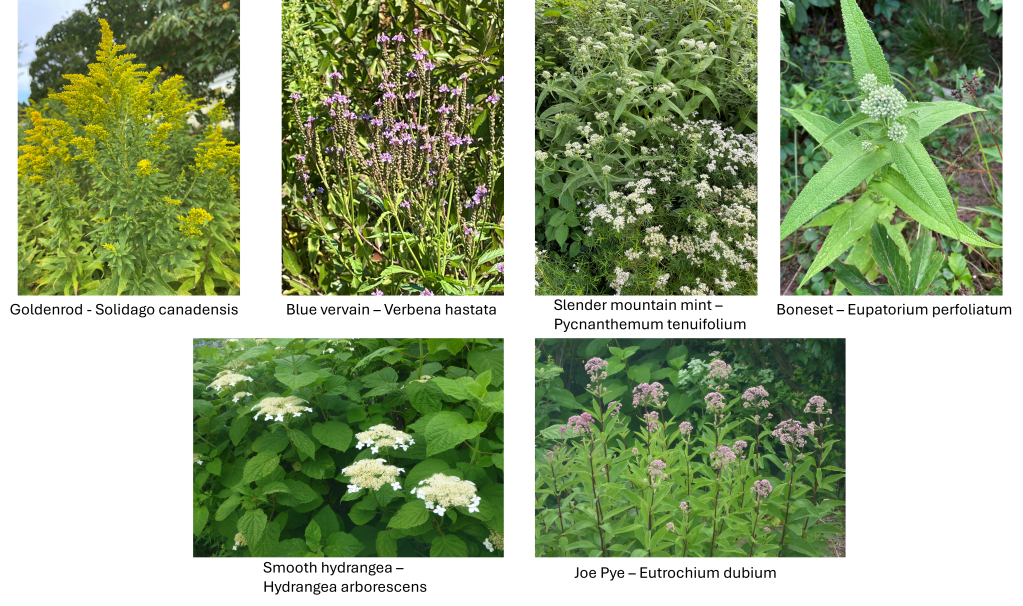
So, I cleaned up the bed, weeded out the blackberries and excess goldenrod that always pop up, added some more Joe Pye and mountain mint, and waited to see what would grow. I also added two new plants – tough ones, yucca plants. I figured the rabbits would leave those spiky leaves alone, and so far, so good. A new volunteer showed up, blue vervain, and the goldenrod has spread.
And finally in August, everything came together. All the pinkish purple things bloomed at once, with several white blooms surrounding them. It’s not an award-winning composition, but it suits the place and it suits me.
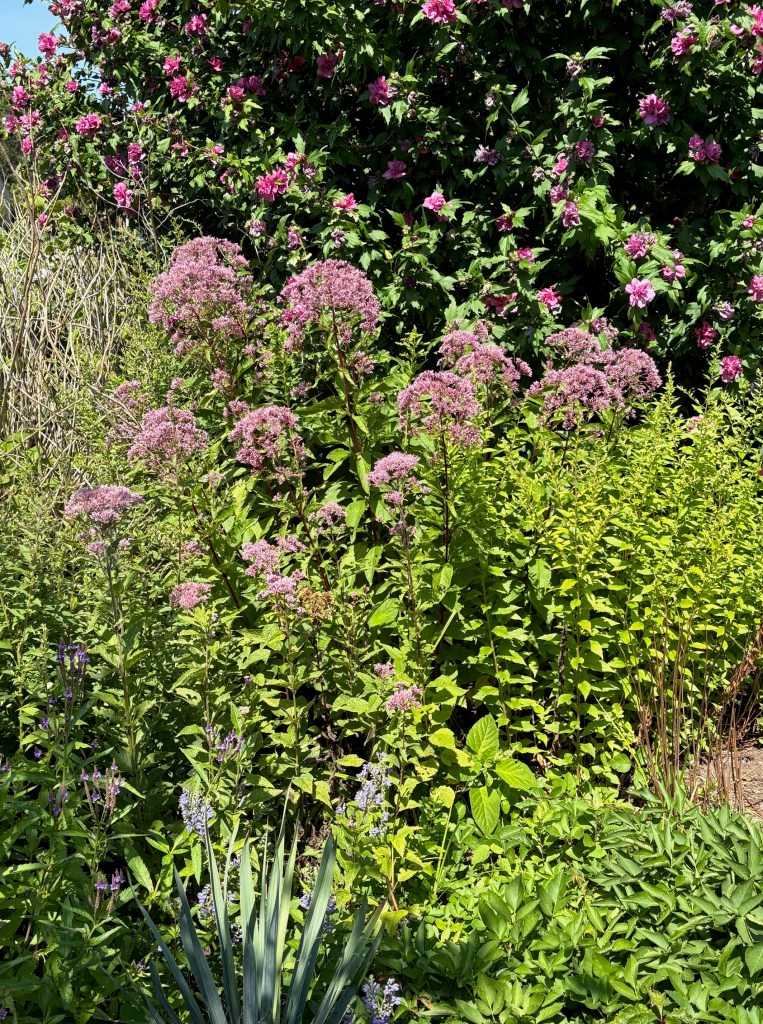

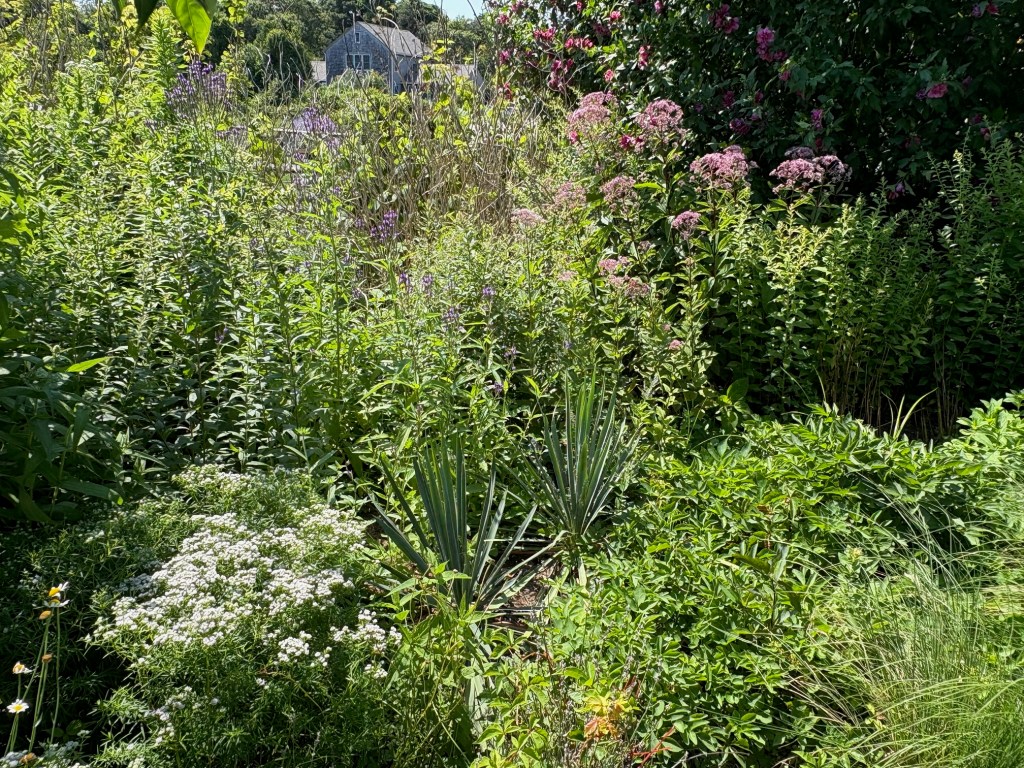
Not all my gardening stories have happy endings, and this one might not last, either. But I am content with this year’s result, and I know that even if the voles come back and the perennials fail, I can always give up the perennial bed and plant more shrubs. The garden will go on.
 Goldenrod Garden