I’m currently working through the decisions about what plants to add to the garden this year and I am finding that one of the first plants I think of is a mountain mint (Pycnanthemum). This is a genus of plants that I have never heard of before studying about native plants but now is one of my most reliable and essential plants for the garden. I grow three different types, each with slightly different characteristics, in different uses in the garden. Why is it a workhorse for me?
–It is a pollinator magnet from mid-July through August, especially attracting native bees.
–It produces a thick layer of interesting white blooms, lots of them, on every stalk.
–it’s a good height – the smallest are 2 feet tall, the largest 3.5 feet.
–It grows well in my typical Cape Cod soil – sandy loam, low nutrients, acidic – in full sun with no supplemental watering.
–Rabbits avoid it.
–The name Pycnanthemum is just plain fun to say!
Short-leaved (or Blunt-leaved) Mountain Mint (Pycnanthemum muticum)
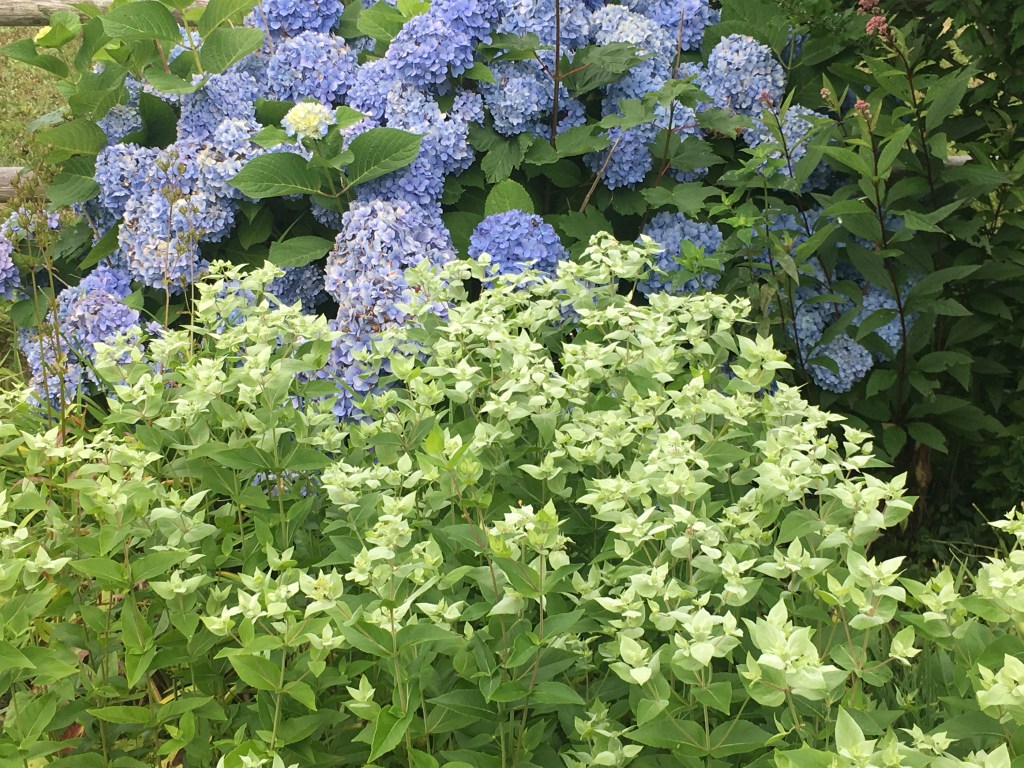
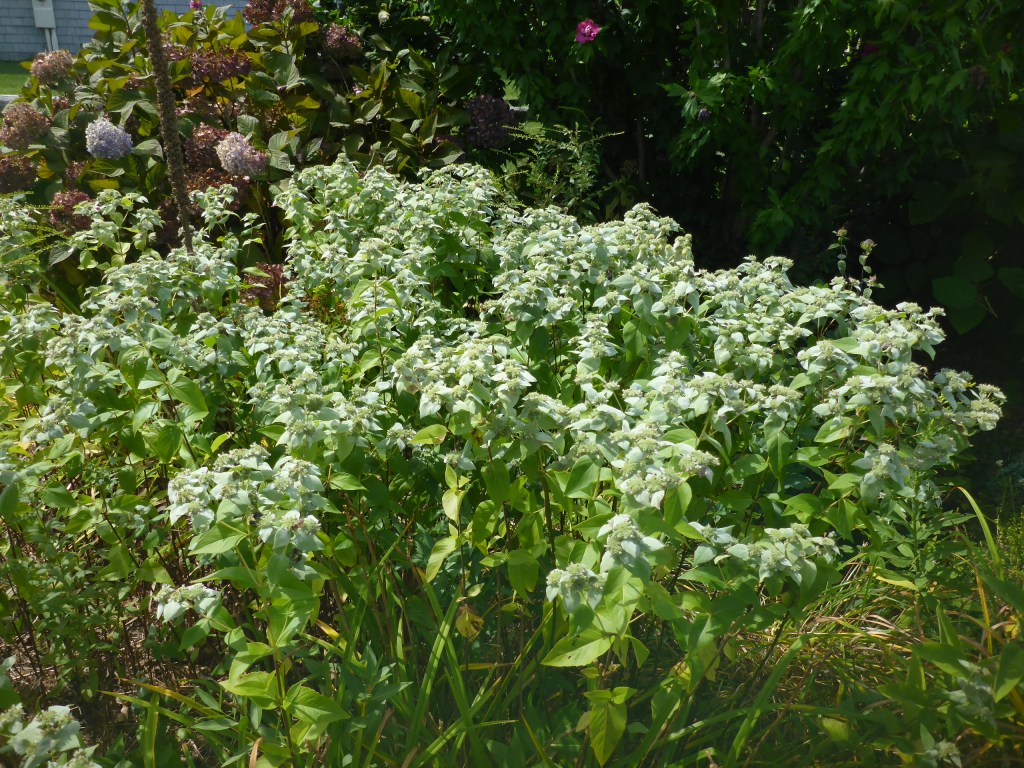
This is the showiest of the mountain mints, with tiny white flowers but gorgeous silver bracts surrounding the flowers. It grows about 2.5 feet tall in a solid clump. Its biggest disadvantage, and the only reason I don’t have it everywhere, is that it spreads the most of the four species. A single 6″ clump will expand to 18″ by the third year, which is great, but after that it sends out runners. It is nowhere near as aggressive a spreader as garden mint, and it won’t regenerate from tiny roots left in the soil like garden mint, but it does spread.
In my garden, and at the Mayo House in downtown Chatham, there are nice clumps of this plant. It’s controlled by looking for the runners in late spring and mid-summer, and editing them out.
If you want to take advantage of its spreading habit, you can fill a lot of space quickly. There’s a planting of this species on the Rose Kennedy Greenway in Boston, in a space about 15′ x 8′, now filled, that started with about 20 plants that expanded until they filled the space. It backs up on a low concrete wall on one side, and the grass around the other 3 sides is regularly mowed, so the planting is well controlled. A smart way to get a glorious stand of pollinating plants!
Slender Mountain Mint (Pycnanthemum tenuifolium)
The “slender” in the name refers to the leaves, which are 2-3″ long but a half inch or less wide. This makes for a look that is more delicate and airier than the short-leafed mint. It is also a bit shorter, growing 2 – 2.5 ‘ in my garden. It is also very well behaved, with the clumps gradually expanding, but with very few runners. The one or two runners I have seen have been welcome, expanding the clumps into more of a drift through the garden bed. All in all, this mountain mint gets my vote for the easiest to grow and the one to start with if this plant is new to you.
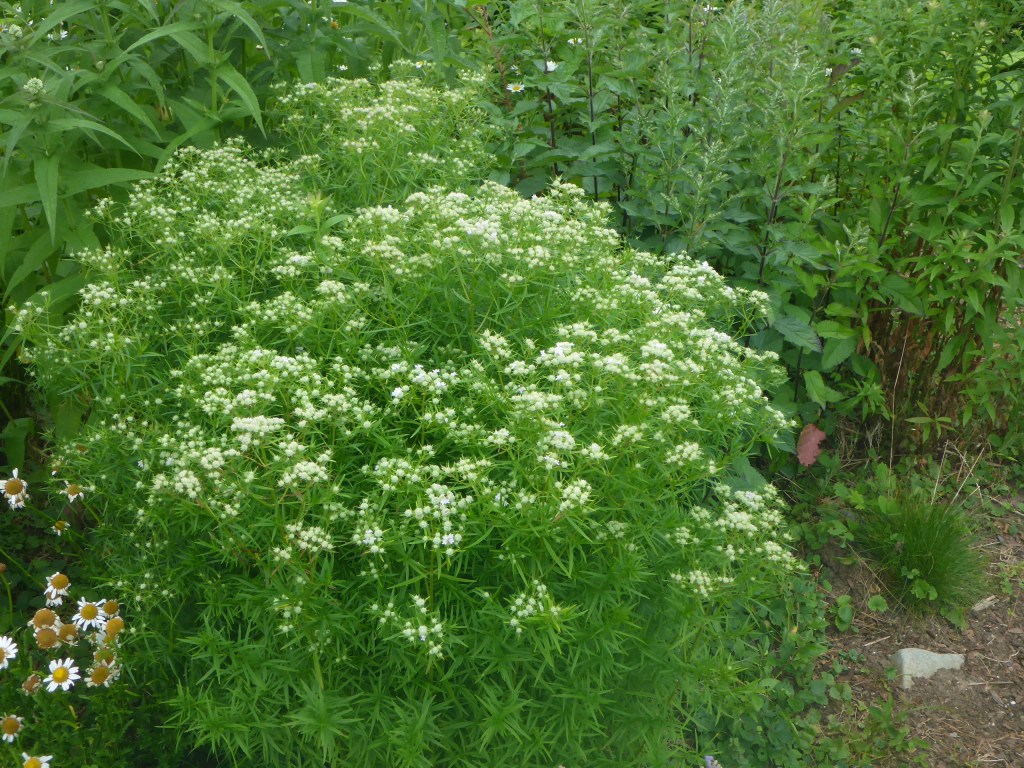
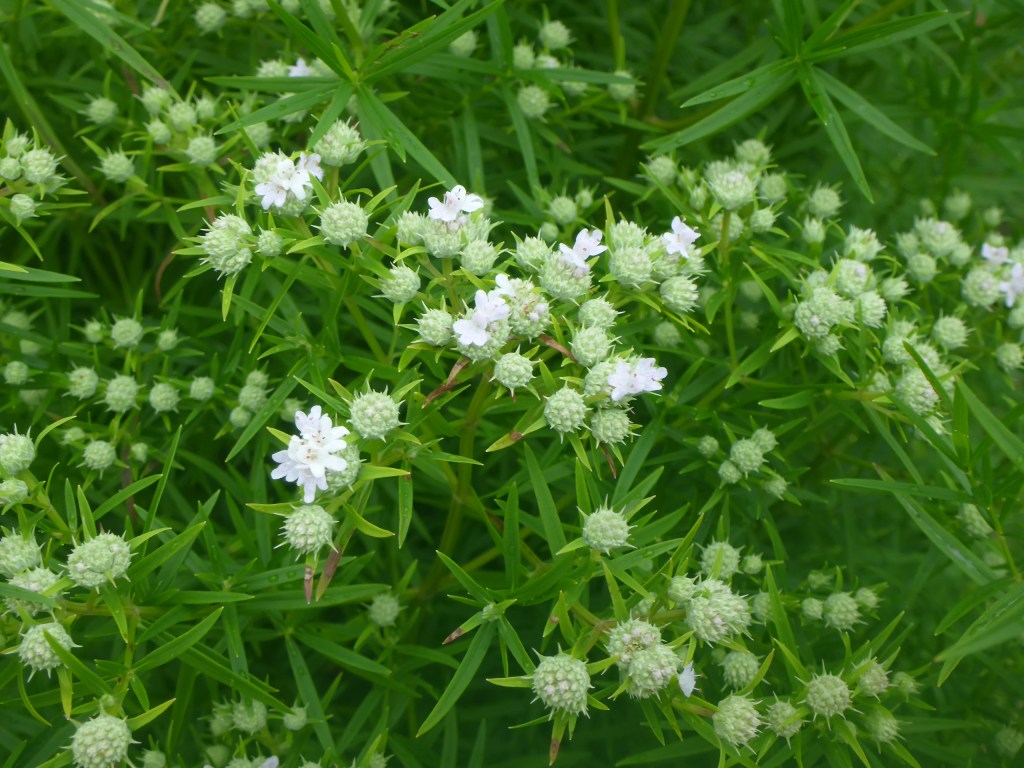
Right now, I have this plant in two places. One is near the front of the bed in the South Border, where the three plants seem content to just come back every year. It is also in the meadow, as a mass of about 15 plants. I had heard that this mountain mint made a good companion plant for little blue stem grasses, so I tried to interplant them. The mountain mint did well, but not the little blue stem. This was my fault, as I watered the meadow too much for the grass, which likes dry conditions. Now that I don’t have to water the meadow, I may try again. New this year will be using this mint in the Glory Garden. There are some holes among the penstemon that I think the mint will fill nicely. The penstemon blooms white in June, and the mint in J and August, so that will be a nice succession. I will just have to cut back the penstemon stems so the mint can be seen and appreciated.
Virginia Mountain Mint or Common Mountain Mint (Pycnanthemum viginiana)
After enjoying the first two mountain mints, I decided to add a third type to the meadow – Virginia mountain mint. It is the tallest of the mountain mints, coming in at 3.4 to 4 feet. It seemed to me that the blossoms lasted a good bit longer than the others, too, at least a month. Like the others, it attracted a lot of pollinators.
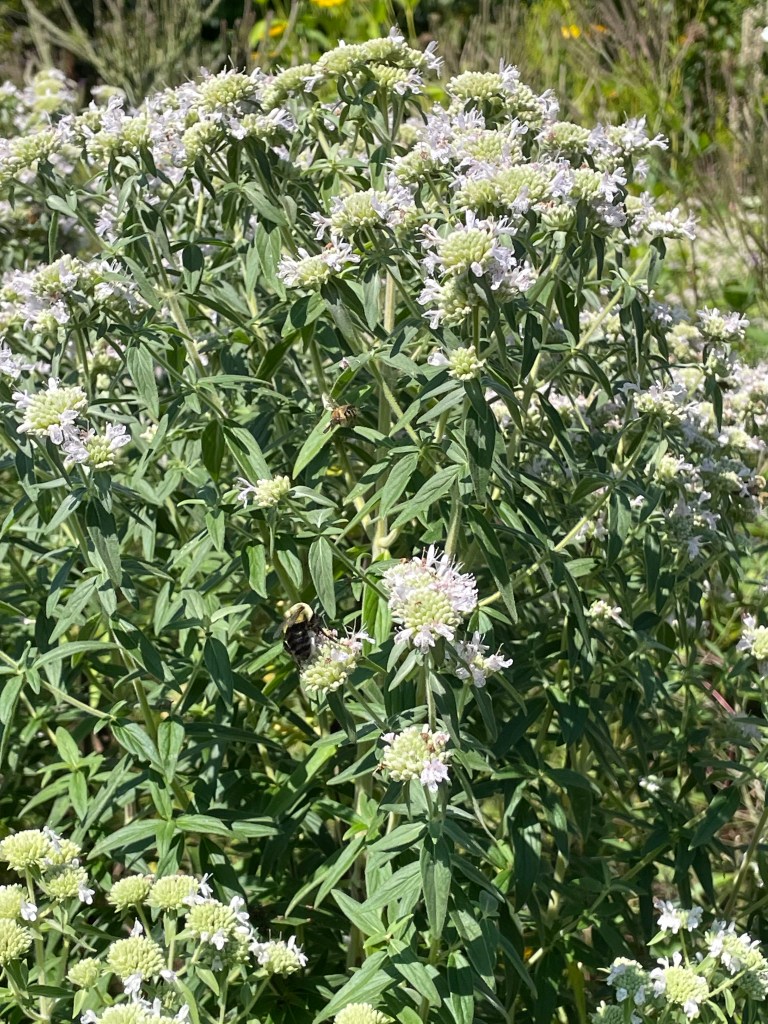
The clumps of this mountain mint have grown quickly and have stayed in place for the two years I have had the meadow going. The literature says that in ideal conditions, this will spread, even aggressively. So far, I have not seen any runners, but this is the third year so I’ll be keeping my eyes open to find out how much control this plant will need.
These three mountain mints are generally available at nurseries that specialize in native plants, such as Native Plant Trust and Bluestem Nursery. Others that you may find are the whorled mountain mint (Pycnanthemum verticillatum) and the hoary mountain mint (Pycnanthemum incanum). These plants each have variations of height and flower shape. This is one genus where I would not hesitate to pick up a new species and try it out.
 Goldenrod Garden
[…] with photos: Plant Profile: Mountain Mint (Cathy Weston/Goldenrod Garden). She discusses three mountain mints: Short-leaved (or Blunt-leaved) […]
LikeLike