It happened again. Last fall I walked around the garden and was pretty happy with the way things looked. It didn’t appear to need a lot of new work in the spring. Hah! As the gardening season wound down, I attended two different webinars that gave me a lot of ideas, and now I’m in the process of figuring out how much I can take on and what I have to postpone.
While I’m sorting out the specifics, let me share some new things I plan on trying.
Planting Perennials from Seed
The vegetable garden has become increasingly infested with voles, and this past summer they got to almost everything. Rather than invest in more/deeper fencing, I’ve decided to support local farmers by shopping at the farmer’s markets for fresh vegetables. Of course, I will grow tomatoes and herbs and maybe a couple of other things, but at least half of the space will be freed up.
I’m excited to turn that space into a combination pollinator/cutting garden. The best part is that it is inside a fence, so I can grow perennials in a place protected from the rabbits. That means plants like echinacea, asters and blazing star, among others.
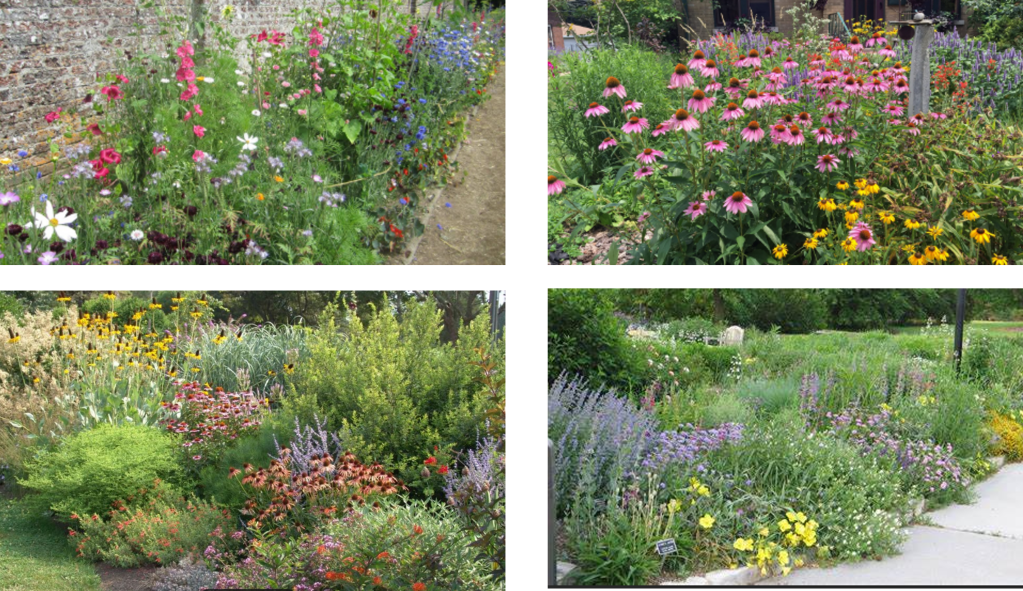
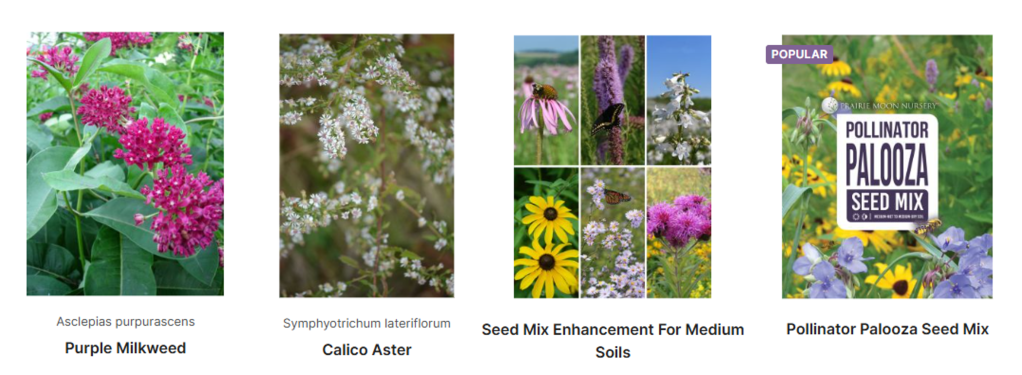
I’m toying with the idea of starting this garden from seed. Good native plant seeds are available in the fall from Blue Stem Natives (only in the fall, and I missed that this year), Ernst Seeds, and Prairie Moon Nursery; there may be others that have locally sourced seeds, and I will look for those.
Mixes for many conditions are readily available – low-growing plants, tall plants, shady plants, plants for clay soils. From what I have seen, most include grasses, for more of a meadow look. I think I will likely do a dense all-perennial look, buying seeds and mixing them to get an interesting design.
I need to read more about how to care for this kind of garden. So far, my sources tell me it will take 2-3 years to reach maturity, and the first year is mostly taking care of the weeds. Supposedly the perennials will not grow very tall the first year, so if you cut down everything that grows 8” or more, a few times a season, you will take care of the weeds until the perennials fill in and dominate the space. The cutting technique is supposed to avoid disturbing the seed bank so weeds can be outcompeted by the perennials. We will see!
Removing Canada Goldenrod
Despite my admiration for the genus Solidago, the Canada goldenrod is a bit much. It spreads aggressively by rhizomes as well as by seed. There are places in the wilder back area that can support that level of aggressiveness, but in my pollinator borders, it needs to be controlled. In particular, there is a 4’x6’ spot in the South Border where it has completely taken over, and I want to replace it.
I’ve read about two removal techniques that do not involve herbicides. The first is to wait until the shoots have emerged and it is after a rain, then dig them all up using shovels and pitchforks, similar to removing sod. The second is a two-year cycle of cutting them to 8” tall in June and 12” tall in September. Over two years, this is supposed to deplete the roots of nutrients, so the entire stand dies off. I’m intrigued by this second method and will give it a try. If it doesn’t work, I can then dig them out.
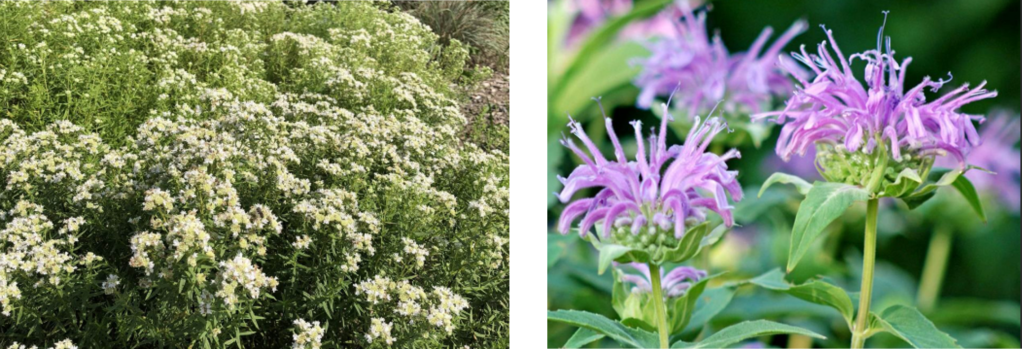
In either case, it is best to replant with a tough species that will spread but is not as aggressive as goldenrod. The new species should out-compete any remaining goldenrod shoots that emerge. The species recommended to fill this are wild bergamot (Monarda fistulosa) and Virginia mountain mint (Pycnanthemum virginiana). I imagine there are others, such as Joe Pye weed, that would work as well.
Creating a Hugelkultur Garden
When I was taking classes at Native Plant Trust, one class was on Soil Management. The parts about assessing soil structure and composition were interesting and useful, but the section on amending soils was lost on me. I have always held that it’s better to buy plants that fit the soil, not amend the soil for the plants. If that means your plant palette is limited, so be it.
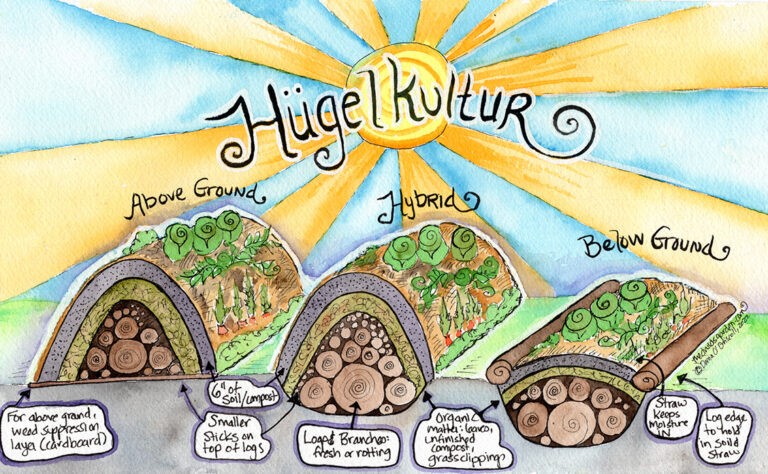
But part of the back property is woodland, and I love the look of ferns as ground cover along pathways in the woodland. Mature woods have a rich organic soil and duff layer from years of leaf decomposition, but mine are too new, and the sandy soil dominates. So, I am convincing myself that it is OK to accelerate the process of creating rich organic soil so I can plant ferns. I’ve read about a technique called hugelkultur that seems to be a good solution.
Wikipedia provides a good overview:
“Hugelkultur is a horticultural technique where a mound constructed from decaying wood debris and other compostable materials is planted as a raised bed. Considered a permaculture practice, advocates claim that the technique helps improve soil fertility, water retention, and soil warming.
“In its basic form, mounds are constructed by piling logs, branches, plant waste, compost and additional soil directly on the ground. Mounds may also be made from alternating layers of wood, sod,[13] compost, straw, and soil.
“Hügelkultur is said to replicate the natural process of decomposition that occurs on forest floors. Trees that fall in a forest often become nurse logs, decaying and supporting seedlings. As the wood decays, its porosity increases, allowing it to store water like a sponge. The water is slowly released back into the environment, benefiting nearby plants.
“These beds are also considered beneficial because of the air pockets created by the settling caused by the wood’s decomposition. This gives the benefits of tilling, without the destruction of soil microorganisms that come with tilling. And the organic material of the rotting wood also houses beneficial soil microorganisms.”
These beds seem to be aimed mostly at growing vegetables in a sunny location. For my ferns in a shady location, I will likely try a simplified version. Last year I collected fallen and trimmed branches and piled them up in an out-of-the-way place. This year I will use those branches to create low 6-12” mounds along the pathways where I want to grow ferns. Then I will cover the branch mounds with any dead leaves that are handy and compost from the pile that is ready for use. I’m hoping that will be enough, and I don’t have to buy topsoil to add. The ferns I want to try are hay-scented ferns, which are said to be pretty tough plants.
Stay tuned for updates on how all these new things turn out!
 Goldenrod Garden
[…] new year brings new possibilities, am I right? Last winter, in a fit of optimism, I wrote about Trying New Things, with three projects I was going to attempt in 2025. Two of them, killing off Canada goldenrod and […]
LikeLike