Here it is, the last day of September, and it’s time to share what’s been blooming in the garden as the season winds down. It’s been surprisingly pretty still. Although we had a great growing season, around early August it essentially stopped raining, so the garden began to show a bit of stress, I watered only a few trees, and the native perennials mostly did just fine without supplemental water and continued to bloom. So, let’s take a mini-garden tour!
In the Meadow
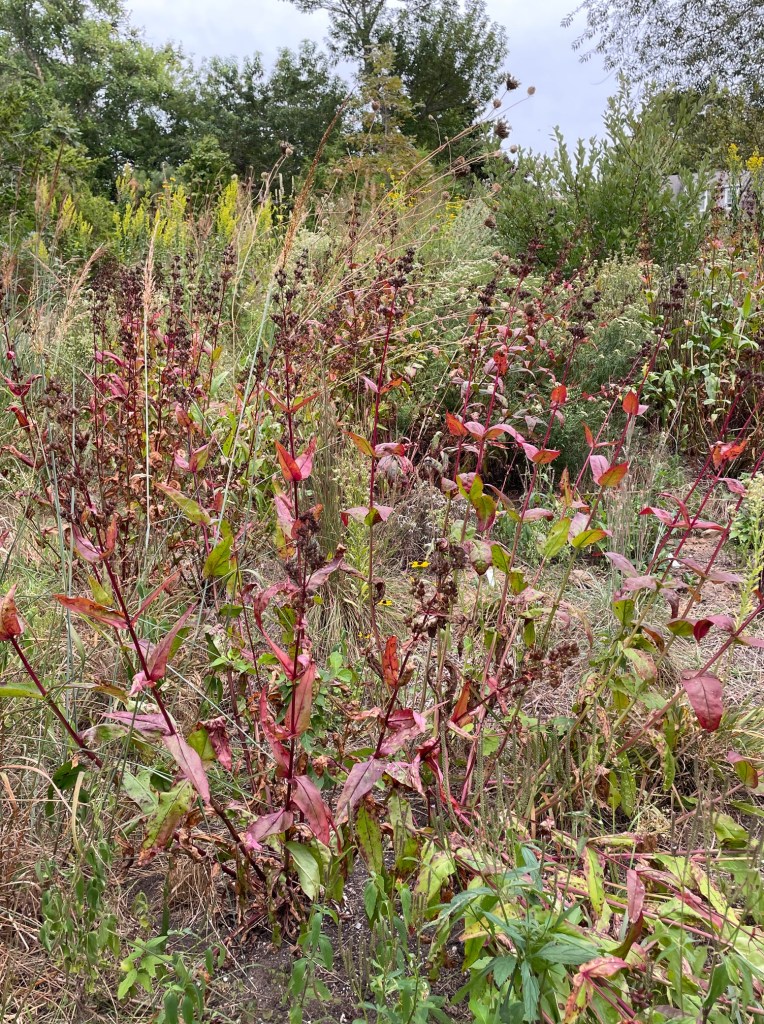
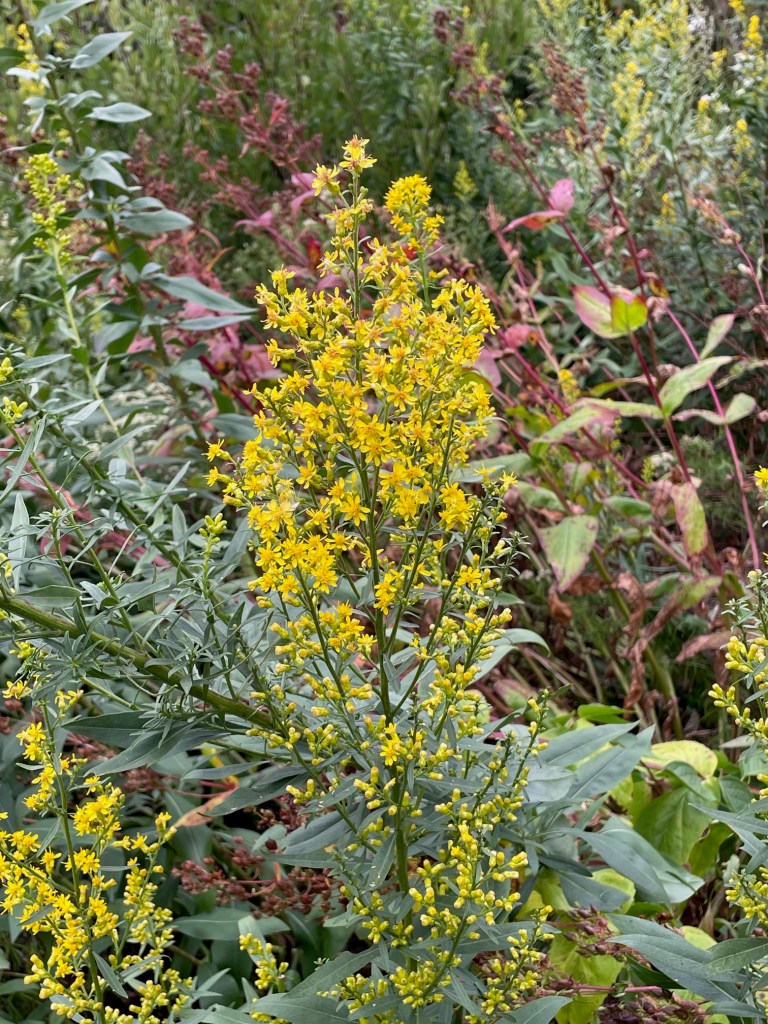
Most of the perennials just turned to yellow and brown, but the beardtongue (Penstemon digitalis) turned this lovely red-burgundy shade. This year I tried a new-to=me goldenrod in the meadow. I had tried it elsewhere, but the rabbits ate it. Here, this showy goldenrod (Solidago spectabilis) survived and in early September it put out these large (8″) clumps of the characteristic tiny daisy-like flowers. Like all the goldenrods, this one attracted a lot of native bees and other pollinatorsAnother rescue from the rabbits – I don’t know why I didn’t create a fenced-in place for perennials years ago! This is ironweed (Vernonia novaboracensis). When I transplanted it last summer, it was totally eaten down, so I was surprised and pleased when it came back this year. They grow 3-5′ high so it was easily visible among the other tall plants in the meadow.
In the Sunny Borders
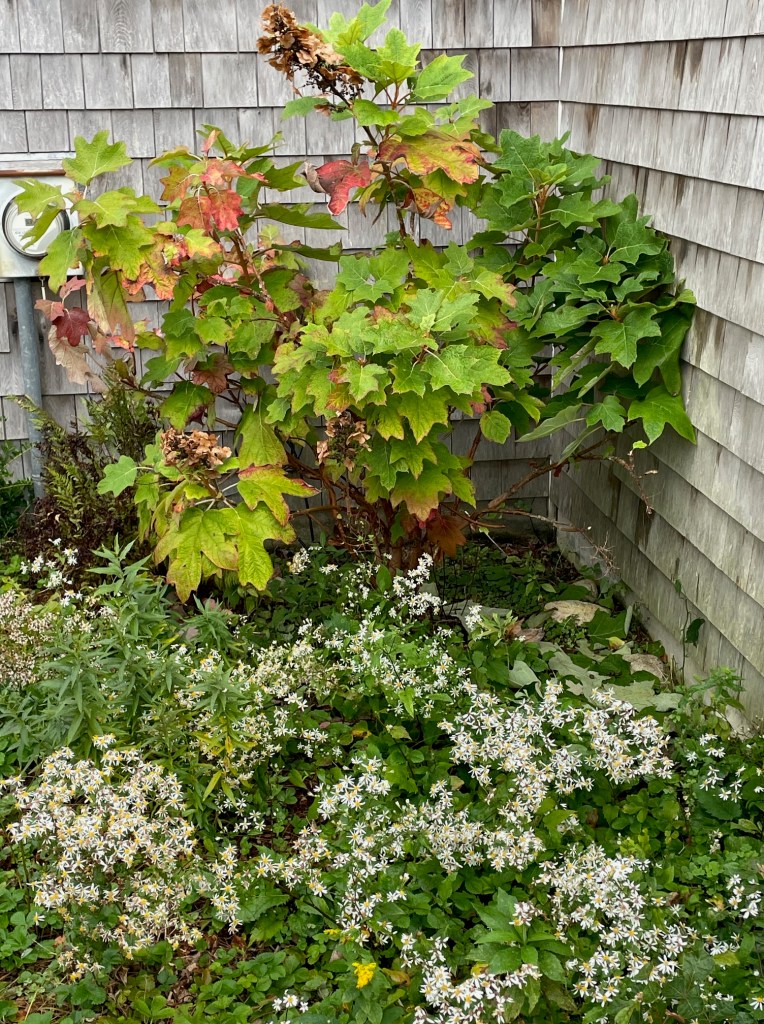
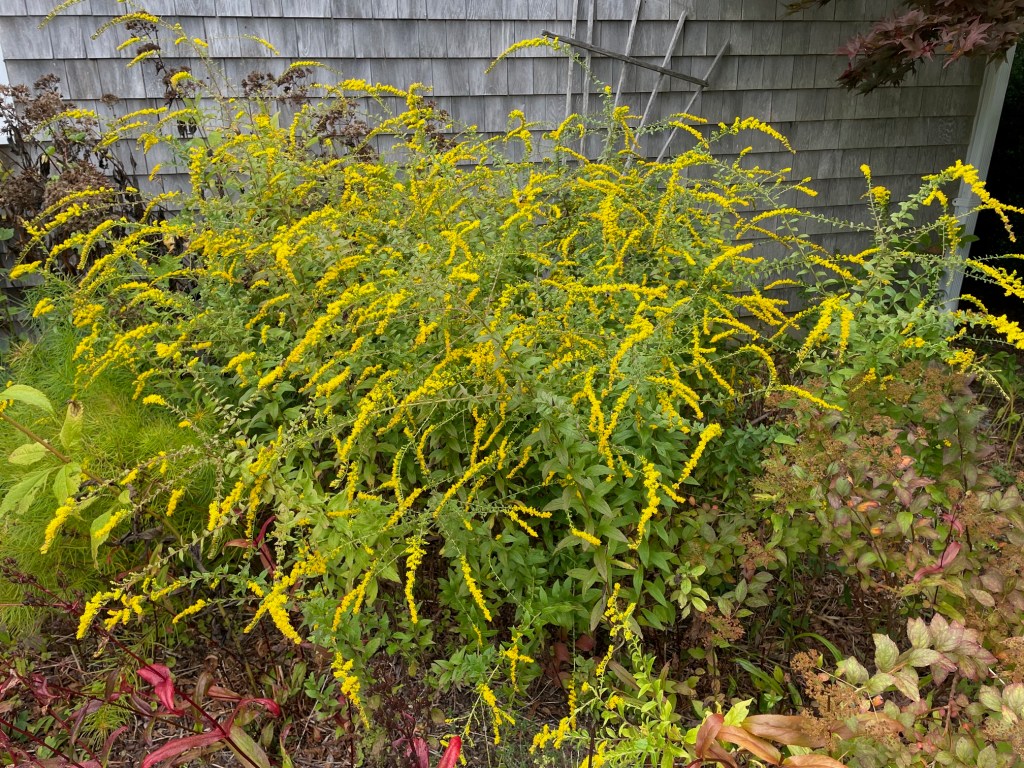
In the South Border, the great blue lobelia (Lobelia siphilitica) has bloomed continuously since the first of August. You can see from its long flower stems that it is just about done. At the bottom is a stand of bluestar (Amsonia tabernaemontana) which is turning to a lovely yellow.Still in the South Border, just to the left of the lobelia, the stand of prairie dropgrass (Sporobolus heterilepsis) did not disappoint. Behind them, the goldenrod is still going, and behind the goldenrod is the smooth hydrangea (Hydrangea arborescens) – this is the layered look I’ve been trying for in this section.In the little corner by the garage, the white wood aster (Eurybia divaricata) is blooming more prolifically than I expected, since this is now a full-sun garden. Above, the oak-leaf hydrangea (Hydrangea quercifolia) is just starting to turn, a bit late, but it will turn to dark-burgundy leaves that will last until Thanksgiving.Back in the Glory Garden, not much is in bloom except this terrific stand of goldenrod. It is a cultivar called Fireworks (Solidago rugosa ‘Fireworks’), which is readily available in nurseries. You can see from the bloom patterns how it earned that name. This goldenrod does spread a bit, but not nearly as much as the wild goldenrods.
In the Woodland
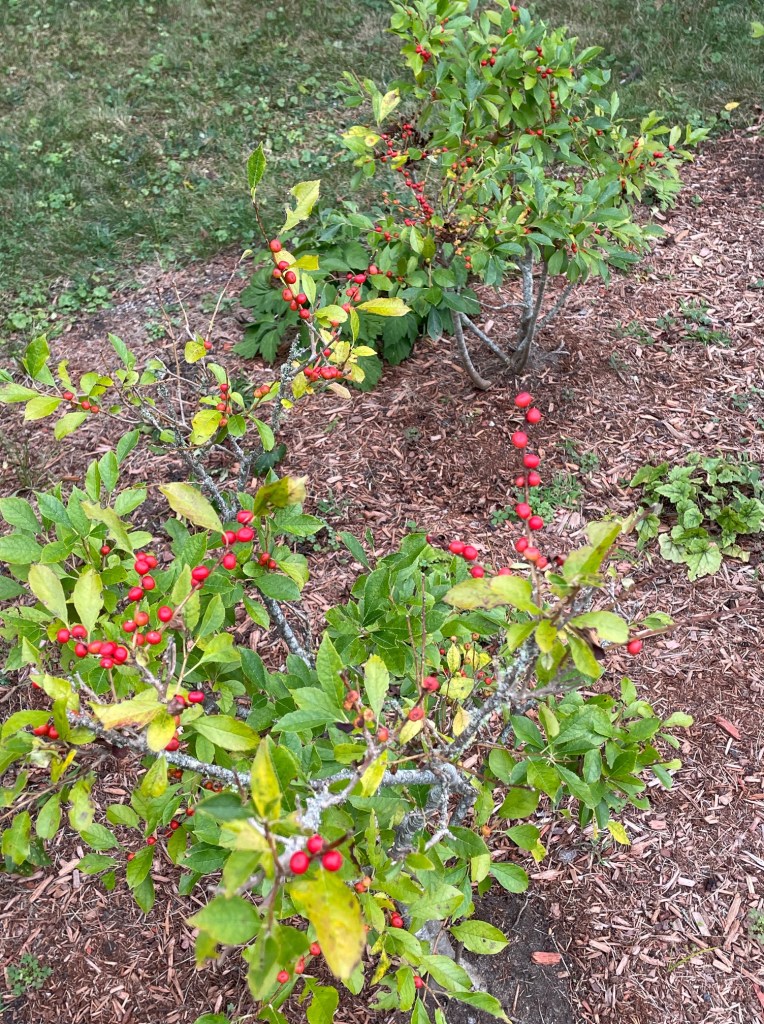
The winterberries (Ilex verticillata) flowered nicely and produced a good crop of fruit in their new garden. Last year I moved them from a spot that was too dry to a spot at the bottom of the slope, and they do seem to like it better. The leaves are yellowing already, perhaps a bit early due to the lack of rain.I love this mixed composition at the entrance to the woodland path. On the right are the shrubs ninebark (Physocarpus cultivar), fothergilla (Fotherfilla gardenii), and black huckleberry (Gaylussacia baccata), in the front the white wood aster (Eurybia divaricata) that has spread all over, more black huckleberry in the back, and the lady fern (Athyrium angustum) on the left, with wild strawberries (Fragaria virginiana) underneath.



 Goldenrod Garden