I really don’t miss those early days as a gardener, when I would confidently pick plants based on their color and size. I would plant them in what I thought would be a pleasing design and care for them faithfully for that first year. Then the next spring I would be both puzzled and disappointed, that some didn’t come up, or grew bigger than expected, or the rabbits ate them, or they had skimpy growth and blooms. And I would set about adjusting, sorry my lovely design didn’t work. Hah! Confidence can be a misplaced thing.
Now, with more experience, I know to research each plant on the site conditions they prefer. Caution, i.e., trial and error, is the order of the day. Now, if there is a new plant I want to try, I will order one or two, protect them from rabbits for half a season, then let them go and see what happens. If they survive the rest of that first season, I will order more for the second year to fill in the gaps.
This was the approach I used for the new meadow last year. Since I knew most of the plants already, I planted pretty densely but still left gaps. I knew I could evaluate the planting and plant more in the second season.
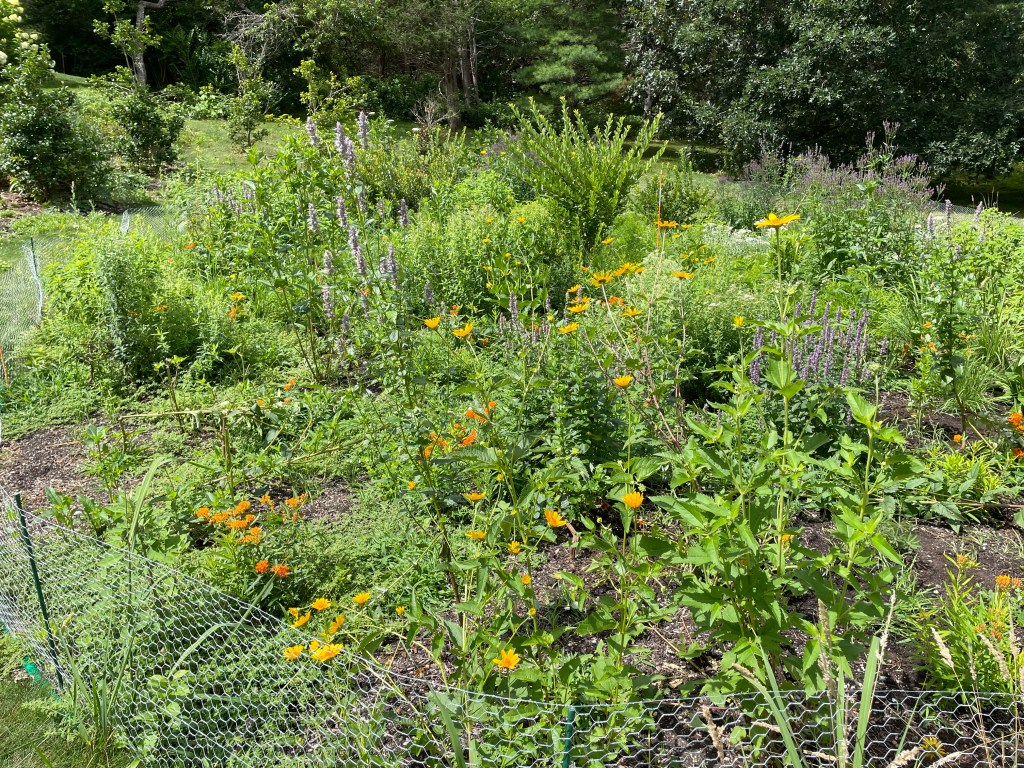
Silly me, what I didn’t sufficiently plan for was the weeds that would grow in the empty spaces. I had crabgrass, purslane, and prostrate spurge galore in the heat of last summer. Over the winter, hairy bittercress popped up everywhere. This spring, while all the good plants were off to a great growing season, so were the sheep sorrel, thistle, mugwort, and horseweed. I lost track of how many loads of weeds went onto the compost pile, and I’m sure there will be more. A classic case of weed management by reacting to weeds that show up.

Recently one of my favorite podcasts goaded me into rethinking my approach to weed management. The podcast is Growing Greener, with host Thomas Christopher, and he has expert guests who address various aspects of ecological gardening. The one I just listened to, “Bankrupting Your Garden’s Weed Seed Bank”, was first aired in January (I’m behind) and featured Dr. Bryan Brown of Cornell University, who has a PhD in Integrated Weed Management (who knew?).

While this is actually a complex subject, the key takeaways for me were ideas I kind of knew but didn’t fully appreciate: First, weeds come as both annuals and perennials, and the tactics for dealing with each are different; and second, a really well-prepared gardener will have a proactive, long-term weed management plan, rather than just reacting to weeds as they emerge.
Annual weeds, like bittercress and horseweed, proliferate by shedding seeds, often thousands of them, which lay in the soil as a seed bank. An important way to manage these plants is to make sure they don’t go to seed by pulling or cutting them before then. Once seeds are in the soil, they will germinate with the right light, temperature, and moisture. By allowing these seeds to emerge and then pulling them, the seed bank will be depleted over time. With the combination of preventing new seeds and eliminating the ones that germinate, there will be fewer and fewer of those weeds to deal with. Common annual weeds are bittercress, crabgrass, prostrate spurge, horseweed, lambsquarter, pigweed, ragweed, prickly lettuce, and chickweed.
Perennial weeds’ strategy is focused on the roots – storing energy in the root system so they can emerge early in the spring and spread by root or rhizomes to form larger colonies. The best ways to manage these are to disrupt this cycle by pulling the weed with its root, cutting back not just before it goes to seed but frequently to deprive it of photosynthesis and nutrients or tilling the soil (although there are a few plants like field bindweed this doesn’t work for.) Common perennial weeds are nutsedge, ground ivy, Canada thistle, mugwort and sheep sorrel, plus of course the invasive vines ivy, bittersweet and porcelain berry.
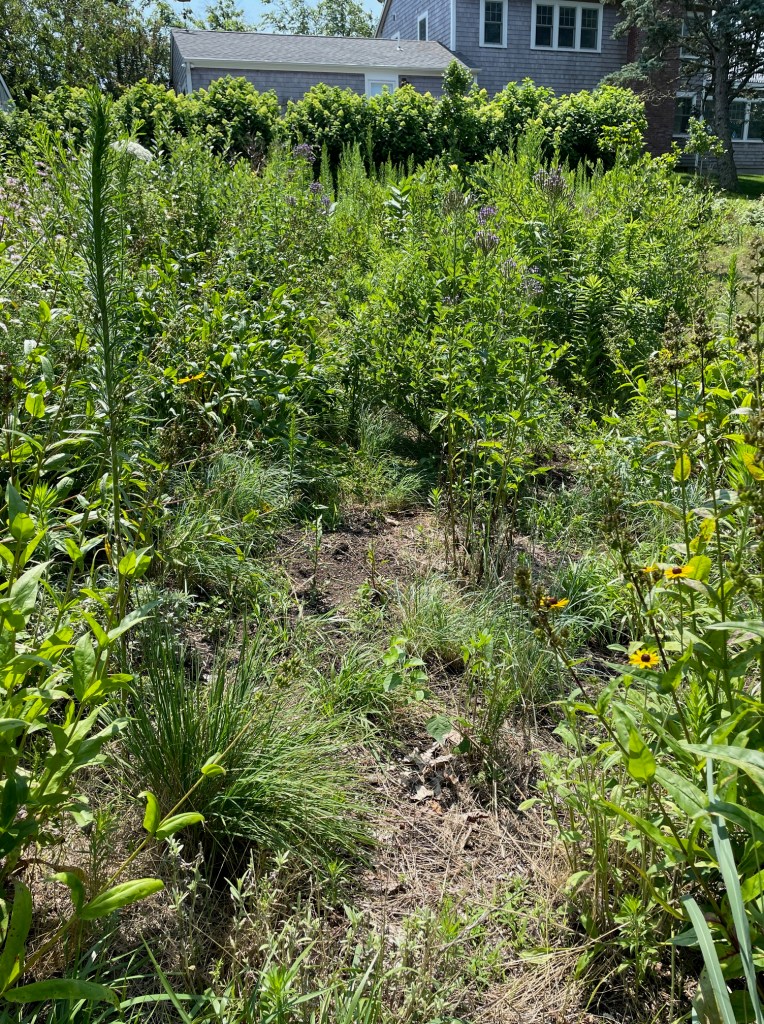
One common tactic that works for both kinds of weeds is one I might have considered before planting the meadow, which is to try to exhaust the seed bank before you plant. This is done by encouraging the weeds to grow with watering and plenty of light, then mowing, hoeing or tilling when they are still small. This cycle would be repeated a number of times until fewer and fewer plants emerge. If that is done over a whole growing season, it would address both winter and summer weeds, and that would greatly reduce the weed problem after the meadow is planted.
A second effective tactic is to plant densely, depriving both seeds and perennial roots the light and moisture they need to grow. I have seen this work in my other gardens, and parts of the meadow are already dense. I hope to get the entire meadow to that densely planted state within the next two years.
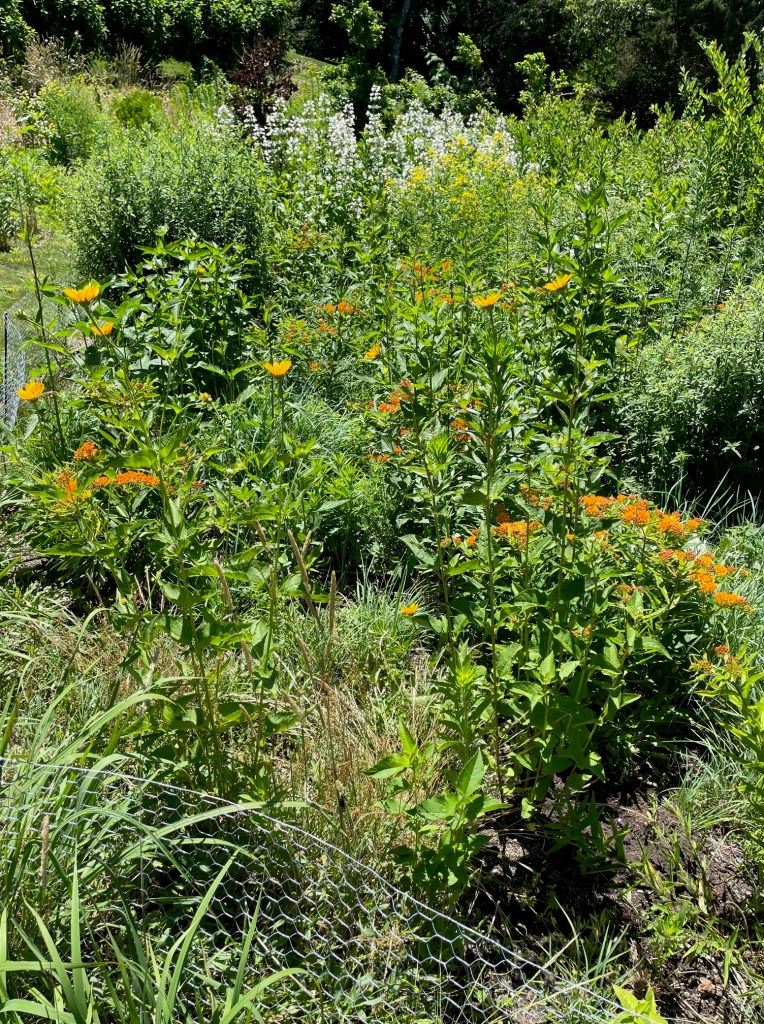
Noted practitioners seem to differ on whether it is better to pull weeds or to cut them down. On one hand, every time the soil is disturbed by pulling a weed, weeds in the seed bank get access to light and moisture and will germinate and grow, so avoiding disturbance by cutting weeds will reduce the number of weed seeds that germinate. On the other hand, the more the soil is disturbed by weeding or tilling, the more seeds germinate and the more the seed bank is depleted. For my gardens and the meadow, I am adopting the second approach, pulling weeds. It is satisfying to pull a weed out roots and all, and I like the idea of reducing future weed growth. So, the weed management plan for the meadow is to pull weeds, early and often, never let the annual weeds go to seed, and add more plants to get the right density. These tactics should reduce the meadow weeding over the next couple of years. Clearly, it’s a long-term game.
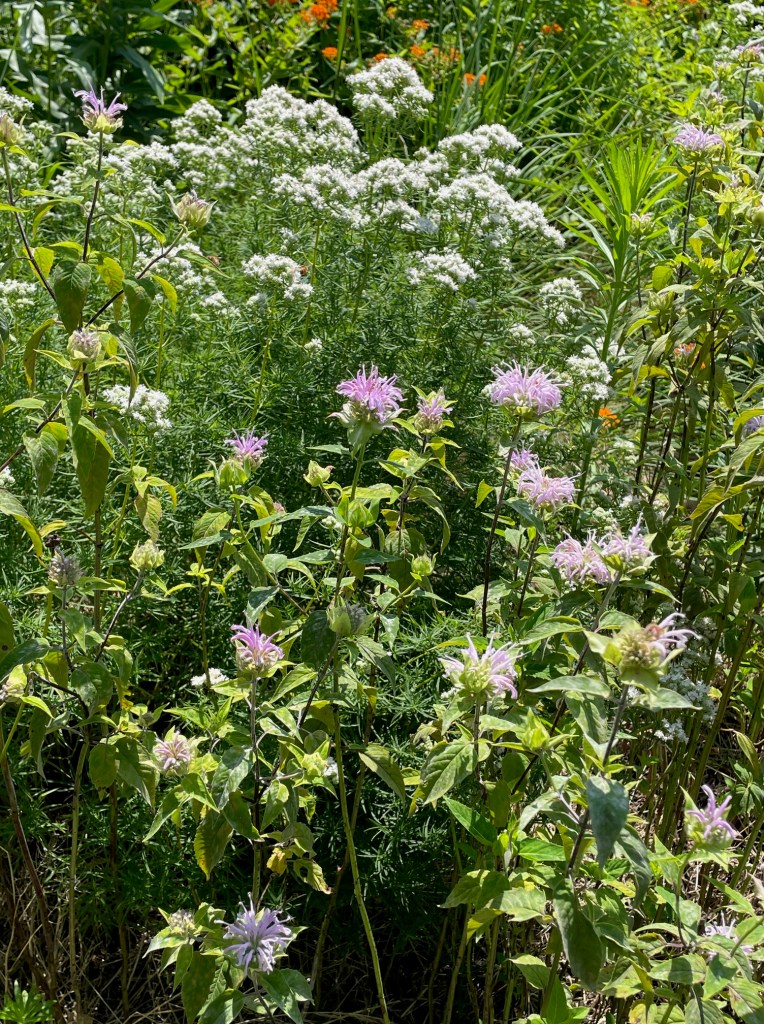
But despite the weeds, the meadow is glorious again this summer. Take a look at some recent pictures.
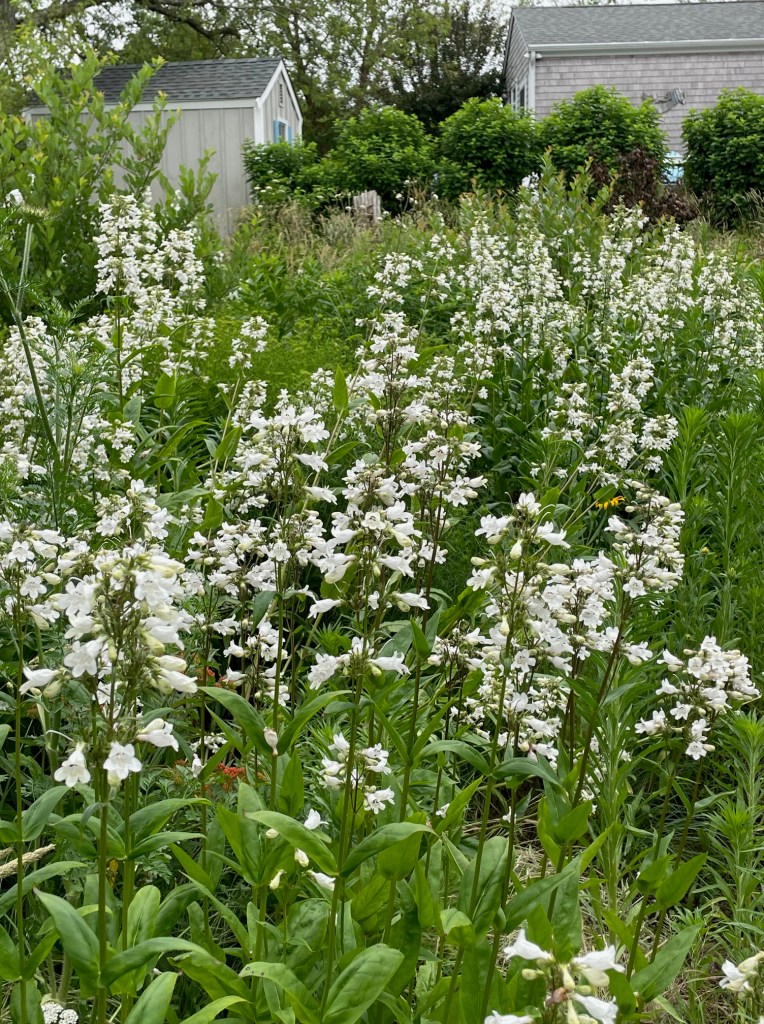



 Goldenrod Garden